VISION AND STUDIO CULTURE
The vision of the School of Architecture at Florida Atlantic University is to combine the rigor of innovative research-based methodologies with the normative constraints associated with “real-world” professional practice. More specifically, the School of Architecture is internationally recognized as a leader in the integration of artificial intelligence into a professional architecture program.
For schools of architecture, there is an ethical responsibility to prepare students to help shape the future of professional practice. It is quite obvious that AI will become a ubiquitous tool within the foreseeable future. Therefore, it is in our opinion that AI should be learned as a requirement to complete a professional degree in architecture.
In 2024, Florida Atlantic University received the Tambellini Future Campus Award Category Winner for Innovation in AI and Technology Integration because of the School of Architecture’s groundbreaking approach. As a school, we predict a fundamental shift in architectural pedagogy from focusing on the design of end products to designing processes, systems, and workflows as a means to tackle some of the most challenging problems of our time.
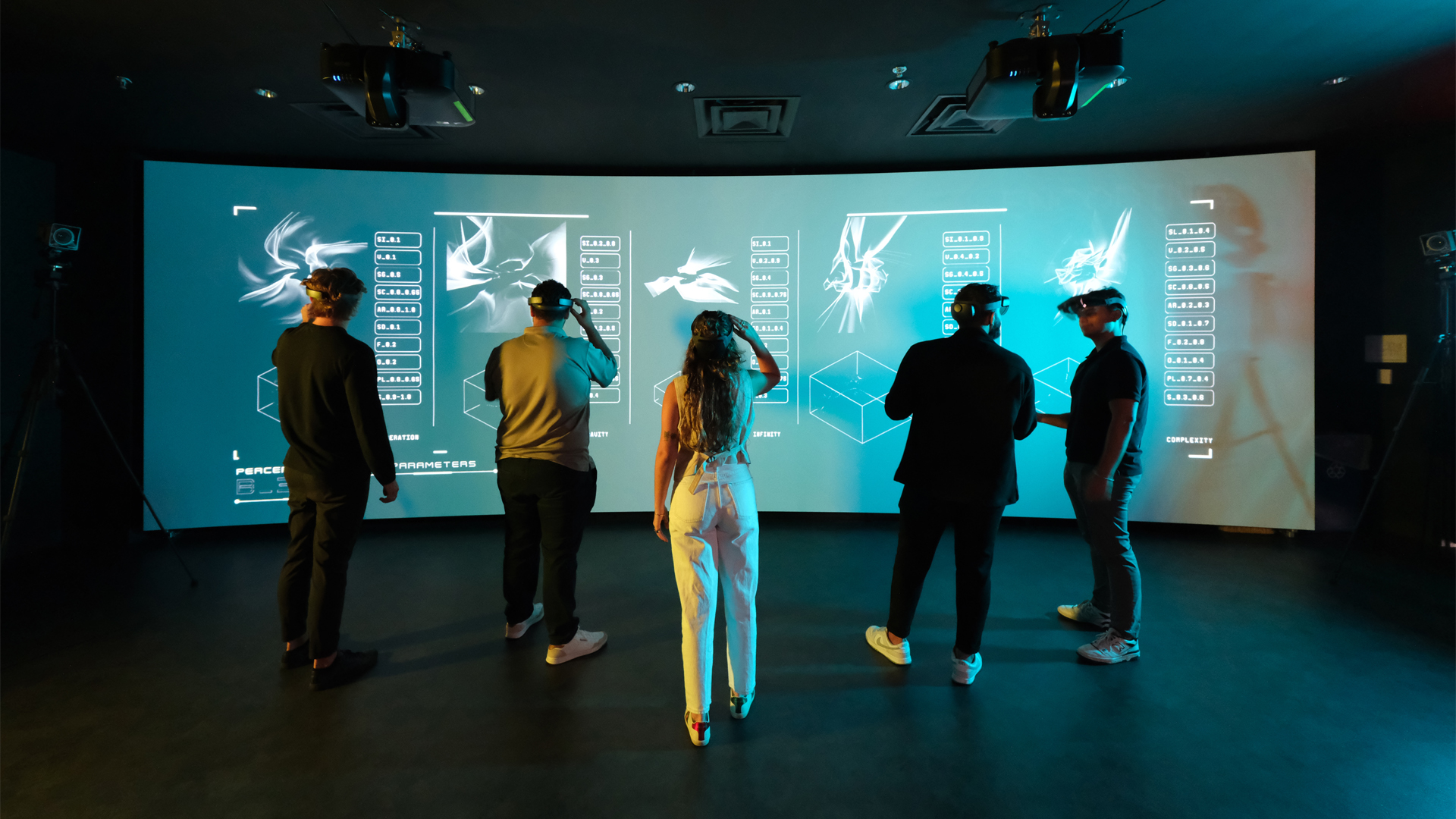
As part of that vision, the school has transformed traditional design studio spaces into new research labs, which are also teaching labs. For example, the Creative AI Lab includes an immersive 180-degree floor to ceiling screen, eight 3D scanners mounted to the ceiling, AR/VR equipment, and a powerful server to compute large datasets instantaneously. This lab allows for human machine collaboration as well as a seamless physical to digital workflow. The labs quite literally become spatial instruments-to-think-with.
Architecture is an intellectual discourse that builds-on itself. Just as students learn from the past, students should also strive to design buildings which add to the history of architecture. At the same time, architecture is also about designing spaces for people to inhabitant which are part of a larger sense of place. Students need to learn how to listen and ask questions. Both of these dimensions make up the professional practice of architecture.
The education of an architect is a highly unique education. Instead of identifying a single solution to a problem, students are encouraged to identify the greatest number of possible opportunities. Within design studios, students are encouraged to take risks and challenge the status quo. Additionally, the school has fostered a collegial culture akin to an academic family. Students are competitive and ambitious but they also openly help each other. They are all here to succeed together. Within the school, there is an intentional informality between the students and faculty (where students frequently call professors by their first name). This is a sign of respect by the professors, because the students are looked at as future peers and colleagues.
This nonhierarchical dialogue between students and faculty is occasionally present in the structure of certain pedagogical opportunities as well. For example, some courses embraced the pedagogical approach of teaching through research and research through teaching, where students collaborate with professor(s) on an industry-sponsored applied research project. Recent sponsored research projects include: a lightweight deployable pop-up structure for Google’s community engagement initiatives and a comprehensive exploration into adaptive reuse strategies as a means to create sustainable and cost-effective solutions to affordable housing for AHF. Within sponsored courses such as these, students learn how to bridge the gap between academic research and professional practice by engaging a client directly and identifying new opportunities through research methodologies.