Faculty Publications
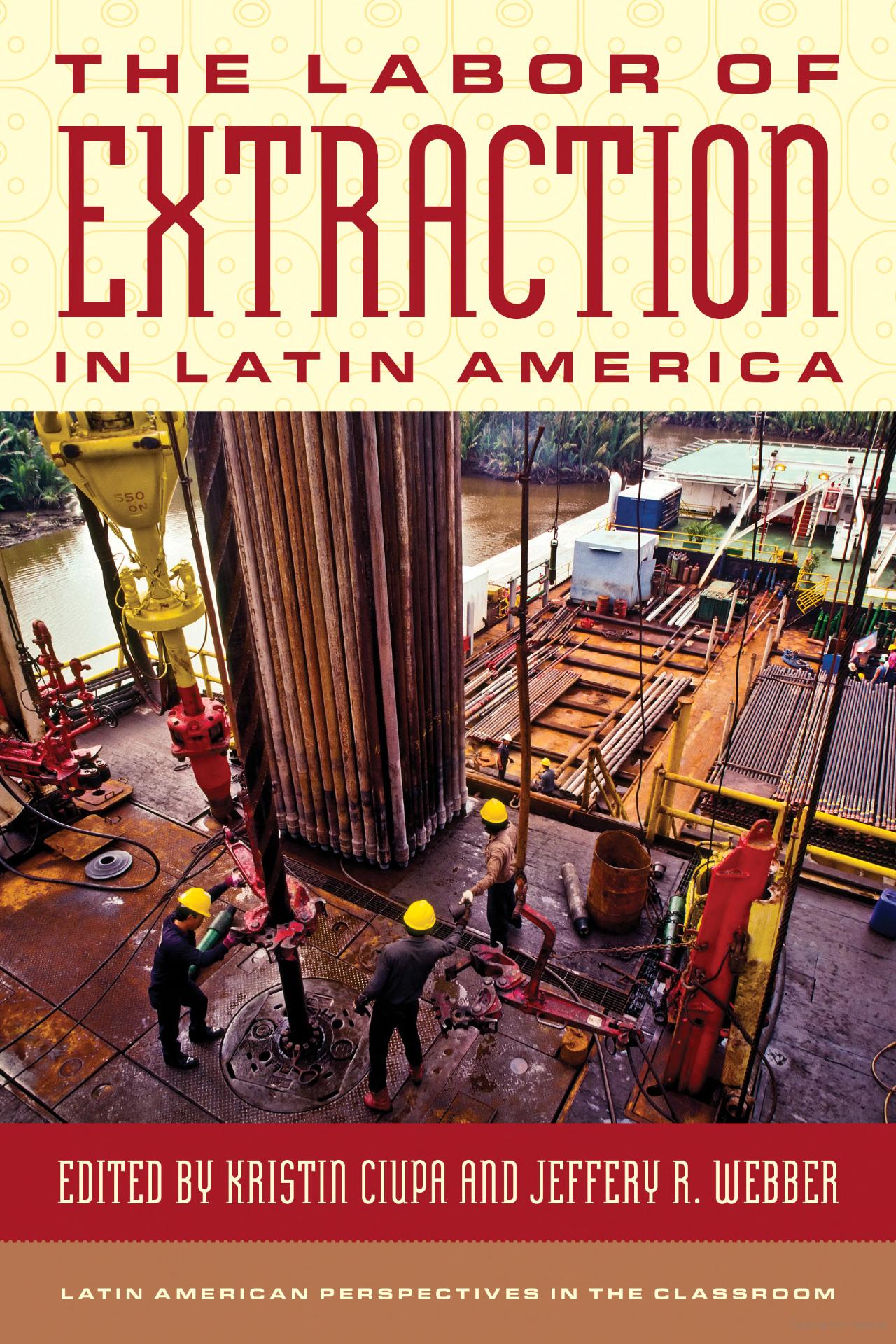
Phillip A. Hough assesses the validity of Bergquist’s interpretation of the coffee growers of mid twentieth-century Colombia, as well as extending Bergquist’s framework into the contemporary era of coca growers and accelerating extractive sectors of the economy.
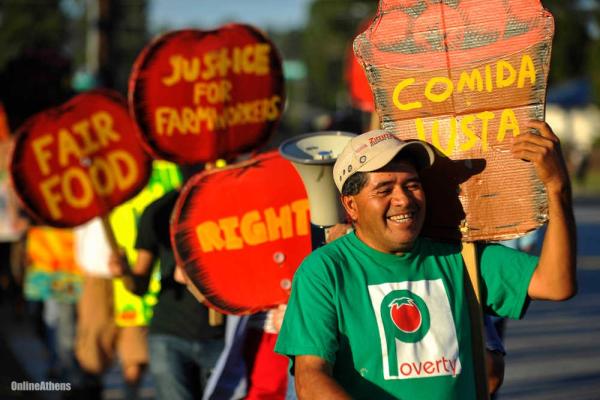
This paper extends scholarship on emerging sources of worker power in the 21st century through an examination of the solidarity activism of the Coalition of Immokalee Workers (CIW), an agricultural worker-led human rights organisation that advocates for Fair Food policies. We demonstrate how CIW coalitions are sustained through solidarity narratives that clarify the stakes for student allies and the discursive frames that motivate their activism.
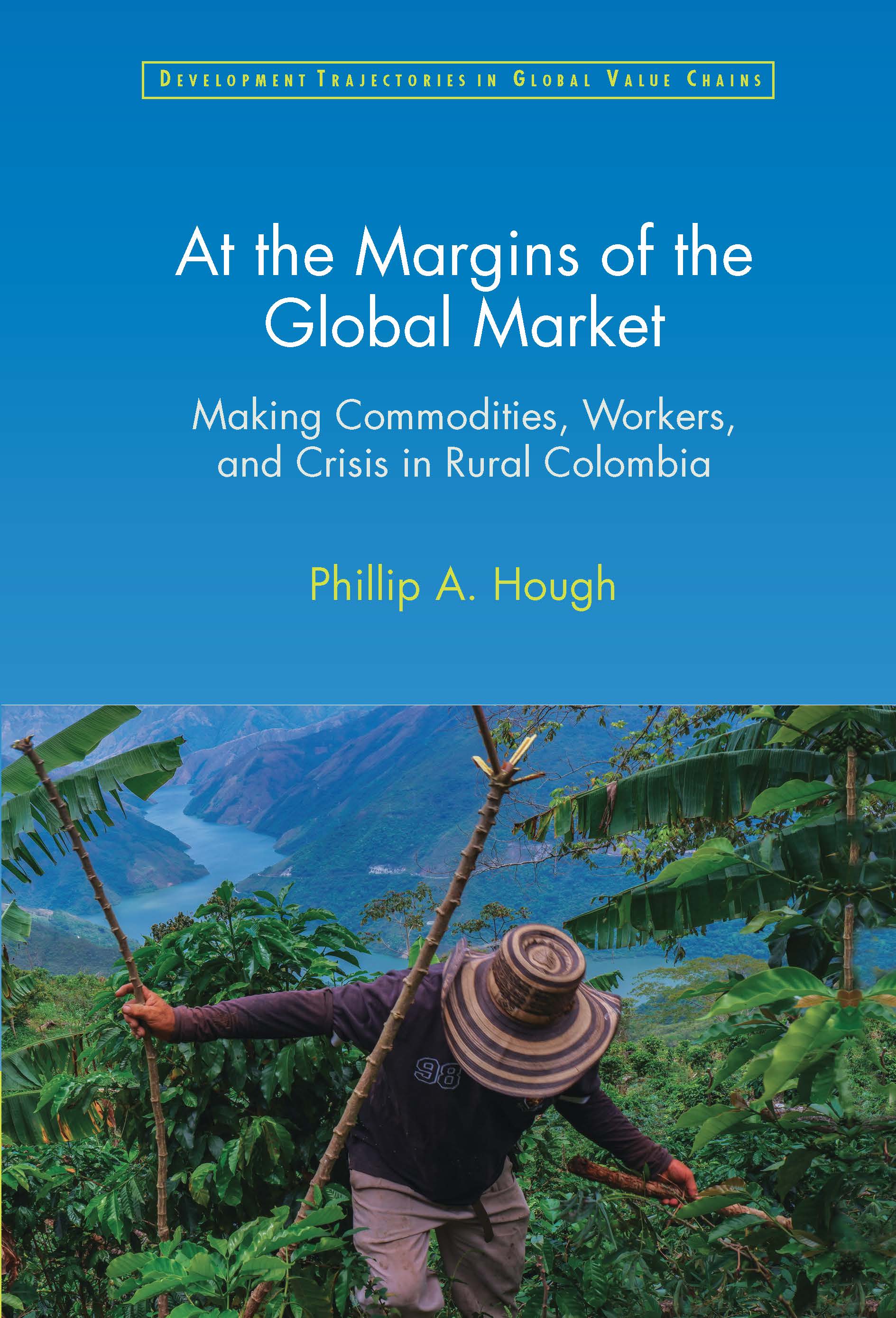
Dr. Phillip A. Hough published At the Margins of the Global Market: Making Workers, Commodities, and Crisis in Rural Colombia (Cambridge University Press, 2022). This book pulls together nearly two decades of research analyzing the intersection of capitalist development, political violence, and struggles for labor and land rights in Colombia’s coffee, banana, and coca-producing regions. It received "Honorable Mention" for the 2023 Barrington Moore Award of the Comparative and Historical section and "Winner" of the 2023 Immanuel Wallerstein Memorial Book Award of the Political Economy of the World-System section of the American Sociological Association.
Yang-Sook Kim, 2022, National Care Experts and Joseonjok Aunties: Eldercare Workers’ Resistance in South Korea. Korean Journal of International Migration , 9(1), 5-23 (Written in Korean).
In this paper, we approach citizenship as a claims-making process consisting of social construction practices that emerge from ongoing negotiations and contestations. Kim and Chien examines the migrant subject-making process of Korean Chinese migrants in South Korea. Kim and Chien draw on the voices of migrants to discuss how Korean Chinese construct their migrant subjectivity by mobilizing a collective understanding of ethnonational belonging and thereby deploy distinctive strategies to support their claims.
This article examines how state eldercare provision influences care workers’ subjectivities and claims for dignity and self-worth. Drawing upon extensive fieldwork conducted in South Korea, Kim argues that migrant and native-born care workers construct different ideals around what is “good” versus “bad” care through the marking of ethnic and professional boundaries.
Lewin, Philip. 2024. “Policy Recommendations for Improving Housing Access, Affordability, and Equity.” Report for the City of Lake Worth Beach, FL. March. 78 pages.
Lewin, Philip. 2023. “Florida Housing Policies: Impact Analysis and Strategic Approaches for Lake Worth Beach.” Report for the City of Lake Worth Beach, FL. November. 63 pages.
Lewin, Philip, Yanmei Li, and Carter Koppelman. 2023. “Social, Economic, and Housing Conditions in Lake Worth Beach.” Report for the City of Lake Worth Beach, FL. September. 210 pages.
Lewin focuses on the construction of identity and authenticity within the punk subculture, specifically addressing the issues of race and class.
Lewin, Philip. 2016. “The Public Engagement Industry and the Future of Democratic Praxis.” Trajectories 28(1): 26-30.
Lewin, Philip. 2014. “Political Participation, Demobilization, and the Problem of Community Embeddedness.” States, Power, and Societies 20(1): 1-6.
Edwards, Frank, Sarah Roberts, Kathleen Kenny, Mical Raz, Matty Lichtenstein, Mishka Terplan. “The Prevalence and Racial Inequity of Child Protection Investigations Resulting from Medical Professional Reports in the US, 2010-2019.”
Health Equity,
October 2023, (653-662). http://doi.org/10.1089/heq.2023.0136.
Lichtenstein, Matty. “Legitimizing Discourses: Hasidic Schools, Non-Compliance, and the Politics of Deservingness.”
American Journal of Sociology,
May 2022 (127:6). DOI: 10.1086/719926
**Best Graduate Student Paper Award, Political Sociology Section, American Sociological Association, 2021.
Lukasik, Greg. “Biology, Culture, and Sexual Assault.” Sociology in the News , February 2022
Lukasik, Greg. “The Covid Pandemic is Not Going Away – This is Why.” Sociology in the News, November 2021.
Lukasik, Greg. “The American Tragedy: Mass Shootings and the Media Construction of Gun Violence.” Sociology in the News , July 2021
Lukasik, Greg. “Civil Rights, Race, and Presidential Elections.” Sociology in the News , April 2021.
Lukasik, Greg. Book Review. Social Mobilization, Global Capitalism and Struggle over Food: A Comparative Study of Social Movements, by Renata Motta. International Journal of Comparative Sociology , June 2018, 59(3): 264-267.
Lukasik, Greg. Book Review. Postcommunism from Within: Social Justice, Mobilization, and Hegemony, Jan Kubik and Amy Lynch (eds.). International Journal of Comparative Sociology , April 2014, 55 (2): 180-182
Lukasik, Greg. 2012. “Have Nice Girls Gone Bad? Social Constructionist Approach to the Rise in Female Violent Offenders.” Pp. 211 – 224 in Crime as a Social Problem , edited by R. McNamara and K. Bell. Durham, NC: Carolina Academic Press.
Isaac, Larry, McDonald, Steve, and Greg Lukasik. 2006. “Takin’ It from the Streets: How the Sixties Breathed Life into the Labor Movement,” American Journal of Sociology , 2006, vol.112(1): 46-96
Carreno, Gina and Greg Lukasik (authors in alphabetical order). 2005. Themes of the Times for Introduction to Sociology: A Collection of Articles from The New York Times for Use with Your Allyn and Bacon Text . Boston: Allyn and Bacon
Gallan, Andrew S., Anu Helkkula, & William R. McConnell. 2024. "Why did this happen to me? Causal attributions of illness and cultural health capital." Social Science & Medicine, 350: 116923.
Perry, Brea L., William R. McConnell, Max E. Coleman, Adam R. Roth, Siyun Peng, & Liana G. Apostolova. 2022. "Why the cognitive “fountain of youth” may be upstream: Pathways to dementia risk and resilience through social connectedness." Alzheimer's & Dementia , 18(5), 934-941.
Perry, Brea L., William R. McConnell, Siyun Peng, Adam R. Roth, Max Coleman, Mohit Manchella, Meghann Roessler, Heather Francis, Hope Sheean, & Liana A. Apostolova. 2022. “Social Networks and Cognitive Function: An Evaluation of Social Bridging and Bonding Mechanisms.” The Gerontologist , 62(6), 865-875.
Feyereisen, Scott, William R. McConnell, Clayton Thomas, & Neeraj Puro. 2021. “Physician dominance in the 21st century: Examining the rise of non-physician autonomy through prevailing theoretical lenses.” Sociology of Health & Illness , 43(8), 1867-1886.
McConnell, William R., & Emma D. Cohen. 2019. “Fear of fraudulence: graduate school program environments and the impostor phenomenon.” The Sociological Quarterly , 60(3), 457-478.
McConnell, William R. 2017. “Cultural guides, cultural critics: Distrust of doctors and social support during mental health treatment.” Journal of Health and Social Behavior, 54(4), 503-519.
McConnell, William R., & Brea L. Perry. 2016. “The revolving door: Patient needs and network turnover during mental health treatment,” in Brea L. Perry (ed.), 50 Years after Deinstitutionalization: Mental Illness in Contemporary Communities (Advances in Medical Sociology, 17) , Emerald Group Publishing Limited, 119-145.
2019. “Hegemonic Femininities and Intersectional Domination.” Sociological Theory 37(4): 315-341.
(Winner of 2020 Distinguished Article Award from the American Sociological Association Sex & Gender Section.)
Seeley, J. Lotus. 2019. “Jumping to the Head of the Invisible Line: Waiting, Queuing, and the Reproduction of Organizational Status.” Social Currents 6(5): 487-503.
Seeley, J. Lotus. 2019. “‘A Give Grief Kind of Guy’: Help-Seeking, Status, and the Experience of Helpers at a University IT Help Desk.” Symbolic Interaction 42(1): 127- 150.
Seeley, J. Lotus. 2018. “‘Show Us Your Frilly Pink Underbelly’: Male Administrative Assistants Performing Masculinities and Femininity.” Gender, Work, and Organizations 25(4):418-436.
Seeley, J. Lotus. 2014. “Harrison White as (Not Quite) Poststructuralist.” Sociological Theory
32(1): 27-42
Armstrong, Elizabeth A., Laura T. Hamilton, Elizabeth M. Armstrong, and J. Lotus Seeley. 2014. “‘Good Girls:’ Gender, Social Class, and Slut Discourse on Campus.” Social Psychology Quarterly 77(2):100-122.
Mullen, Casey and P. Widener. 2022. “Dissonance between Framing and Acting for Climate Justice.” Local Environment: The International Journal of Justice and Sustainability . 27(5): 586-604.
Widener, P. 2022. “Energy & Export Transitions: From Oil Exports to Renewable Energy Goals in Aotearoa New Zealand.” Pp 91-104 in Public Responses to Fossil Fuel Export: Exporting Energy and Emissions in a Time of Transition , edited by Hilary Boudet and Shawn Olson Hazboun. Elsevier.
Widener, P. 2021. Toxic and Intoxicating Oil: Discovery, Resistance, and Justice in Aotearoa New Zealand . New Brunswick NJ: Rutgers University Press.
Widener, P. 2020. “The Visual Opportunity Spaces of Oil: In Promotion, Protest, and Warning.” Visual Studies .
Widener, P. 2018. “National Discovery and Citizen Experts in Aotearoa New Zealand: Local and Global Narratives of Hydraulic Fracturing.” Extractive Industries & Society 5(4): 515-523.
Widener, P. 2018. “Coastal People Dispute Offshore Oil Exploration: Toward a Study of Embedded Seascapes, Submersible Knowledge, Sacrifice, and Marine Justice.” Environmental Sociology 4(4): 405-418.
Widener, P. and Carmen Rowe. 2018. “Climate Discourse: Eluding Literacy, Justice and Inclusion, By Evading Causation, Privilege and Diversity.” Environmental Sociology 4(1): 162-174.
Widener, P. 2018. “Citizens in Resistance to Oil Development and Acid Fracking in the Sunshine State.” Pp. 224-247 in Fractured Communities: Risk, Impacts, and Protest against Hydraulic Fracking in US Shale Regions , edited by Anthony Ladd. New Brunswick NJ: Rutgers University Press.
Karides, Marina and P. Widener. 2018. “Race, Class, Privilege and Bias in South Florida Food Movement.” Pp. 191-203 in Food & Poverty: Food Insecurity and Food Sovereignty among America’s Poor , edited by Leslie Hossfeld, E. Brooke Kelly, and Julia Waity. Nashville TN: Vanderbilt University Press.
Widener, P. 2016. “E-Fears, E-Risks and Citizen-Intelligence: The Impacts of Surveillance on Resistance and Research.” Surveillance & Society 14(2): 277-285.
Widener, P., Carmen Rowe, Ana Marie Estrada, Marcella Ahumada, Martha Eichloff and Jacquelyn Anderson. 2016. “Climate Action and Literacy through Creativity and Conversations.” Pp. 125-138 in Systemic Crises of Global Climate Change: Intersections of Race, Class and Gender , edited by Phoebe Godfrey and Denise Torres. NY: Routledge.
Widener, P. and Marina Karides. 2014. “Food System Literacy: Empowering Citizens and Consumers beyond Farm-to-Fork Pathways.” Food, Culture & Society 17(4): 665-687.
Widener, P. 2013. “A Protracted Age of Oil: Pipelines, Refineries and Quiet Conflict.” Local Environment: The International Journal of Justice and Sustainability 18(7): 834-851.
Widener, P. 2011. Oil Injustice: Resisting and Conceding a Pipeline in Ecuador . Lanham MD: Rowman & Littlefield.
Widener, P. 2009. “Oil Tourism: Disasters and Destinations in Ecuador and the Philippines.”
Sociological Inquiry
79(3): 266-288.
Widener, P. 2009. “Global Links and Environmental Flows: Oil Disputes in Ecuador.”
Global Environmental Politics
9(1): 31-57.
Widener, P. 2007. “Benefits and Burdens of Transnational Campaigns: A Comparison of Four Oil Struggles in Ecuador.”
Mobilization: An International Quarterly
12(1): 21-36.
Widener, P. and Valerie Gunter. 2007. “Oil Spill Recovery in the Media: Missing an Alaska Native Perspective.”
Society and Natural Resources
20(9): 767-783.
Widener, P. 2007. “Oil Conflict in Ecuador: A Photographic Essay.”
Organization & Environment
20(1): 84-105.