Multimodal VAEGAN AI
Overview
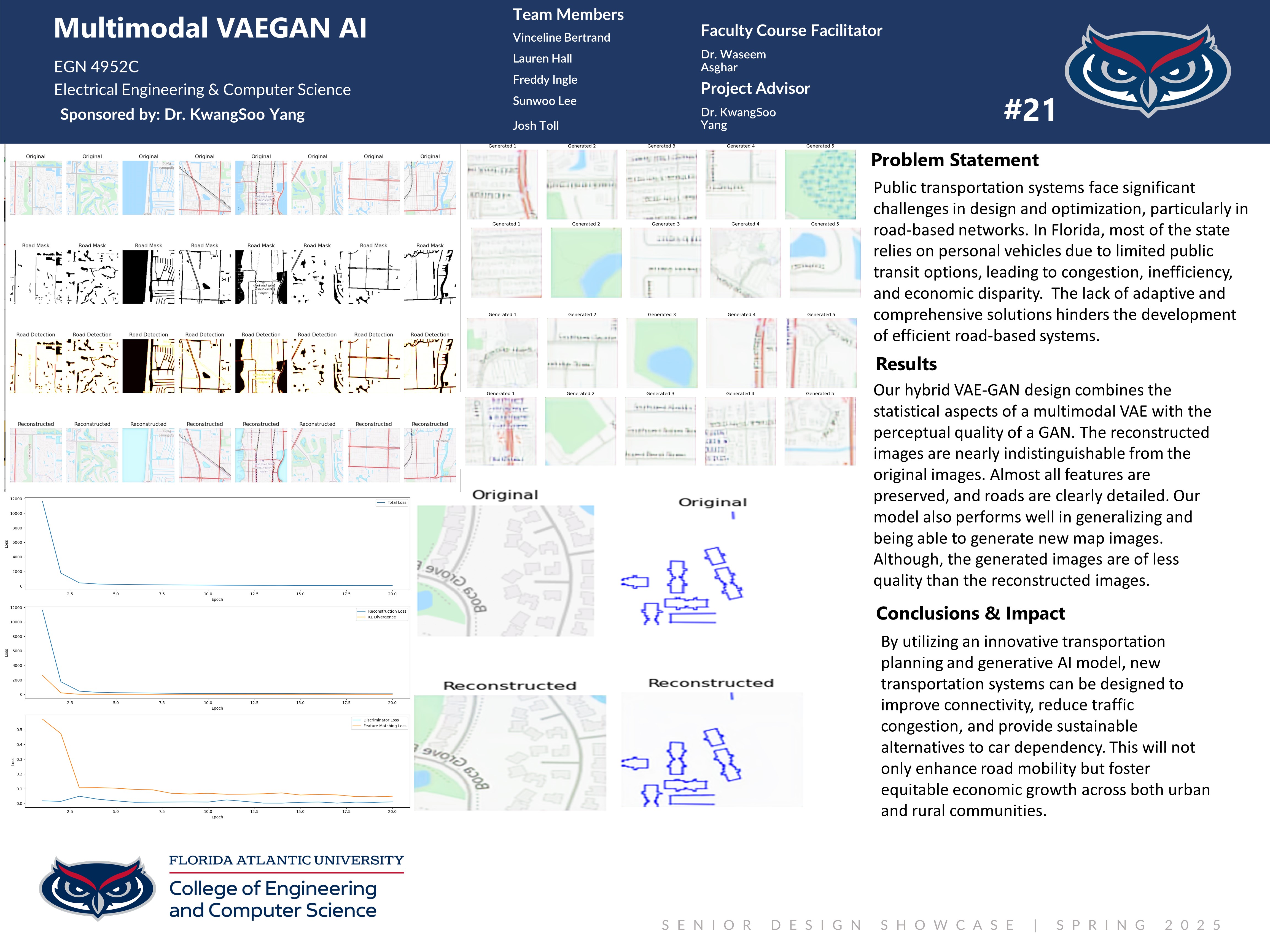
Our Model is a generative AI model that uses a Variational Autoencoder architecture to generate a map with an optimized transportation network. The purpose of the project is to increase the efficiency of urban planning and decrease traffic congestion. The model learns from image data fed to the model from snapshots of city maps, and trains the model to learn how to create transportation networks into a new area where a proposed city, town, or urban development would be.
Community Benefit
Public transportation systems face significant challenges in design and optimization, particularly in road-based networks. In Florida, much of the state relies on personal vehicles due to limited public transit options, leading to congestion, inefficiency, and economic disparity. The lack of adaptive and comprehensive solutions hinders the development of efficient road-based public transit networks. By utilizing innovative transportation planning and generative models, new road transportation systems can be designed to improve connectivity, reduce congestion, and provide sustainable alternatives to car dependency. Developing an optimized, data-driven road transportation network can enhance mobility, reduce commute times, and foster equitable economic growth across both urban and rural communities.
Team Members
Sponsored By
Dr. KwangSoo Yang