Ground Station Software for Cubesat Mission Simulations
Overview
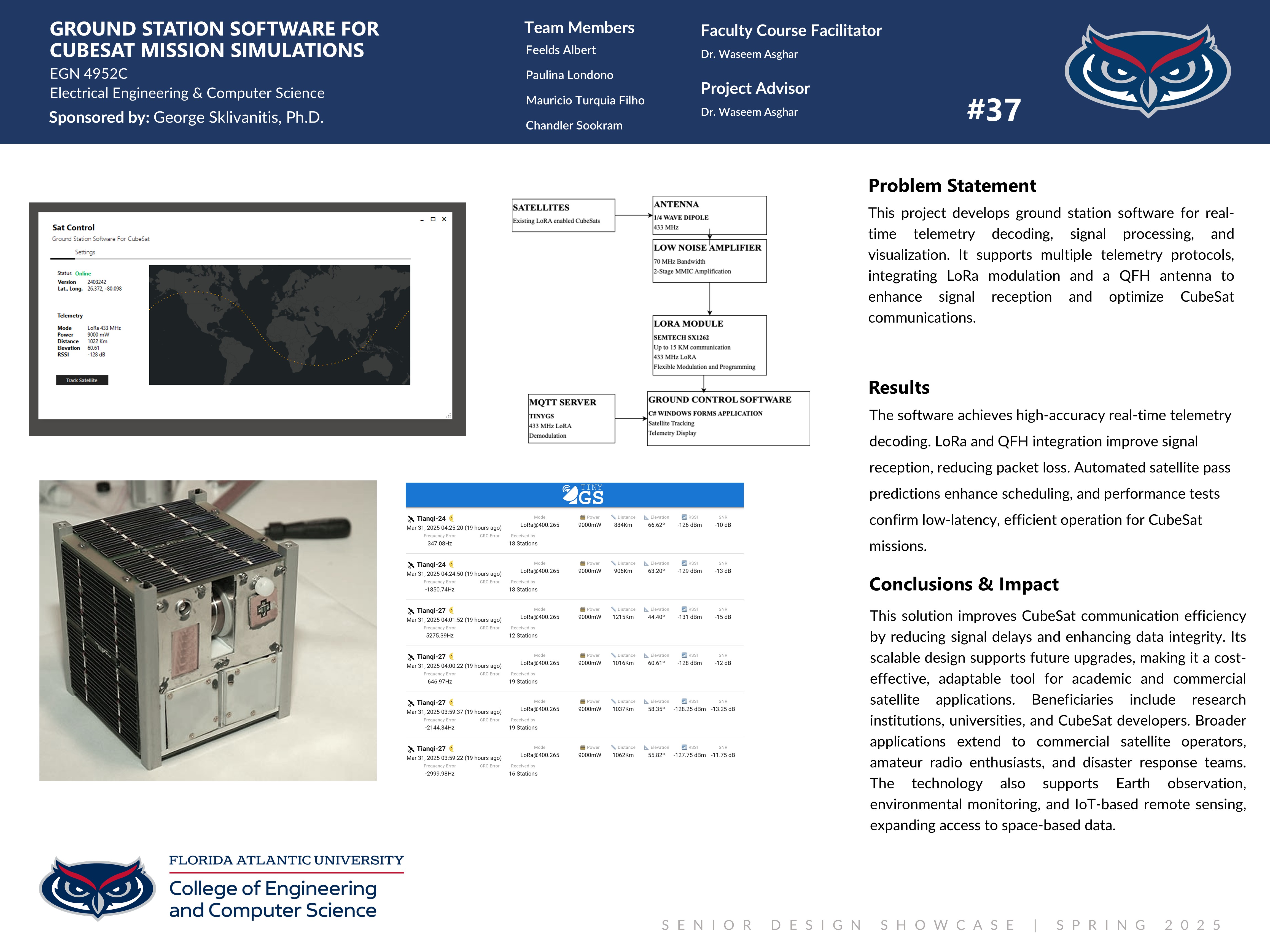
This project involves the development of a modular, scalable ground station software system that ensures reliable communication with CubeSats in Low Earth Orbit (LEO). The system integrates advanced signal processing, satellite tracking automation, and telemetry decoding to provide real-time data acquisition, command capabilities, and remote accessibility. It is tailored for research, educational, and commercial satellite missions.
Community Benefit
The Ground Station Software for Satellite Telemetry project provides significant benefits to both the local and global community by democratizing access to space-based data and fostering STEM education.
By creating an open, modular, and scalable solution for satellite communication, the project empowers educational institutions, research facilities, and amateur satellite operators to participate in space missions at a fraction of the cost. It enables real-time reception and analysis of weather and environmental data from CubeSat satellites, which can be leveraged for disaster monitoring, environmental protection, and educational purposes.
Locally, the project enhances student learning through hands-on experience with embedded systems, signal processing, satellite tracking, and data analysis—skills that are critical in today’s rapidly growing aerospace and telecommunications industries. It prepares the next generation of engineers and researchers to innovate in high-demand technical fields.
Globally, the system can be deployed in underserved areas to gather critical climate and environmental data, contributing to more equitable access to scientific resources. Additionally, by promoting open-source development and community collaboration, the project cultivates a network of contributors dedicated to scientific advancement and sustainable development.
In essence, this project not only addresses technical challenges in satellite communication but also contributes to societal progress through education, innovation, and community empowerment.
Team Members
Sponsored By
George Sklivanitis, Ph.D.