Environmental Assessment
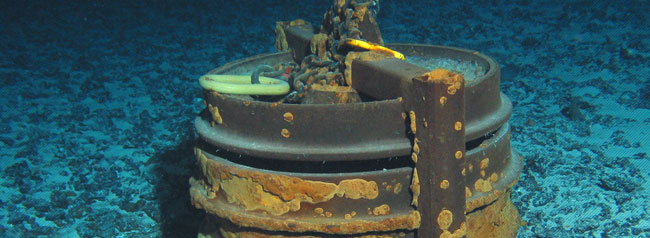
Although the concept of installing electrical generating systems in the marine environment goes back at least a half-century, there have been limited opportunities to evaluate the potential interactions, and mostly with partial-scale equipment. In contrast, future full-scale commercial deployments are likely to involve arrays of devices with networked cable-to-shore systems to connect to the electrical grid. At this scale, it is clear that the interaction between the equipment and the marine environment will be two-way, with questions arising in both directions:
- How will commercial-scale arrays of generating devices affect the marine environment?
- How will the marine environment affect the equipment?
Environmental stewardship aims to emulate the natural-world version of the Hippocratic Oath to “do no harm.” Because there is some potential for harm to marine life from electricity-generating equipment, this must be understood and mitigated. Concerns which arise from the sea floor to the surface include, for example:
- What effects will there be on benthic habitat from anchor systems and potential changes in sediment transport?
- Within the water column, will pelagic fishes be disturbed by (or attracted to) the generating equipment
- How will acoustic effects on the ocean be perceived by noise-sensitive species?
- Will electrical cables be an issue with respect to sharks and other electroreceptive sea creatures?
- What is the potential for strikes of pelagic species (notably protected mammals and endangered sea turtles) with the equipment (particularly turning rotors)?
While the range of these important questions could be daunting, SNMREC’s approach offers a multi-dimensional approach to mitigate risks. From the use of small-scale experiments to investigate these issues with care to studies that evaluate the levels of risk to habitat and marine life, SNMREC will use results to develop mitigation strategies, inform resource managers, suggest best practices, and influence technologies.
A good resource to better understand how SNMREC and the U.S. marine energy sector are responsibly approaching environmental stewardship is the Pacific Northwest National Laboratory-managed TETHYS knowledge base.