English Classes Summer 2025


Intro to Literary Studies
ENG 3822.002|Frost, T.|Req.|Term 3|Boca Raton|In-Person|W/F 1:15pm–4:25pm
As a foundational gateway to the study of literature for English majors, this course “prepares students to enter the field of literary studies by introducing three genres, key concepts, and two-to-three critical approaches to literature.” To achieve these outcomes, students will read texts from the genres of poetry, fiction, and graphic narrative, and they will consider and apply theoretical approaches, including Formalism, Structuralism, New Historicism, Marxism, Postcolonial Studies, Gender Studies, and Deconstruction. We will consider the ways literature is shaped by society, and how we, as readers, situate ourselves within both literary and cultural texts. Students who take this course will learn essential terms of literary discourse, consider several critical and theoretical approaches to literature, attain and practice strategies of literary research, and apply these skills in the analysis of texts.
***************

Women and Literature
LIT 4383.001|Dagbovie-Mullins, S.|Cat 1|Term 2|Distance Learning|Online Live Lecture|T/R 11:30am–2:40pm
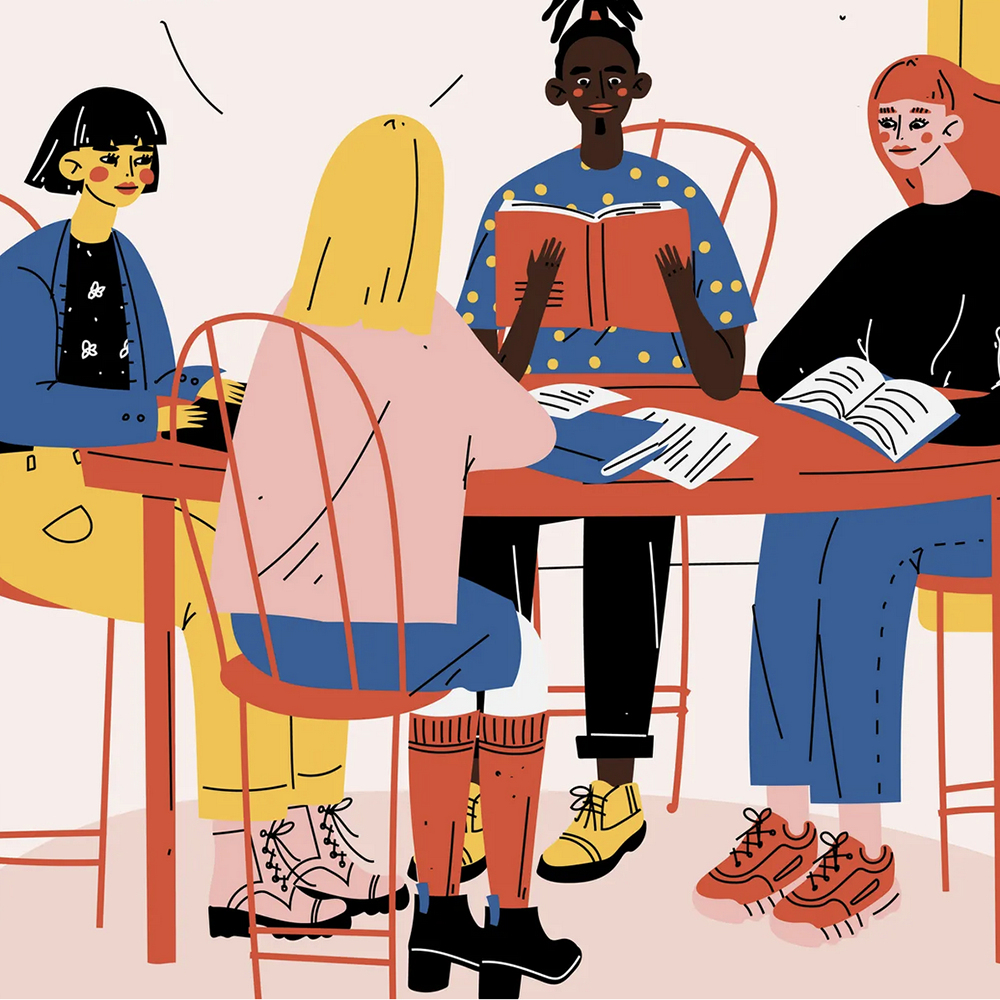
The course examines both contemporary canonical and less canonical women writers and the ways women are portrayed in twentieth and twenty-first century literature. How does women’s literature represent the experiences of those who identify as women and/or challenge conventional notions of gender and sexuality? We will explore how women writers think about gender roles, address various forms of oppression, and confront social and political issues.

Major Writers of World Lit in English
LIT 4244.001|Ma, C.|Cat 1|Term 2|Distance Learning|Online Live Lecture|T/R 1:15pm–4:25pm
This course examines some key works of world literature, highlighting diverse perspectives shaped by historical and imperial contexts. We will explore narratives as histories and geographies that influence our worldviews and challenge conventional ideas of “world,” analyzing texts that prompt a rethinking of traditional archetypes. Our journey will take us across continents, investigating aesthetic forms that are deeply local, material, and historically rooted. We will begin by exploring the political implications of “worlding” literature, then move on to ecological texts that trace the paths of empire and the cultural logic of late capitalism. We will also examine climate fictions that illuminate the interconnectedness of global ecologies and speculative fictions that disrupt false binaries such as inside and outside, self and other, and human and nature. Our storytellers will include Amitav Ghosh, Nnedi Okorafor, Emmi Itäranta, and Chen Qiufan.
Postcolonial Literature
LIT 4233.001|MacDonald, I.|Cat 1|Term 3|Distance Learning|Online Live Lecture|T/R 9:45am–12:55pm
Since the term "postcolonial" entered academic discourse en vigeur in the late 1980s, it has spurred numerous debates both inside and outside the academy. Does the "post-" in postcolonial refer, for example, to temporality, to the time after the formal end of European colonialism, or does it refer to a form of discourse, a resistance to the language and culture of Empire that may remain as prevalent today--if occupying a different costume--as during the era of the British Raj and the Scramble for Africa of 1885? This course will assess many of the central arguments concerning postcoloniality and put them into the context of literature written about and in nations which gained independence following the period of mass decolonization in the mid- to late twentieth century.
**************************

Major American Writers: 19th Century
AML 4311.001|Fox, R.|Cat 2|Term 2|Distance Learning|Online Live Lecture|W/F 11:30am–2:40pm
In this course, students will analyze important examples of nineteenth-century American poetry, prose, short and long fiction, by the likes of William Apess, Edgar Allan Poe, Zitkala-Sa, Sojourner Truth, and Frederick Douglass, in order to evaluate how their engagement with traditional literary themes of the period such as family, nation, and belonging have gendered and classed, among other, political implications. Participants will analyze imaginative renderings of loss, fear, and desire in relation to matters of race and labor in order to gain a thorough understanding of the ways in which power is manipulated and sustained. Course readings and activities will undermine perceptions of nineteenth-century American writing as unified in its purpose or goals, illuminating instead its texture, complexities, and contradictions.
American Literature from 1865
AML 2020.001|Hagood, T.|Cat 2|Term 2|Distance Learning|Fully Online Class
When you have finished reading the literature in this course, your grasp of our present world will be more profound than ever. The tropes that define practically every aspect of contemporary life aesthetically, socially, politically, economically, and linguistically were all shaped in the works of literature produced since the Civil War. From W. E. B. Du Bois and Booker Washington to Gertrude Stein and William Faulkner to the poets and comics of our moment, the literature of the United States since 1865 shows us how we have become who we are.
max of 2 courses (6 credits) can be in lower division for the entire major
Colonial & Early American Literature
AML 4213.001|Medina, D.|Cat 2 (pre-1800)|Term 3|Distance Learning|Online Live Lecture|T/R 1:15pm–4:25pm
This course surveys American literature from the 1600 to 1800. Readings begin with Native American narratives and Indigenous accounts of European arrival in the New World and end with American fiction and poetry written near the of end of the 18th century. In between, we’ll sample the rich and extensive multinational, multilingual, and multicultural American literature, considering how that literature imagines America—whether as home or as foreign territory, as indigenous, colonial, national, or imperial space. We will aim to read selected literary texts closely and carefully, and work toward understanding those texts within their historical and cultural contexts.
Science Fiction
LIT 3313.001|Taylor, T.|Cat 2|Term 2|Distance Learning|Fully Online Class
In this course we’ll explore the genre of science fiction as well as the field of science fiction studies. We’ll focus our studies on a breadth of Anglophone science fiction and pay particular attention to the way contemporary authors are reshaping how we view the sf genre. Our course readings will primarily be short stories, though we will also read 2-3 novels.
British Literature Since 1798
ENL 2022.002|Ulin, J.|Cat 2|Term 3|Distance Learning|Fully Online Class
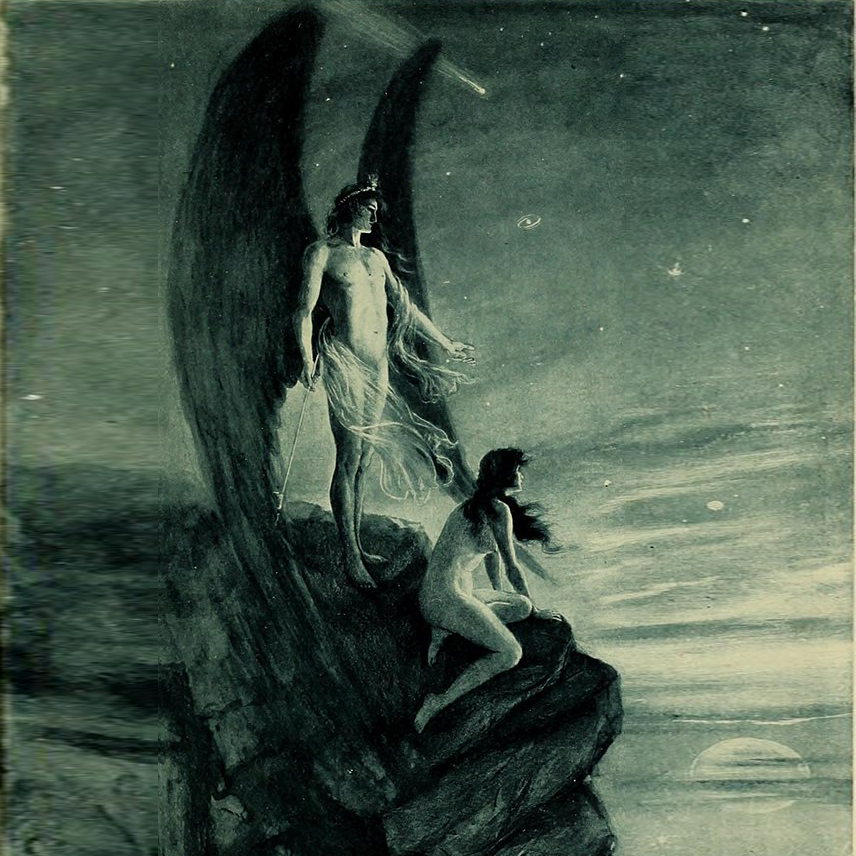
While yet a boy I sought for ghosts, and sped / Through many a listening chamber, cave and ruin, / And starlight wood, with fearful steps pursuing / Hopes of high talk with the departed dead.
—“Hymn to Intellectual Beauty,” P.B. Shelley
Major works, writers and movements of modern British literature with a focus on ghosts, the gothic, and the supernatural.
max of 2 courses (6 credits) can be in lower division for the entire major
Literary Genres
LIT 4001.001|Jones, S.|Cat 2|Term 3|Distance Learning|Fully Online Class
Is there a work or type of literature that you have always wanted to read, but you never had the opportunity to do so? This course takes a "choose your own adventure" approach in which each student can select any such work and analyze it in context of its genre conventions. Our first weeks together will define a wide range of genres and explore a variety of options for the course readings. Each subsequent week will be devoted to the works and genres that you, the students, select. Options include (but are not limited to) genres from: the four mythoi (comedy, romance, tragedy, and irony/satire), speculative fiction (fantasy, horror, sci-fi, etc.), visual narrative media (comics, film adaptation), and others (mystery, fairytales, mythology, parody, etc.).
21st Century Medieval Monstrosity
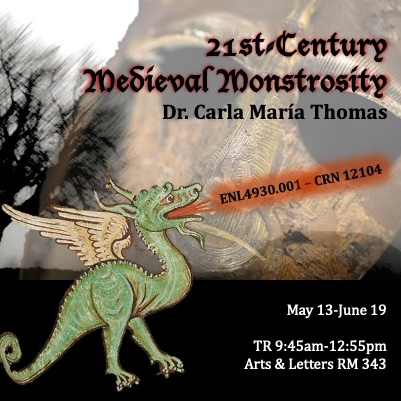
ENL 4930.001|Thomas, C.|Cat 2 (pre-1800)|Term 2|Boca Raton|In-Person|T/R 9:45am–12:55pm
21st-Century Medieval Monstrosity explores adaptations of medieval monstrosity in the late 20th and early 21st centuries by pairing medieval texts with modern literature, television, film, and games (tabletop and video). We will read Jeffrey Jerome Cohen's "Monster Culture (Seven Theses)" before diving into a variety of classical Arabic, Old English, and Middle English texts along with a Michael Crichton novel, an Inuit reimaging of Beowulf, films like The Green Knight, and games like Dungeons & Dragons, Skyrim, and more. Our class meetings will be filled with student-driven discussions, film viewings, and gaming to answer the question: what constitutes a monster or the monstrous, then and now?
British Novel: 18th Century
ENL 3112.001|W. Kelly|Cat 2 (pre-1800)|Term 2|Boca Raton|In-Person|T/R 4:45pm–7:55pm
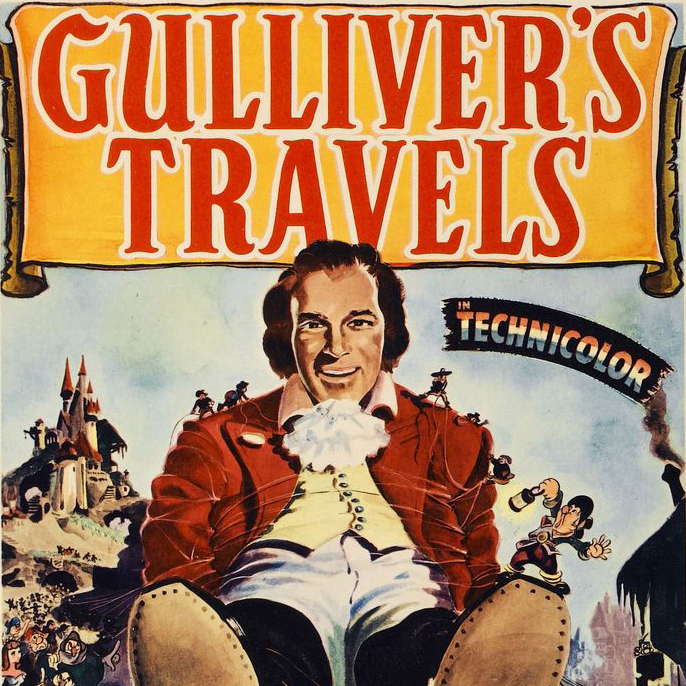
We'll read four short, delightful early novels: Robinson Crusoe, the first English novel; Gulliver's Travels, the satirical masterpiece; The Vicar of Wakefield, a sentimental novel; and The Castle of Otranto, the first Gothic novel. As we read them, we'll discuss connections to 18th Century history and the Enlightenment (as well as reactions to it).
*******************

Professional Writing
ENC 3213.001|Chasteen, N.|Cat 3|Term 3|Distance Learning|Fully Online Class
Professional writing is a vital skill for college students inside and outside of academics. This course will prepare students to write for professional settings with a heavy emphasis on practical application of skills, such as networking, writing, and collaborative assessment (peer review). Students will gain knowledge about their own professional goals and those of their peers.
Professional Writing
ENC 3213.002|Cohen, J.|Cat 3|Term 3|Distance Learning|Fully Online Class
ENC 3213: Professional Writing will teach students the basics of professional composition, which entails specific formatting requirements and stylistic nuances that vary from academic writing. This course will provide instruction on common types of professional documents, such as emails, formal reports, job application letters, résumés, and web-oriented materials. The course will also include instruction on conducting job searches, completing workplace research, designing appealing documents, and providing constructive peer feedback. Many assignments will have a connection to the student’s chosen career field.
Professional Writing
ENC 3213.003|Fox, P.|Cat 3|Term 3|Distance Learning|Fully Online Class
Building on writing experiences in previous writing classes, such as College Composition I & II, in this course, student will develop writing skills needed in the workplace. After targeting an audience, students will complete an array of assignments: memos, instructions, proposals, formal analytical reports, etc. Students will learn how to format pages, incorporate visuals into their writing, and present reports based on business writing standards.
Creative Writing
CRW 3010.001|
|Cat 3|Term 3|Boca Raton|In-Person|W/F 9:45am–12:55pm
Guidance and criticism for beginners in writing prose fiction and poetry.
Professional Writing
ENC 3213.004|Mason, J.|Cat 3|Term 2|Boca Raton|Mixed Online and Classroom|W/F 1:15pm–4:25pm

(Half Online / Half On-Campus: Class meets only on Fridays, 1:15-4:25pm. The rest of the week's material will be asynchronous online).
Writing as a professional entails learning the forms of writing—or genres—that professionals in the field commonly write. In this class, you will be introduced to the various types of and techniques for producing professional writing, including correspondence, proposals, reports, presentations, and other texts often found in business and professional communities. But more than this, being a professional means being able to read and write effectively in any professional situation. For that reason, this class will focus on reading and writing rhetorically—taking a rhetorical approach. In addition to practicing professional communication in situations similar to those found in the professions, students may also analyze and write about business issues, which will demand thoughtful analysis of content areas, organizational patterns, point of view, and of document layout and design.
Creative Writing
CRW 3010.002|McKay, R.|Cat 3|Term 1|Distance Learning|Fully Online Class
The writer Toni Morrison once said, “If there is a book that you want to read, but it hasn't been written yet, you must be the one to write it.” And, similarly, the poet Ezra Pound said, “Any work of art which is not a beginning, an invention, a discovery is of little worth.” The best kind of creative writing—poem, story, essay—comes when we can find fresh and unexpected ways to present language. Stories and poems are only as strong and fresh as the language they contain, and only through strength and originality of language we can achieve depth in our writing. In this course we will approach creative writing in several ways:
|
|
Creative Writing
CRW 3010.003|Oriogun, O.|Cat 3|Term 2|Boca Raton|Mixed Online and Classroom|W/F 1:15pm–4:25pm
(Half Online / Half On-Campus: Class meets only on Wednesdays, 1:15-4:25pm. The rest of the week's material will be asynchronous online).
In this class, we will be reading and crafting fiction and narrative non-fiction, paying special attention to how form and technique contribute to meaning. We’ll consider questions such as: What makes a story interesting? How do we develop an early vision into a finished work, through the process of revision? And how do the choices we make as writers shape what the reader experiences? Through studying poems, short stories and essays that employ particular elements of craft in service of the whole, we will acquire techniques for our own writing.
We will generate new works of fiction and non-fiction to be shared within the workshop space, provide thoughtful and generous written critique of peers’ work, complete weekly writing exercises, participate in discussion of weekly reading assignments, and attend public readings in the Ann Arbor literary community. The class will culminate in a portfolio of revised writing, new work, and a reflection letter. Since all writing is a gradual process of thinking and discovery, greater emphasis will be placed on the revision of your work.
Advanced Exposition
ENC 3310.001|Salisbury, L.|Cat 3|Term 2|Distance Learning|Fully Online Class
Advanced Exposition ENC 3310 focuses on the study and practice of writing by building on skills developed in lower-level composition courses. As a class, we will read and write about ideas, myths, and experiences of writing as well as engage with common discussions in writing studies. We will begin by exploring writing experiences in our own lives before considering current debates about writing. Through discussing, investigating, and writing about writing we will gain knowledge about how writing works to grow as stronger, more confident, and more rhetorically aware writers. This course is especially well-suited for English majors, Education majors, and students pursuing the Certificate in Professional and Technical Writing.