New Biomedical Engineering Faculty Member, Dr. Yue Liu
Thursday, Mar 19, 2026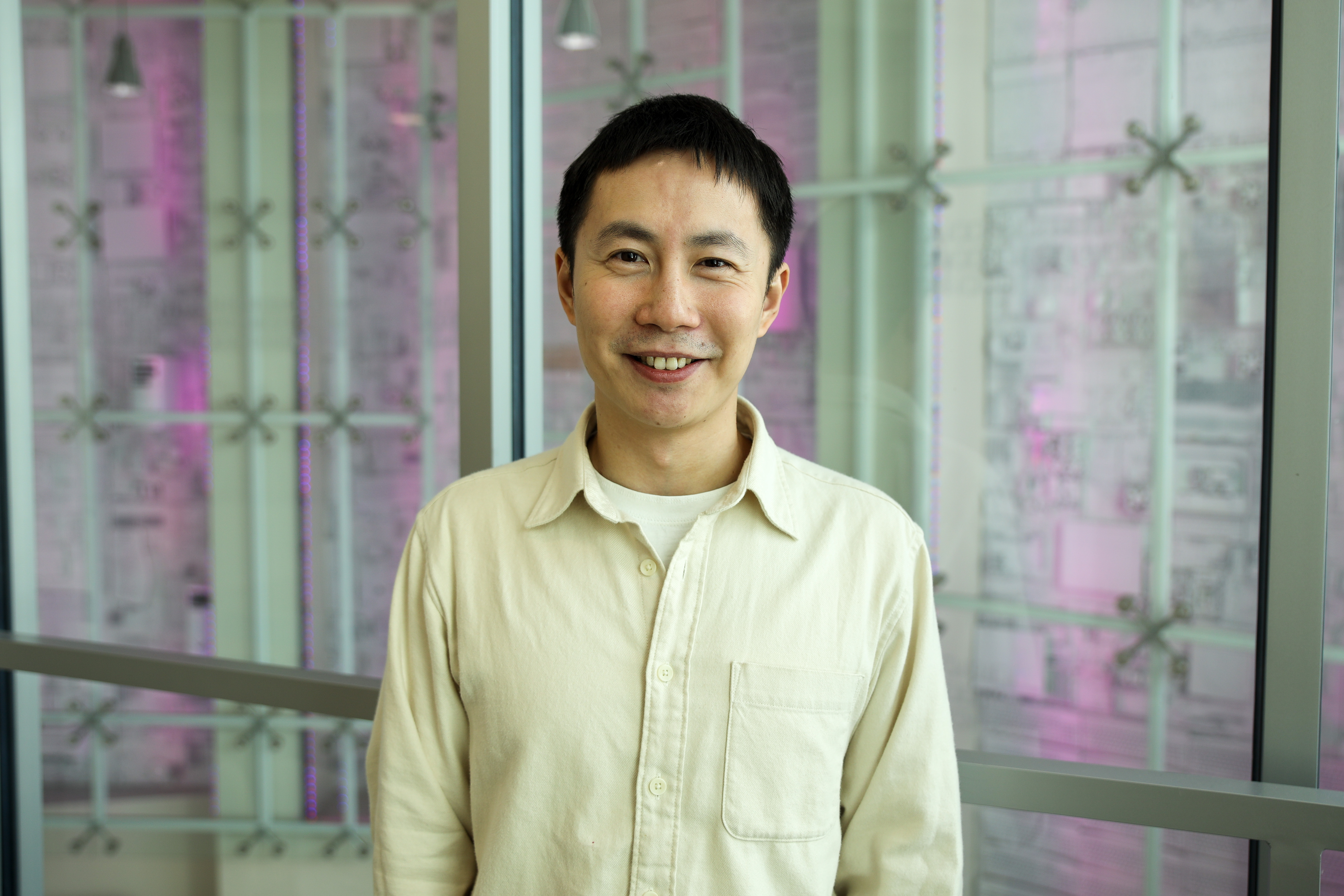
The FAU College of Engineering and Computer Science is strengthening its leadership at the intersection of neuroscience, computation, and intelligent engineering systems through a joint faculty appointment with the Stiles-Nicholson Brain Institute (SNBI), welcoming Yue Liu, Ph.D., as an assistant professor in the Department of Biomedical Engineering.
Liu’s research focuses on understanding how neural circuits enable flexible thinking, abstract reasoning, and problem-solving — core components of human intelligence. Trained initially as a physicist, he brings a rigorous quantitative perspective to one of neuroscience’s most compelling challenges: how the brain generalizes from limited experience to adapt to new and unfamiliar situations.
He earned his bachelor’s degree from Fudan University in Shanghai, China, and his Ph.D. from Boston University, where his research shifted toward computational neuroscience. His doctoral work examined how neural circuits in the hippocampus generate sequential activity patterns that remain consistent across different timescales — a mechanism believed to support how the brain encodes and recalls experiences over seconds, minutes, and longer intervals.
Liu later completed postdoctoral training at New York University in the laboratory of Xiao-Jing Wang, Ph.D., where he developed biologically grounded neural circuit models to investigate cognitive flexibility, the ability to switch between tasks, and apply learned knowledge in new contexts.
At FAU, Liu’s laboratory will focus on uncovering the neural circuit basis of fluid intelligence — the brain’s capacity to reason abstractly and solve novel problems. His team will develop biologically realistic neural network models that reflect how brain circuits process information through parallel, recurrent, and adaptive dynamics. By incorporating features such as cell-type diversity, neuromodulation, and synaptic plasticity, his research aims to reveal how flexible behavior emerges from circuit-level interactions.
Liu frames his work around a central observation: “Humans and some other animals are not only good at pattern recognition, but also good at abstract reasoning and generalization — the things that classical symbolic AI are good at. And all we use to solve these problems is our brain — a neural network, not a symbolic system.” Guided by this perspective, he says, “I will strive to identify general principles - mathematical or conceptual - that explain how flexible cognition emerges from neural circuits, beyond any single behavioral task or network model.”
By bridging neuroscience, computational modeling, and biomedical engineering, Liu’s work strengthens the College’s growing research ecosystem in intelligent systems and brain-inspired technologies. His appointment further advances FAU’s commitment to developing transformative, engineering-driven solutions that deepen our understanding of the brain and inform the next generation of adaptive technologies.
"Dr. Liu is our second joint hire between the Department of Biomedical Engineering and SNBI in the area of Computational Neuroscience and Engineering," said Javad Hashemi, PhD, Chair, FAU's Department of Biomedical Engineering. "We are now searching for a third senior position in the same area to form a new research cluster at FAU that will make the institution a leader in the field for the foreseeable future."