C. elegans
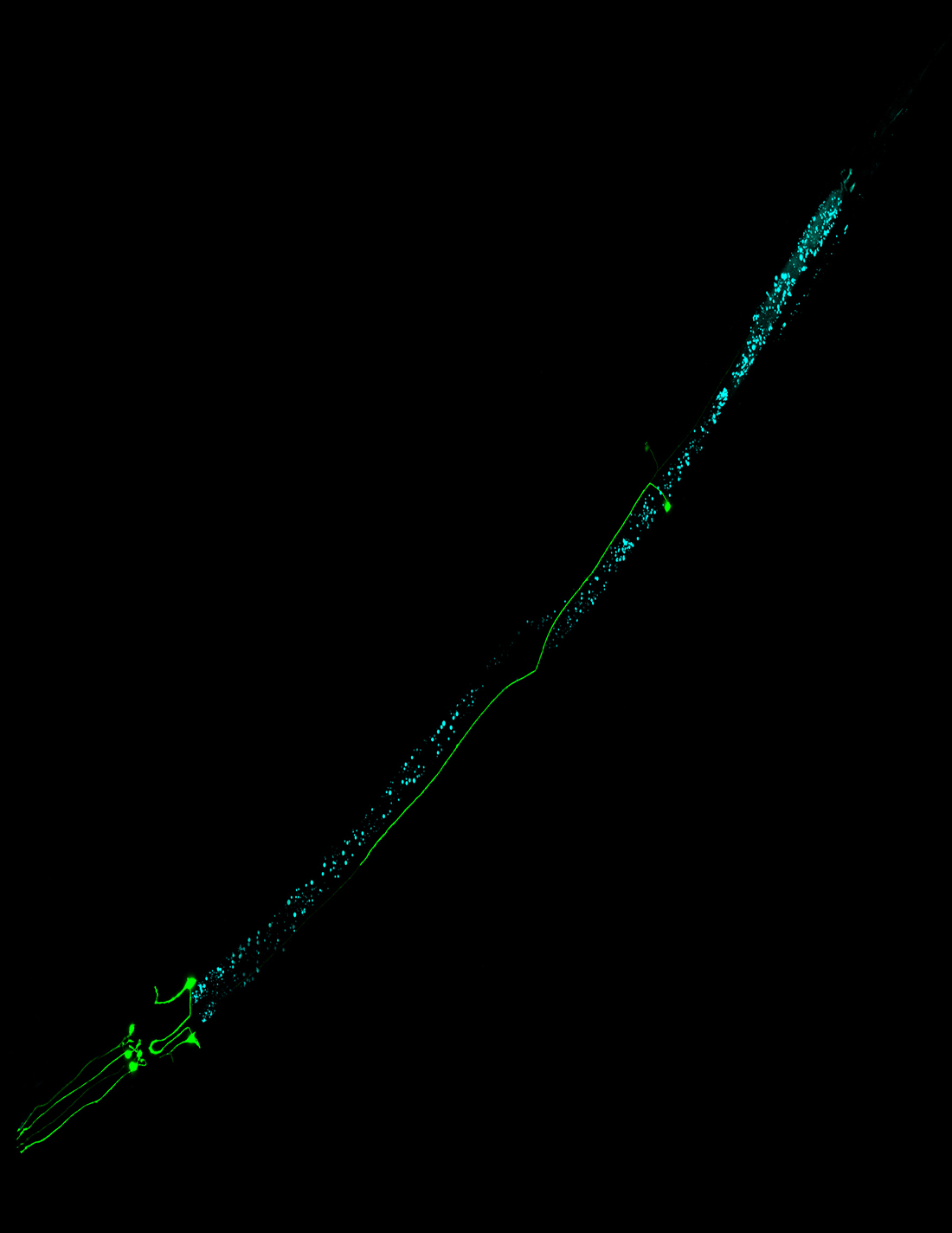
Dopamine Neurons and Copper (I) Granules in C. elegans - The Blakely lab was the first to identify and clone a gene in the nematode C. elegans termed swip-10. Studies indicate that the human version of swip-10 is a risk factor for Alzheimer's disease, though a mechanism has not been established. Recently accepted work (Rodriguez et al, PNAS 2024 in press) demonstrates the basis for neurodegeneration with loss of swip-10 is the ability of the swip-10 gene produce to maintain normal levels of cuprous copper, Cu(I). Dopamine neurons (green) were found to be very sensitive to loss of Cu(I), normally stored in granules (cyan) in the worm intestine. In a swip-10 mutant, Rodriguez at al show that the insensitivity of Cu(I) storage granules is greatly diminished accompanying the death of dopamine neurons. Dietary or pharmacological elevation of Cu(I) in swip-10 mutants prevented dopamine neurodegeneration. The early death of dopamine neurons is a diagnostic feature of Parkinson's disease, suggesting that a MBLAC1 reduction may impact risk for neurodenerative disorders beyond Alzheimer's disease.
Mentor: Randy D. Blakely, Ph.D., Stiles-Nicholson Brain Institute