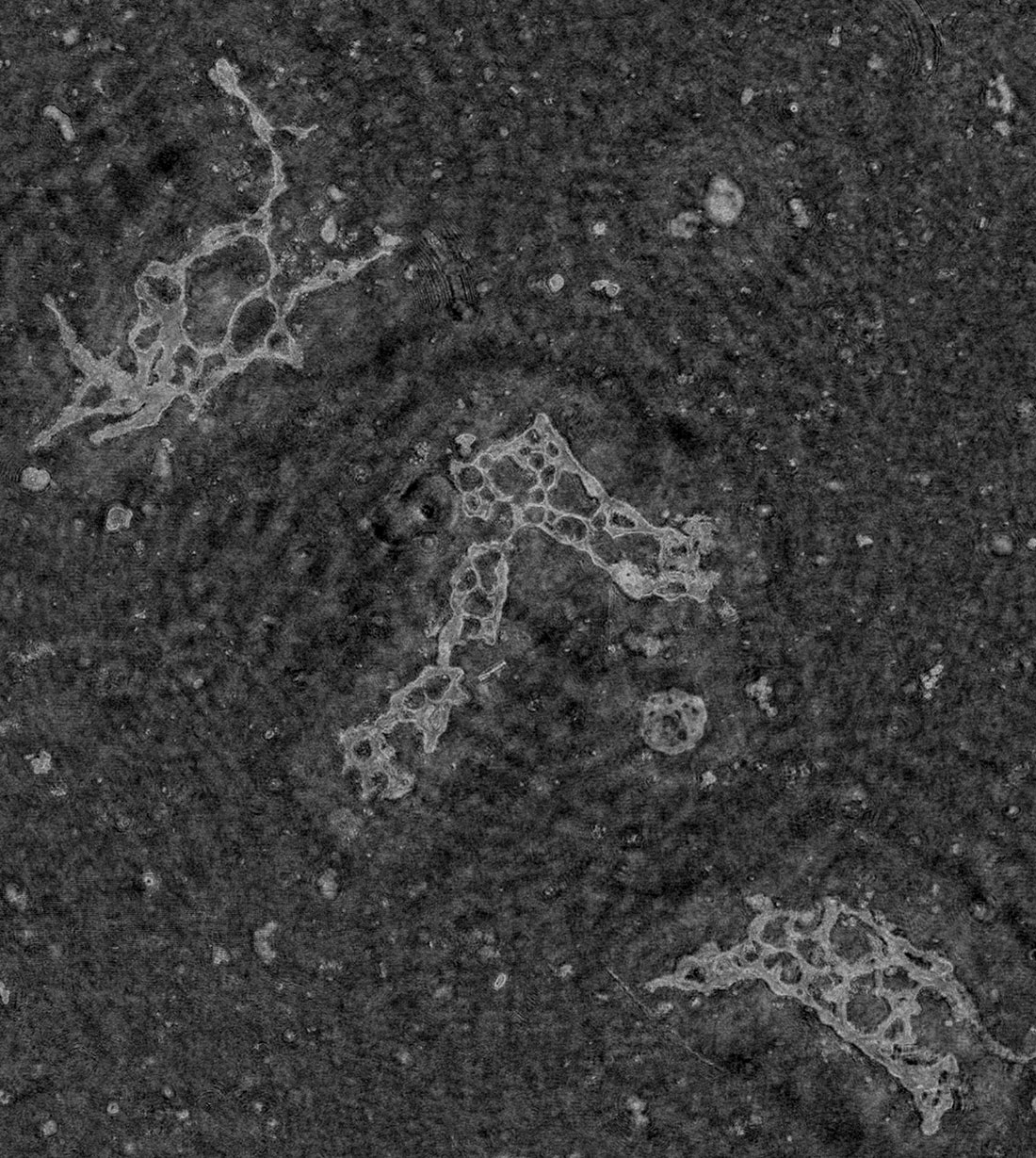
Cyanobacterial Blooms
In Lake Erie - Microcystis aeruginosa, a type of freshwater cyanobacteria, is notorious for forming harmful algal blooms with significant ecological and economic impacts. These blooms are the most common toxic cyanobacterial events in freshwater systems, producing microcystins, potent toxins that can severely damage water quality. Microcystis colonies, which range in size from 40 micrometers (μm) to several millimeters (mm) depending on species and morphology, pose serious risks. The microcystins they produce can cause severe liver damage in animals, including humans, if ingested, potentially leading to serious health issues or even death. Additionally, large blooms deplete oxygen levels in the water, threatening aquatic life and disrupting the ecosystem's balance. The original image was captured using the instrument AUTOHOLO, developed by the Florida Atlantic University research team. Post-processing techniques were applied to produce a focused image. This image intricately showcases cyanobacterial colonies, enabling us to better characterize their undisturbed colony morphology in the natural habitat.