Summer 2026: Upper Division English Courses
Required
Literary Theory
LIT 3213.001|MacDonald|Req.|Second Half|Distance|Online Live Lecture|M/W 6:30pm-9:40pm
This survey course will introduce students to the academic discourse surrounding science fiction in the academy. Focusing on the figure of the alien, students will read novels and short stories by authors including H.G. Wells, Stansilaw Lem, Nnedi Okorafor, J. Tiptree, and Nalo Hopkinson working to develop interpretations of what the extra-terrestrial represents, both metaphorically and symbolically, as it recurs in science fiction contexts.
Professional & Creative Writing Concentration students must take ENG 3822 or LIT 3213; required for all other English majors
Intro to Literary Studies
ENG 3822.002|Taylor|Req.|First Half|Distance|Fully Online
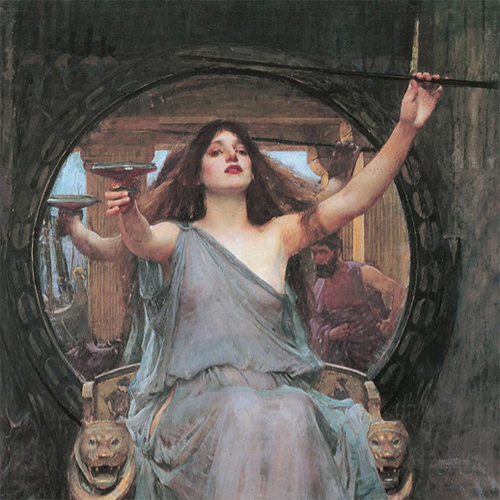
Together, we’ll delve into myths and fairytales from around the world as well as retellings and adaptations of those stories. We’ll look at a range of myths and fairytales sources, from stories many are familiar with like Snow White or the story of Circe and Odysseus, to stories that may be less familiar like that of the Maya Hero Twins or the Celtic Tuatha Dé Danann. We will also compare contemporary adaptations of these myths and fairytales across time periods from Victorian era poetry to contemporary science fiction and fantasy. Most of our readings will be short stories and poetry, but we will also read three novels: Madeline Miller’s Circe, Silvia Moreno-Garcia’s Gods of Jade and Shadow, and Mary Shelley’s Frankenstein.
Professional & Creative Writing Concentration students must take ENG 3822 or LIT 3213; required for all other English majors
Category 1
Black Literatures
LIT 4355.001|Dagbovie-Mullins|Cat 1|Second Half|Distance|Online Live Lecture|T/R 6:30pm-9:40pm
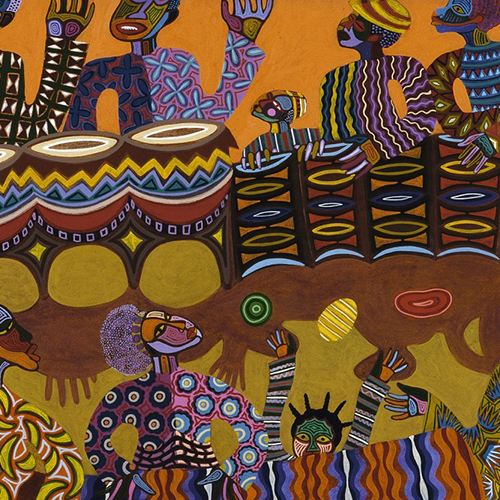
This course explores literature from the African diaspora; we read texts from Nigeria, Kenya, Haiti, and the U.S. (among other countries). A range of questions will guide our discussion including: What constitutes the African diaspora? What is the relationship between diaspora and nation? What are the connections between the African diasporas in the construction of a black identity? Upon completion of this course, students should be able to: understand what constitutes literature of the African diaspora while recognizing the challenges in studying the African diaspora, understand the impact of the legacies of slavery and colonialism on the African diasporic community, pinpoint “Africanisms” in the literary expressions of African diasporic writers, and engage in comparative literary analysis.
Florida Writers
AML 3265.001|Hagood|Cat 1|First Half|Distance|Fully Online
This course focuses on writers who have written about Florida, from the Everglades to the scrub brush to the Keys to south Florida’s Latinx culture. Along with learning about these writer’s lives and reading their work, we will consider the ways they refract culture in the state through the lens of gender, paying close attention to their stylistic approaches and the major themes that drive their respective fictional visions. Writers will include Zora Neale Hurston, Ernest Hemingway, and Karen Russell.
Category 2
Literature of Adolescence
LIT 3333.001|Fox, R.|Cat 2|First Half|Distance|Online Live Lecture|M/W 6:30pm-9:40pm
The aim of this course is to explore representations of adolescence, in literary texts classified as “YA” and texts that take up adolescence as theme. Participants will assess texts (drawn primarily from Black and Latinx cultural contexts) to examine conditions of adolescence and their effects. We will uncover how adolescence intertwines with matters of friendship, sexuality, and violence, as well as ways in which it involves processes of nation, including immigration and assimilation. We will also interrogate renderings of young adulthood as innocent, ignorant, even disposable. Other questions orienting this course include: How is adolescence evoked by the body? How do devices, such as flashback, mediate adolescent longings? How do religion and education regulate adolescent self-expression? In what ways does class privilege inform naiveté? In what respects do gender and race influence one’s upbringing? How might those circumstances be reimagined to alternate ends?
Literature and Environment
LIT 4434.001|Ma|Cat 2|First Half|Distance|Fully Online
This course explores how contemporary literature engages the ecological crises of our time, including climate change, pollution, resource depletion, environmental injustice, and the global systems that shape them. Through short fiction, novels, and critical theory, students will examine how writers imagine environmental futures, narrate planetary catastrophe, and rethink the relationship between humans, technology, labor, and the nonhuman world.
American Literature to 1865
AML 2010.001|Medina|Cat 2|First Half|Distance|Online Live Lecture|T/R 6:30pm-9:40pm
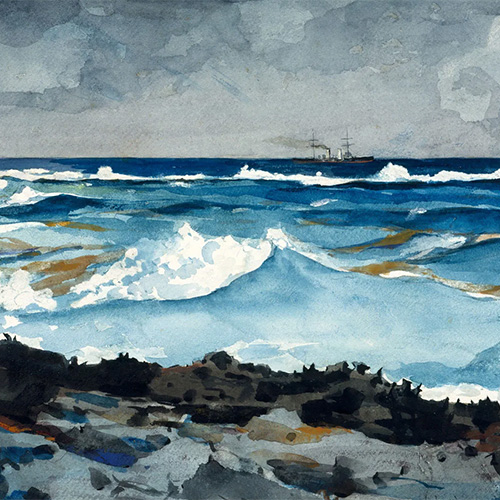
This course surveys American literature from the Pre-Colonial period to the Civil War. Throughout the course, we examine literature from early America to better understand American literary and cultural legacies. Our readings will begin with early accounts of European arrival in the New World and will end with fiction and poetry written before and during the years of the American Civil War. In between, we’ll sample the rich and extensive multinational, multilingual, and multicultural American literature, considering how that literature imagines America.
Medieval Literature
ENL 4210.001|Thomas|Cat 2|Second Half|Distance|Fully Online
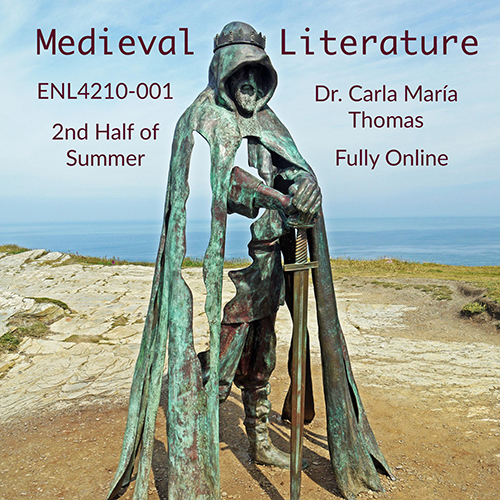
References and stories of King Arthur and his court have existed since around 500 CE with Gildas’s Latin The Ruin of Britain and then references to an “Arthur” figure in the early 7th-century Welsh Y Gododdin with more fully developed stories having been part of Welsh oral culture as early as 1000 CE. Welsh bards carried their stories beyond the borders of Wales, bringing Arthuriana to England, France, Iceland, the Netherlands, Poland, Germany, Italy (by way of Hebrew!) and more! Join the class for a quick tour of such tales!
British Literature Since 1798
ENL 2022.002|Ulin|Cat 2|Second Half|Distance|Fully Online
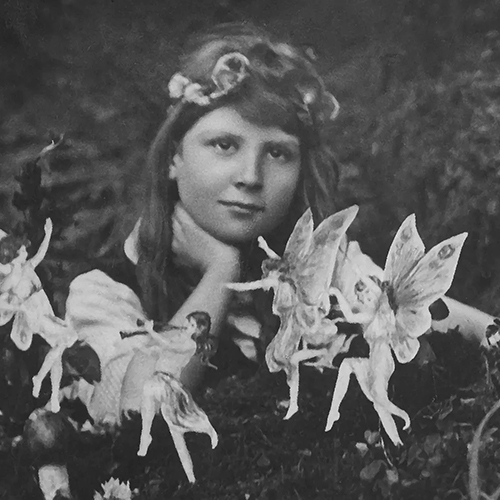
While yet a boy I sought for ghosts, and sped
Through many a listening chamber, cave and ruin,
And starlight wood, with fearful steps pursuing
Hopes of high talk with the departed dead.
—“Hymn to Intellectual Beauty,” P.B. Shelley
Major works, writers and movements of modern British and Irish literature with a focus on ghosts, the gothic, and the supernatural.
max of 2 courses (6 credits) can be in lower division for the entire major
Category 3
Advanced Exposition
ENC 3310.001|Barrios|Cat 3|First Half|Distance|Fully Online
Writing and the AI Turn: Tools, Ethics, and Critical Literacy. ENC 3310 develops advanced writing skills with an emphasis on revision, research-supported argument, multimodal composition, and professional writing habits. In this section, we treat AI not as a shortcut, but as a defining feature of contemporary writing environments.
This course introduces students to large language models (LLMs) and generative AI tools as writing technologies. Students will learn what generative AI is, how it works, and how to use it responsibly in academic and professional contexts. The course emphasizes prompt writing (“prompt engineering”), tool fluency, ethical writing practices, citation and documentation of AI use, and critical evaluation of AI outputs (bias, hallucination, misinformation, and persuasive manipulation).
Creative Writing
CRW 3010.002|McKay|Cat 3|Full Term|Distance|Fully Online
The writer Toni Morrison once said, “If there is a book that you want to read, but it hasn't been written yet, you must be the one to write it.” And, similarly, the poet Ezra Pound said, “Any work of art which is not a beginning, an invention, a discovery is of little worth.” The best kind of creative writing—poem, story, essay—comes when we can find fresh and unexpected ways to present language. Stories and poems are only as strong and fresh as the language they contain, and only through strength and originality of language we can achieve depth in our writing. In this course we will approach creative writing in several ways: Through exercises designed to help you find new approaches to writing prose and poetry; By reading and discussing works of fiction, creative nonfiction, and poetry; By spending significant time on writing as well as on the revision process; By developing your critical eye and ear as you read and critique each other’s work.
Creative Writing
CRW 3010.003|Oriogun|Cat 3|Second Half|Distance|Fully Online
In this class, we will be reading and crafting fiction and narrative non-fiction, paying special attention to how form and technique contribute to meaning. We’ll consider questions such as: What makes a story interesting? How do we develop an early vision into a finished work, through the process of revision? And how do the choices we make as writers shape what the reader experiences?
Through studying poems, short stories and essays that employ particular elements of craft in service of the whole, we will acquire techniques for our own writing. The class will culminate in a portfolio of revised writing, and a reflection letter. Since all writing is a gradual process of thinking and discovery, greater emphasis will be placed on the revision of your work.
Professional Writing
ENC 3213.001|Chasteen|Cat 3|Second Half|Distance|Fully Online
Professional writing is a vital skill for college students inside and outside of academics. This course will prepare students to write for professional settings with a heavy emphasis on practical application of skills, such as networking, writing, and collaborative assessment (peer review). Students will gain knowledge about their own professional goals and those of their peers.
Required for Professional & Creative Writing concentration students; Cat 3 for all other English majors
Professional Writing
ENC 3213.003|<TBA|Cat 3|Second Half|Distance|Fully Online
TBA
Required for Professional & Creative Writing concentration students; Cat 3 for all other English majors
Professional Writing
ENC 3213.002|Fox, P. |Cat 3|First Half|Distance|Fully Online
Building on writing experiences in previous writing classes, such as College Composition I & II, in this course, student will develop writing skills needed in the workplace. After targeting an audience, students will complete an array of assignments: memos, instructions, proposals, formal analytical reports, etc. Students will learn how to format pages, incorporate visuals into their writing, and present reports based on business writing standards.
Required for Professional & Creative Writing concentration students; Cat 3 for all other English majors
Professional Writing
ENC 3213.004|Frost|Cat 3|First Half|Boca Raton|In-Person|T/R 9:45am-12:55pm
This course teaches students how to communicate strategically in professional environments. Success in professional writing depends on a writer's ability to achieve an objective by effectively communicating information to a target audience. Therefore, students will learn how to assess readers' expectations and motivations, conduct field-specific research, organize information logically, design documents, and convey their ideas in a clear, rhetorically impactful manner.
Required for Professional & Creative Writing concentration students; Cat 3 for all other English majors