Fall 2026: Upper Division English Courses
REQUIRED
Literary Theory
LIT 3213.002|Hagood|Req.|Distance|Fully Online
Literary theory is a fundamental aspect of literary studies and criticism. Theory provides the abstract modeling that guides interpretation of primary literary texts and thus is crucial to successful work as an English major. This course explores the development of literary theory from the New Criticism to the major movements of the present moment.
Professional & Creative Writing Concentration students must take ENG 3822 or LIT 3213; required for all other English majors
Intro to Literary Studies
ENG 3822.004|Ma|Req.|Boca|In-Person|W/F 2:00pm–3:20pm
This course serves as an essential gateway for English majors, preparing you for the field of literary studies. You will explore three key genres: nonfiction, fiction, and poetry, while also engaging with important literary concepts. Throughout the course, we will emphasize close textual analysis and foundational research skills. By the end of the course, you will have mastered essential critical terminology, explored various theoretical approaches, and become proficient in research techniques. You will apply these skills to closely read and analyze primary literary works across all three genres.
Professional & Creative Writing Concentration students must take ENG 3822 or LIT 3213; required for all other English majors
Literary Theory
LIT 3213.003|Lettman|Req.|Distance|Online Live Lecture|T/R 2:00pm–3:20pm
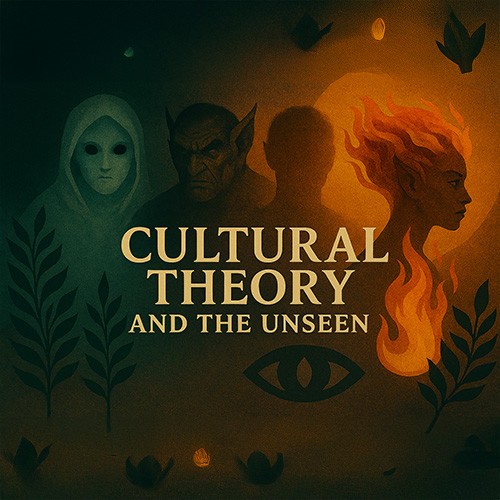
Focusing on Cultural Theory and the Unseen, this class introduces students to major theoretical frameworks that show how cultural texts reveal what lies beneath everyday life. Drawing on thinkers such as Fanon, Lacan, Wynter, Spivak, Sharpe, Hall, Gramsci, Butler, Césaire, and Haraway, the course examines how theory illuminates the structures that shape perception, meaning, and the formation of the self. Four guiding concepts anchor our analysis: the ghost, the monstrous, the invisible, and the uncanny. Each provides a way to explore lingering histories, disavowed forces, unsettling returns, and disruptions of the familiar that organize cultural experience. Through close reading and analytical writing, students will consider how theory makes hidden frameworks legible and how cultural forms render these forces perceptible. By the end, students will have a strong foundation in cultural theory and interpretive tools for recognizing how the unseen shapes everyday experience.
Professional & Creative Writing Concentration students must take ENG 3822 or LIT 3213; required for all other English majors
CATEGORY 1
Women and Literature
LIT 4383.002|Dagbovie-Mullins|Cat 1|Boca|In-Person|T/R 12:30pm–1:50pm
The course examines both contemporary canonical and less canonical women writers and the ways women are portrayed in twentieth and twenty-first century literature. How does women’s literature represent the diverse experiences of those who identify as women and/or challenge conventional notions of gender and sexuality? We will explore how women writers think about gender roles, address various forms of oppression, and confront social and political issues. The course readings are authored by women writers with different social, racial, and geographic roots and thus we will pay close attention to how women’s writing is conditioned by race, class, ethnicity, nationality, religion, and sexuality.
Asian Literature in English
LIT 4832.001|Ma|Cat 1|Boca|In-Person|W/F 12:30pm–1:50pm
This course examines both Asian literatures in English and in English translation. We will interpret and write about contemporary Asian literary works within their historical, social, and cultural contexts, along with relevant critical and theoretical readings. Topics of discussion will include globalization, migrancy, and environmentalism. Texts may include examples from China, Hong Kong, India, and other Asian nations.
Latinx Speculative Fiction
LIT 4930.001|Taylor|Cat 1|Boca|In-Person|W/F 2:00pm–3:20pm
This course will focus on Latinx speculative fiction, particularly fantasy and science fiction. We will also consider Latinx speculation in film and music. We’ll read recent Latinx science fiction and fantasy literature to discuss how these authors are reshaping the genres. We will also consider the way the Latinx speculative has inspired the emerging subgenre Latinx Futurisms and its intersections with Afro, Indigenous, and Caribbean Futurisms. Latinx Futurist creators use science fictional thinking to showcase that, even in the face of the apocalypse, we can engage in science fictional thinking to build a better tomorrow, to heal and rebuild, to look towards a more collaborative, collective way of being in the world. Latinx speculative creators whose work will consider includes writers such as Silvia Moreno-Garcia, E.G. Condé, & Nalo Hopkinson; filmmakers such as Alex Rivera, Jorge R. Gutiérrez, & Robert Rodriguez; as well as musicians such as Cardi B, Princess Nokia, Ibeyi, & more!
Irish Literature
LIT 3184.001|Ulin|Cat 1|Distance|Online Live Lecture|W 7:10pm–10:00pm
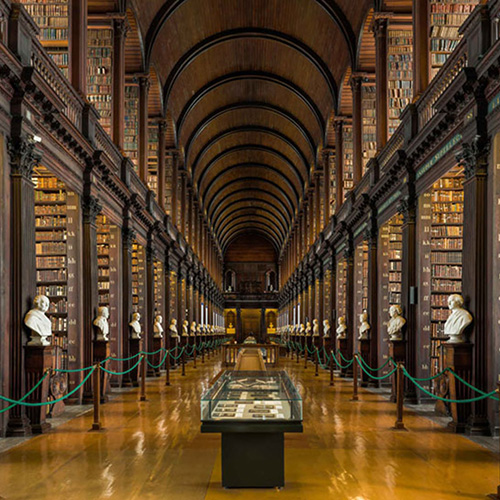
An exploration of the developments of the Irish literary tradition. Selections may include Irish language literature in translation, folklore, fiction, poetry and drama from writers such as Merriman, Swift, Joyce, Yeats, Bowen, Beckett, Heaney, Boland and Ni Dhomhnaill.
CATEGORY 2
17th Century Literature
ENL 4221.001|Chenovick|Cat 2|Boca|Mixed Online & Classroom|M 12:30pm–1:50pm
The seventeenth century in England was a time of tremendous upheaval and vibrant and varied literary output. The “scientific revolutions” of the era laid out early blueprints for what we know as “scientific method,” while European exploration of the Americas seemed to open up new worlds promising untold riches even as they resulted in problematic and violent encounters. In England, there were political revolutions and religious turmoil, while in in the domestic sphere the roles of the sexes were hotly debated. This course will examine the impact of these forces on the poetry, prose, and drama of the period, exploring work by the stunning so-called “metaphysical” poets Donne, Herbert, and Crashaw, political and religious writing by women, plays by Tom Ford and Aphra Behn, and selected travel writings, memoirs, and proto-science fiction texts.
The Art of Toni Morrison
AML 4930.001|Dagbovie-Mullins|Cat 2|Boca|In-Person|T/R 11:00am–12:20pm
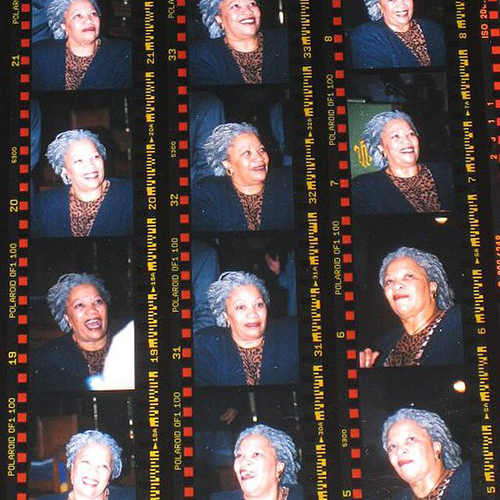
Toni Morrison (1931-2019) has published eleven novels, a book of literary criticism, several children’s books, various essays, and other writings (including plays, poetry, libretto). She won the Pulitzer Prize for Fiction and is the first African American woman to receive the Nobel Prize for Literature. This course will examine Morrison’s exploration of the black experience in the U.S. (and, in Tar Baby, abroad). We will pay close attention to recurring ideas, themes, and images that animate Morrison’s impressive body of work. We will also consider Morrison’s role as an editor, children’s book author, and public intellectual. Upon successful completion of this course, students should be able to 1) analyze Morrison’s fiction and non-fiction, strengthening their critical thinking and writing skills and 2) identify important issues and themes in Morrison’s oeuvre.
Literature of the South
AML 3263.001|Hagood|Cat 2|Distance|Fully Online
Few regions of the United States are as distinct, haunted, controversial, and continually impactful as the South. On one hand, it has been and continues to be thought of as a place of romance, escape, and beauty for people fascinated with the glamour of the plantation to the appeal of southern accents, food, and folkways to the attractions for tourists throughout the Sunbelt. One the other hand, for many people the region conjures up a history of vexed trafficking in extractive and exploitative global economic structures; hostility and violence driven by racism, mysogyny, and other forms of prejudice; and the potential of threat to the very union of the nation. An understanding of the South's culture, history, and literature are crucial to understanding the country. In this course, we will undertake an overview of this region's writing, from its beginnings to the present day. Along the way, we will read some of the greatest, and most painful, writing this country has produced, including Frederick Douglass, William Faulkner, Flannery O'Connor, and Tennessee Williams.
British Romanticism
ENL 4243.001|Kocher|Cat 2|Boca|In-Person|W/F 12:30pm–1:50pm
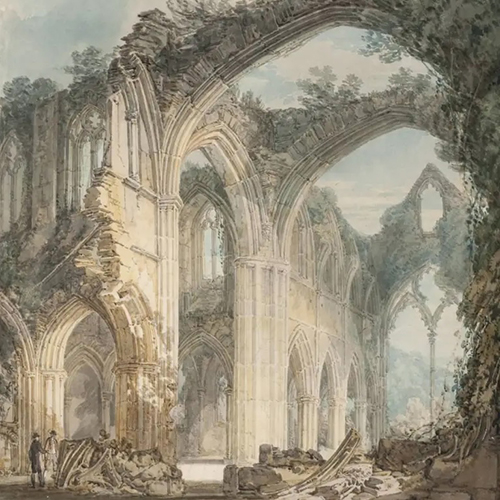
This course attends to the literary and political movements associated with British Romanticism during the late eighteenth- and early nineteenth-centuries. In addition to reading poetry and prose from the period, we will discuss the ways in which cultural upheaval – including the American and French Revolutions, the transatlantic slave trade, and industrialization – influenced literature and vice versa. Assignments will include two short papers, an article presentation, journal entries, and the maintenance of a commonplace book. We will discuss writing by Wordsworth, Coleridge, Keats, Cugoano, Prince, Austen, Byron, Shelley, and others.
Fairy Tales
LIT 4001.001|Lettman|Cat 2|Distance|Online Live Lecture|T/R 12:30pm–1:50pm
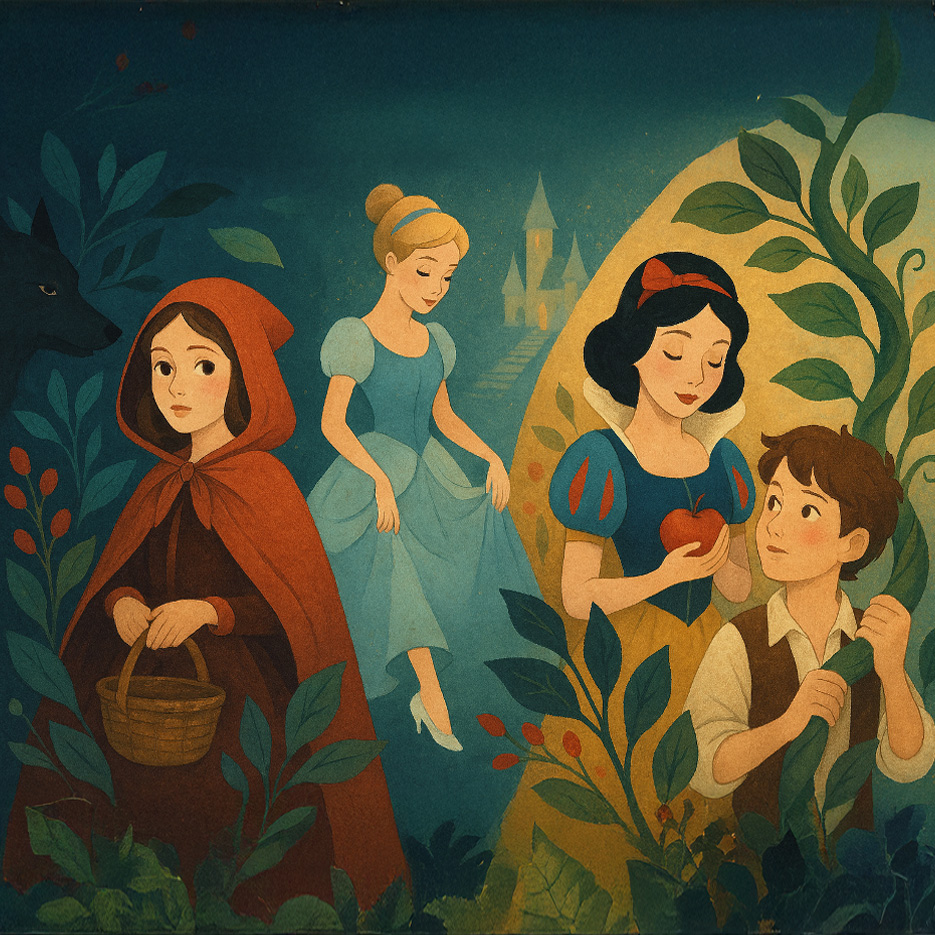
We'll explore the familiar, playful, magical, and enchanting world of fairy tales—Little Red Riding Hood, Snow White, Beauty and the Beast, Cinderella, Jack and the Beanstalk, and more—while uncovering the hidden cultural codes that shape each version. Moving from eighteenth century origins to global, contemporary rewritings, the course traces how these wonder tales evolve across time and place, revealing shifting ideas about beauty, danger, class mobility, gender expectation, and the politics of “happily ever after.” Because the stories are instantly recognizable, they offer the perfect ground for developing interpretive skills: you will learn to read beneath their surface charm to discover what each retelling exposes about the society that produced it. Through guided activities and weekly Canvas reflections, you will experience the pleasure of rediscovering tales you thought you knew—and see why fairy tales remain powerful lenses for understanding today’s cultural debates.
Modern Drama
LIT 3043.001|Ulin|Cat 2|Boca|In-Person|W 4:00pm–6:50pm
This course will explore works of modern drama beginning with Ibsen and ending with O'Neill. We will consider how to interpret a work of dramatic literature as well as what is involved in moving from the page to the stage. There will be opportunities to present staged scenes in class, to meet with local theatre professionals, and to consider writing drama for public performance. In the following semester, Contemporary Drama will cover O'Neill through the present. This course welcomes students interested in theatre and in writing for film and television.
New Testament
LIT 3374.002|Lindbeck|Cat 2|Distance|Online Live Lecture|T/R 2:00pm–3:20pm
Catalog Course Description: An historical and literary approach to the Bible text and the methods modern scholars use to understand it. Covers the content and historical setting of the New Testament in Jewish and Greco-Roman culture, as well as the style and genre of different books.
Honors Seminar: The Nonhuman
ENG 4932.001|Miller|Cat 2|Boca|In-Person|F 2:00pm–4:50pm
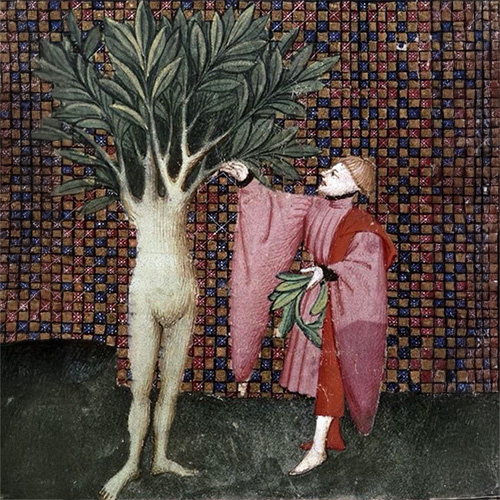
In this first half of the English Honors sequence, we will study narratives that think through relationships between the human and the nonhuman world. How have plants, animals, monsters, artificial intelligences, and more occupied the human imagination, and led us to think differently? How have literary texts attempted to imagine other ways of being and other forms of existence beyond what we know? As we consider our course texts, we will think about what it takes to develop an argument about works of literature both old and new with trips to our Special Collections and archives here at FAU and deep engagement with online resources and databases. The course will encourage interdisciplinary approaches involving for example film, television, music, or games. The texts we will read include Richard Powers’s The Overstory; Han Kang’s The Vegetarian; Ursula K. Le Guin’s The Word for World Is Forest; Beowulf; Rafaella Marcus’s play Sap; and others.
Games & Play in Medieval Literature
ENL 4930.001|Miller|Cat 2|Boca|In-Person|W/F 9:30am–10:50am
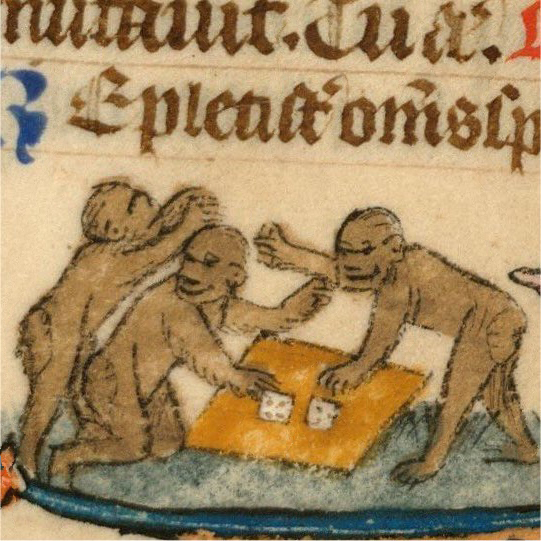
In contrast to popular depictions of the Middle Ages as an era of drab and dull suffering, games and other forms of play flourished across Western Europe: contemporary games such as chess, backgammon, and playing cards began to develop into their modern forms during the period. In this course, we will read a broad survey of medieval literature -- from the Old English heroic poem Beowulf to the Arthurian romance Sir Gawain and the Green Knight to selections from Chaucer’s Canterbury Tales -- but with an emphasis on how these texts engage with games, gaming, and play, including various kinds of medieval contests, competitions, sports, entertainments, and even ritualized insult exchanges, a premodern analogue of the rap battle. We’ll also be asking some simultaneously serious and playful questions: did 15th-century authors write Chaucer fan fiction, and can Choose Your Own Adventure novels tell us anything about Chaucer, and vice versa?
Science Fiction
LIT 3313.001|Miller|Cat 2|Boca|In-Person|W/F 11:00am–12:20pm
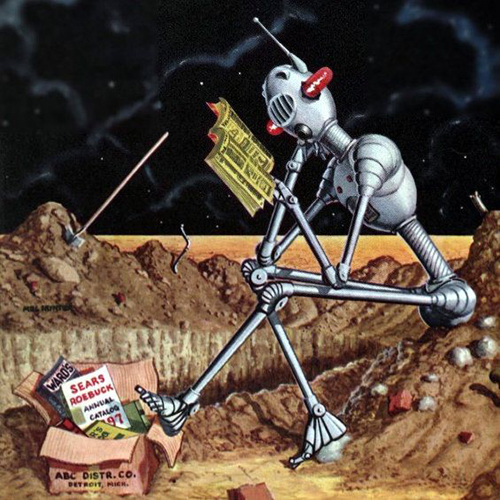
Science and storytelling represent two of the most fundamental tools that human beings use to understand ourselves and our place in the universe. Science fiction relies on both to ask questions such as the following: What does it mean to be human? What obligations might we have to other beings and to our planet? What do life and death mean, biologically, spiritually, or otherwise? What does it mean and what comes next, now that we have the power to change our environment irreversibly and on a massive scale? In this survey of science fiction literature, we will explore the significance of such recurring motifs of the genre as the alien; the apocalyptic disaster; artificial intelligence; interstellar travel; genetic engineering; and many more. Authors to be considered include Ray Bradbury, Philip K. Dick, Ursula K. Le Guin, Nnedi Okorafor, Kurt Vonnegut, Octavia Butler, and many more.
Literature of War
LIT 4605.001|Schwartz|Cat 2|Distance|Online Live Lecture|T 7:10pm–10:00pm
Catalog Course Description: Examines major themes, genres and stylistic modes in war writing. Considers works from American, British and other literatures. Topics may include the history of war literature, war poetry, propaganda and reportage, black humor and literature and culture of the World Wars, the Vietnam War and other wars.
British Literature to 1798
ENL 2012.001|Thomas|Cat 2|Boca|In-Person|T/R 12:30pm–1:50pm
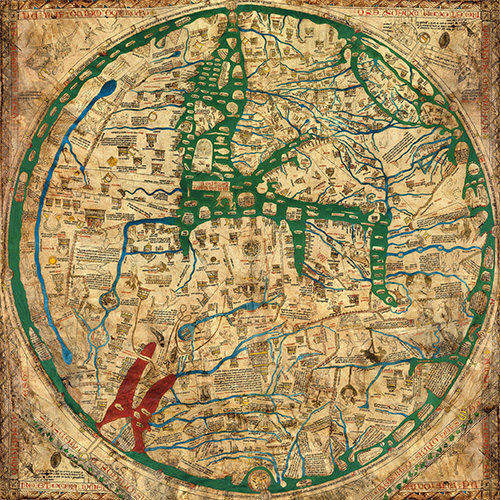
This course will explore the literatures of Britain from the early medieval period (ca. 600) to the end of the 18th century. We'll read texts from the peoples who wrote in Old and Middle English, Old Irish, Middle Welsh, Middle Scots, French of England, Anglo-Latin, Early Modern English, and more. These peoples and languages had complex relationships with each other, and this complexity only grew as centuries passed.
Course goals include gaining some knowledge of premodern English languages; analyzing the act of translation; identifying different genres of writing; understanding the basic historical, socio-political, and religious events that influenced literary history; and improving close reading and research composition derived from an intimate relationship with one text.
max of 2 courses (6 credits) can be in lower division for the entire major
Chaucer
ENL 4311.001|Thomas|Cat 2|Boca|In-Person|T/R 11:00am–12:20pm
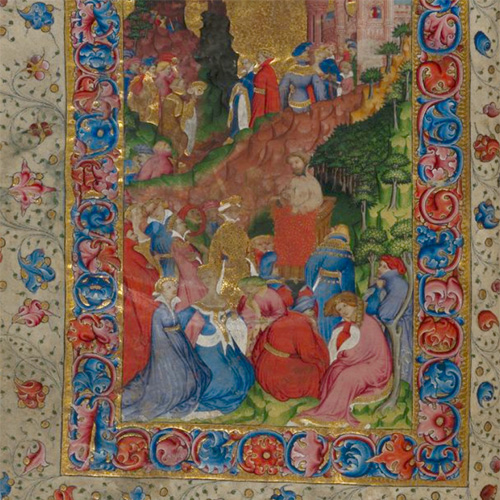
We will read Chaucer's Troilus and Criseyde in the original Middle English along with one of the most influential texts on medieval writers (Boethius’s The Consolation of Philosophy), Chaucer’s primary “source” Il Filostrato by Boccaccio, a subsequent text that is essentially fan fiction by a Middle Scots poet, a modern poetic version called A Double Sorrow: Troilus and Criseyde by Lavinia Greenlaw, and some critical essays by scholars in the field of late Middle English, Chaucer, and translation studies. We will think critically about language, gender, religion, politics, temporality, and much more!
Class goals include gaining greater knowledge of Italian influence on Chaucer, a firm grasp of Boethian philosophy, Chaucer as a writer and historical person, his socio-political and religious contexts in 14th-century England, and the ability to read Middle English and Middle Scots!
Literature & Social Movements
LIT 4484.001|Zamora|Cat 2|Boca|In-Person|T/R 2:00pm–3:20pm
*Reverberations in Latinx Communities: This course investigates the representation of historical Latinx community movements across media. With a strong focus on Latinx methodologies, this class will connect theory with history and contemporary media (including novels, television, film, and music) to consider key questions, such as: What histories shape Latinx communities today? How are contemporary authors and creators engaging Latinx social movements? What is at stake with these representations in the 21st century? Scholars we’ll consider include: Gloria Anzaldúa, Jillian M. Baez, and Lorgia García Peña. This course will incorporate theory to analyze texts such as: Real Women Have Curves, Gentefied, The Inheritance of Orquídea Divina, and performances by Bad Bunny and Karol G.
Latinx Speculative Fiction
LIT 4930.001|Taylor|Cat 2|Boca|In-Person|W/F 2:00pm–3:20pm
This course will focus on Latinx speculative fiction, particularly fantasy and science fiction. We will also consider Latinx speculation in film and music. We’ll read recent Latinx science fiction and fantasy literature to discuss how these authors are reshaping the genres. We will also consider the way the Latinx speculative has inspired the emerging subgenre Latinx Futurisms and its intersections with Afro, Indigenous, and Caribbean Futurisms. Latinx Futurist creators use science fictional thinking to showcase that, even in the face of the apocalypse, we can engage in science fictional thinking to build a better tomorrow, to heal and rebuild, to look towards a more collaborative, collective way of being in the world. Latinx speculative creators whose work will consider includes writers such as Silvia Moreno-Garcia, E.G. Condé, & Nalo Hopkinson; filmmakers such as Alex Rivera, Jorge R. Gutiérrez, & Robert Rodriguez; as well as musicians such as Cardi B, Princess Nokia, Ibeyi, & more!
CATEGORY 3
Literary Editing & Publishing
CRW 4723.003|Anderson|Cat 3|Boca|In-Person|M 11:00am–1:50pm
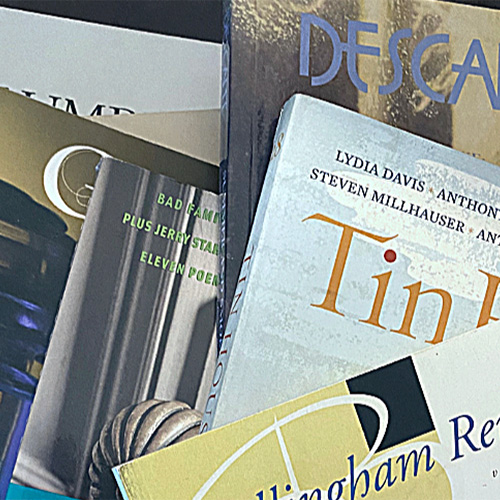
Literary Editing and Publishing will immerse students in the world of editing and publishing as the class collectively works on Coastlines. Sample duties include soliciting, tracking, and evaluating submissions of fiction, poetry, nonfiction, and visual art; making decisions regarding everything from data entry procedures to the aesthetic vision for the magazine; and promoting Coastlines on campus and digitally. Interested and qualified students can apply for leadership positions (such as Editor in Chief or Fiction Editor) that carry into the spring semester for internship credit. In addition, students will complete assignments individually and in teams, and expand their knowledge via supportive readings. We will study the craft of literary editing, the publishing industry writ large, and various career channels that exist within it. To that end, students will develop professional editorial skills to prepare for possible employment in publishing or arts administration.
Professional & Technical Writing Certificate as Special Topics
Advanced Exposition
ENC 3310.001|TBA|Cat 3|Distance|Fully Online
Catalog Course Description: A study of rhetorical techniques, including principles of classical rhetoric.
Creative Writing
CRW 3010.002|Furman|Cat 3|Boca|In-Person|W/F 9:30am–10:50am
This is an introductory course on the writing of literary short fiction, creative nonfiction, and poetry. The course will help students to further understand and master the elements of fiction and poetry through: writing of original work, focused readings on craft, workshopping of peer work, and analysis of successful, published stories, essays, and poems. The course offers students the rare opportunity in college to create, learn from, and enjoy a community of writers.
Required for Professional & Creative Writing concentration students; Cat 3 for all other English majors; WAC; Professional & Technical Writing Certificate
Fiction Workshop 1
CRW 4120.001|Furman|Cat 3|Boca|In-Person|W/F 11:00am–12:20pm
This fiction writing workshop will provide valuable collaborative feedback on your writing. We will also read essays on the craft, plus a range of fiction (stories and novels) designed to introduce you to various models that, collectively, demonstrate the elasticity of the genre. Hopefully, the readings (both by published authors and your peers) will inspire you all to move out of what might be your comfort zone in writing fiction.
Structure of Modern English
LIN 4680.006|Kelly|Cat 3|Boca|In-Person|T/R 11:00am–12:20pm
Using elaborate tree diagramming and Chomskyan linguistic theory, the course will teach students to describe the structure of Modern English sentences. The textbook is Max Morenberg’s Doing Grammar.
AI Literacy for Writers
ENC 4930.001|Klein|Cat 3|Boca|In-Person|T/R 9:30am–10:50am
Catalog Course Description: Special topics in composition studies. May be repeated for credit.
Creative Writing
CRW 3010.001|Oriogun|Cat 3|Distance|Online Live Lecture|T/R 2:00pm–3:20pm
Some people can articulate their reasons for writing and pinpoint what guides their impulse to commit thoughts to the page; others cannot but are driven to write with no less verve. For all of us, however, the act of writing is often an act of failure. We are always trying to match our work to the desire that makes us produce it, and often we discover a gulf between intent and production. Yet we return to writing, attempting to bridge that gulf, and often the only thing that keeps us going is that we have once felt and continue to feel what Orwell describes as “the joy of mere words.”
In this course, we will do our best to revel in the joy of mere words by considering works of poetry, fiction, and creative non-fiction. We will study these as we attempt to find techniques and models for our own writing, ways to bridge that gap between that impulse to write and the act itself. We will read works by writers such as Harryette Mullen, Rachel Ghansah Kaadzi, John Jeremiah Sullivan, and Lesley Nneka Arimah, among others.
Required for Professional & Creative Writing concentration students; Cat 3 for all other English majors; WAC; Professional & Technical Writing Certificate
Poetic Forms
CRW 4311.001|Oriogun|Cat 3|Distance|Online Live Lecture|T/R 12:30pm–1:50pm
Catalog Course Description: Students develop appreciation for poetic forms by writing sestinas, sonnets, villanelles, blank verse and a variety of other forms. Emphasis on contemporary poets experimenting in medieval, Renaissance, 17th-century forms and romantic forms such as the ode.
Creative Writing
CRW 3010.003|Schwartz|Cat 3|Distance|Online Live Lecture|M 7:10pm–10:00pm
Catalog Course Description: Guidance and criticism for beginners in writing prose fiction and poetry.
Required for Professional & Creative Writing concentration students; Cat 3 for all other English majors; WAC; Professional & Technical Writing Certificate
Studies in Writing & Rhetoric
ENG 4020.002|Slotkin|Cat 3|Distance|Fully Online
Rhetoric—you’ve heard the word before, but what does it really mean? And what’s its connection to culture?
Rhetoric was invented some 2,300 years ago (or thereabouts) by the Ancient Greeks. But here’s the twist: communities all over the world have been practicing rhetoric in some form for as long as people have been making meaning, creating a deep well of different rhetorics. This course will introduce you to contemporary developments in rhetoric and writing studies with a particular emphasis on cultural rhetorics.
By the end of this course, you’ll not only grasp why rhetoric is deeply cultural but also see how culture itself is rhetorical. This course is both conceptual and practical in nature, with students engaging in scholarly discussions about how to study rhetoric before connecting these theories to their writing.