RUBEN YEPES
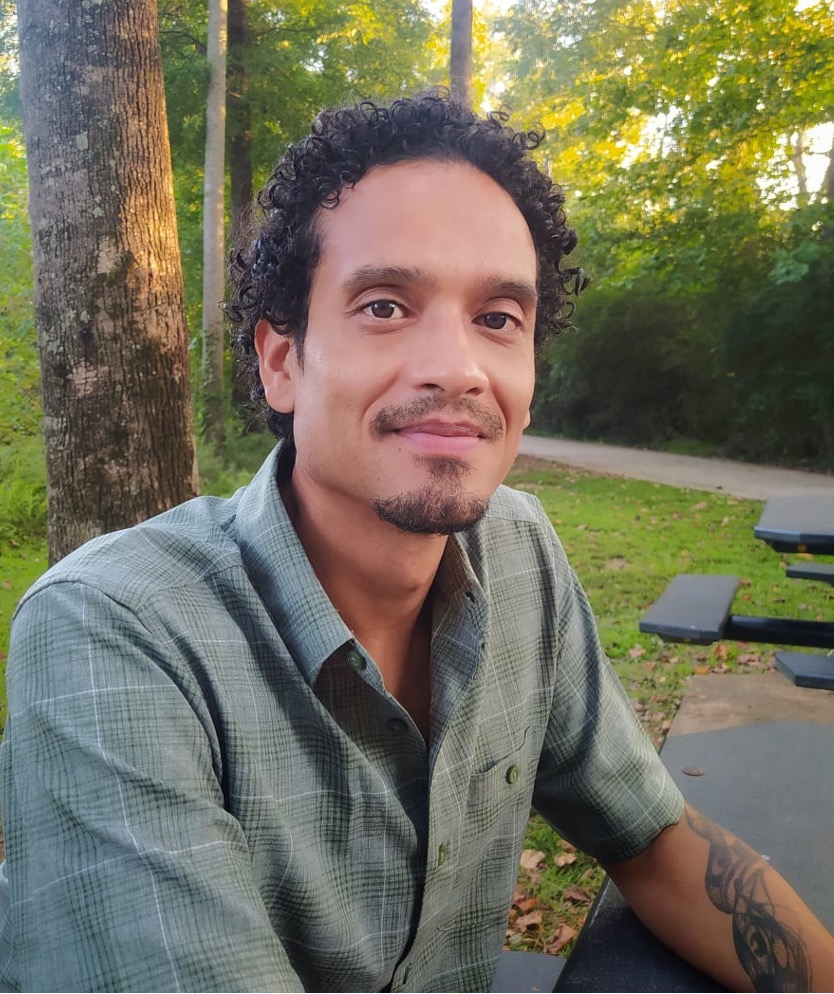 Received his Ph.D. in Visual and Cultural Studies from the University of Rochester and is an Assistant Professor of Art History in the Department of Visual Art & Art History at FAU. Before joining FAU, he worked as an assistant professor of art history and visual culture at Georgia College & State University. Dr. Yepes is the author of five books, including his recent Affecting the Conflict: Mediations of the Colombian War in Contemporary Art and Film (2025) and Estudios visuales desde América Latina: un aporte a la consolidación del campo (2024). He is also the author of over twenty articles and book chapters. His current research focuses on the art created in response to the multidimensional crises that emerged in Latin America during the Covid-19 pandemic, and the genealogy of Latin American Visual Studies. Dr. Yepes has received several prestigious grants and awards, including the National Prize for Scholarly Essay on Colombian Art (Colombia), a Mellon/ACLS Dissertation Completion Fellowship, and a Fulbright Scholarship.
Elton Johnson: So, as I did my prep work for this interview, I went on FAU’s and I noticed that instead of the traditional bio and CV you have a website featuring some incredible artwork.
Dr Ruben Yepes: Oh, do I? I haven't looked recently.
EJ: Yes, and I was so fascinated by it that I changed the entire direction of the interview. It was a post-COVID digital art exhibit of sorts—I remember just when COVID hit, people were trying to be positive, as positive as possible, and some people were predicting that it would be a great time for art. So, I just wanted to ask what was the inspiration behind that project?
RY: That's one of the projects that I've been working on since 2022. So before coming here [FAU], I was at Georgia College and State University. I worked there for four years, and that's where I started on this project. The initial impetus was that, like many other people, I was affected by COVID-19. Indeed, everyone was affected to some degree. I wanted to know what artists had been doing in response to this global health crisis. 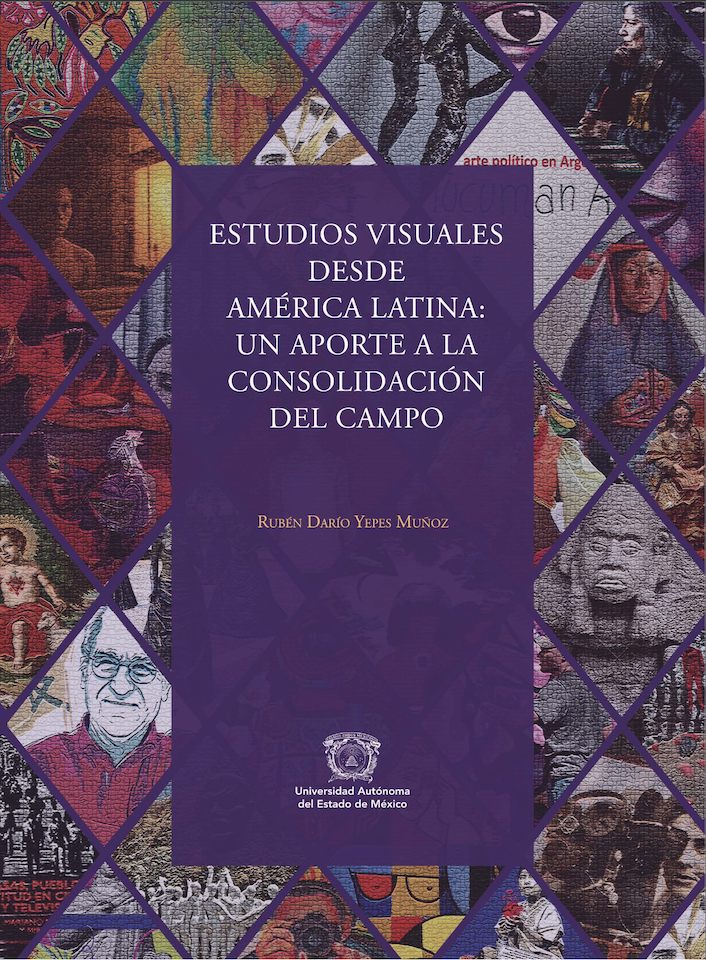 I'm a Latin Americanist. I am from Latin America. So, I thought, well, I'm going to look at what artists in America have done to respond to this crisis. Very quickly I realized that it wasn't just the health crisis. There was also a sociopolitical crisis, with massive protests and demonstrations in Chile, where they had the social outbreak, they called it the Estadio Soc
ial. There were national strikes in Colombia. There were protests in Brazil. There was also the gender-based violence crisis in a number of countries that exacerbated what was already happening in places like Mexico, Colombia and Brazil. There was the economic crisis in Venezuela and in Cuba. And there was even an ecological crisis, which sounds weird considering the shutdown of economies and production. Nevertheless, the lack of government oversight and the reallocation of resources to take care of people during the pandemic meant that, for instance, the rainforest in the Amazon jungle was left unguarded.
I'm a Latin Americanist. I am from Latin America. So, I thought, well, I'm going to look at what artists in America have done to respond to this crisis. Very quickly I realized that it wasn't just the health crisis. There was also a sociopolitical crisis, with massive protests and demonstrations in Chile, where they had the social outbreak, they called it the Estadio Soc
ial. There were national strikes in Colombia. There were protests in Brazil. There was also the gender-based violence crisis in a number of countries that exacerbated what was already happening in places like Mexico, Colombia and Brazil. There was the economic crisis in Venezuela and in Cuba. And there was even an ecological crisis, which sounds weird considering the shutdown of economies and production. Nevertheless, the lack of government oversight and the reallocation of resources to take care of people during the pandemic meant that, for instance, the rainforest in the Amazon jungle was left unguarded.
EJ: I didn’t know about the ecological crisis, but it does seem plausible now that you’ve explained how it happened.
RY: So, I started looking online first. What exhibitions have been created in response to these multidimensional crises or interrelated crises? And eventually I travelled. So, I spent the summers of 2022, 2023, and 2024, traveling all around Latin America. I spent time in Rio de Janeiro, São Paulo, in Buenos Aires, in Santiago, Valparaíso, Lima, in Cuzco, and Bogotá, Cali, and Medellín, and Mexico City. I spoke with artists, visited studios, examined artworks, went to museums and galleries, looked through archives and collections and spoke with curators, I saw exhibitions as well. So that's what you're seeing on the website. It's a synthesis of this research, which at the moment includes roughly 70 artworks and exhibitions. And the idea has been to examine the agency of these artworks and exhibitions in relation to these contexts of crisis.
EJ: Can you maybe talk a bit more about that—the agency of artworks and exhibitions?
RY: So, I don't exactly come from an art history background. I come from a cultural studies and visual studies background and in cultural studies, there's a very important concept called intervention. I'm trying to frame these artworks and exhibitions as aesthetic interventions. Interventions in a cultural studies sense, but with a focus on the aesthetic—so the embodied, perceptual, sensitive, and effective dimension of the artworks and exhibitions. This is where I think most of their agency lies.
EJ: I like that. That’s very interesting.
RY: Two papers are being published, and those are linked through the website. They are in Spanish and I have three in English that are under peer review. I'm working on a book as well. Most of this material will find a way into the book. The other projects I've been working on— I think I have the book here. It’s in Spanish, but this is a book that was published in 2024. It focuses on the field of Latin American visual studies. This work emerged, quite randomly, in fact, from different activities I was engaged in when I was in Colombia, right after getting my PhD. I was working in a master's program in cultural studies at a university in Bogotá. I was teaching courses in visual studies. I was also leading a research and study group in visual studies. At some point, the chair of my department charged me with leading the creation of a master's program in visual studies with a Latin American focus. This meant doing a lot of research. It didn't work out for administrative reasons, but I ended up with all of materials in my hands, and nearly 100 pages of notes, summaries, and ideas. So, I thought, well, here's the archive for a book examining the field of visual studies generally from a Latin American perspective. Visual studies is predominantly an American and British field, even though it's, at this point, global, but the key developments have happened mostly in America and in the UK, maybe also Australia and Hong Kong. So, my question was, the concepts, the theories, the methods that have been developed in these areas, how helpful are they for the sort of themes and issues that we research and encounter in Latin America? Can they be reframed from a Latin American perspective? Another part of the book examines the field of Latin American visual studies. Who are the key authors? Who's mobilizing the field right now? What are the institutional nodes? Where are things happening? What are the programs? What conferences have there been? What sort of themes are people working on? What type of concepts and methodologies are people working with? I also contrast those with concepts, theories, and methodologies that are recurrent in North American and British visual studies, to map out the state of play in the field of Latin American visual studies. That's only one section of the book, and in the future, I want to do more thorough work focusing on the field of Latin American visual studies. So those are the two projects that I'm currently working on, even though this second one's a little bit on hold.
EJ: You mentioned a number of countries that you worked with in your first project, but was there a limit or a focus on any specific countries in the region? Or was it just any country in the region?
RY: There was a limit in principle. I believe we should not write about artworks that we have not experienced directly. That's a personal rule because being in the space with the artwork, being able to get up close to it, looking at its materiality and its physicality carefully, seeing how it is used in space—be it, museum, gallery, exhibition or art studio—is a very different experience than an image of an artwork. Because I work with affect, it is very important in my analyses of artworks to be able to react to them personally. I don't see any way of speaking about the effective dimension of an artwork if the art historian themself hasn’t been moved in some way by the artwork. So, the limitation on the scope of the project has been whether or not I can gain access to the physical artwork in its exhibition space. That's the main reason why I've travelled to these different places.
EJ: With this project specifically and possibly more generally, what impact are you hoping to have with your academic work?
RY: Apart from the scholarly goal of documenting what has been happening in the field of contemporary Latin American art, I am trying to produce work that furthers the argument of art’s social and political agency. It's not a new argument but work that furthers the argument that the worth of art doesn't necessarily lie in how well it fits into our historical discourse and art world narratives. I want to provide a platform for artists, relatively unknown—meaning they're not circulating in big art museums or galleries—but they're having a social impact. So, refocusing the value of art is a broad goal of this project. I wouldn't be the only person working in that direction, of course, but I think bringing Latin American artists into that conversation is a goal of mine. What I’m trying to demonstrate is not that these artworks, these artists, single-handedly produce transformation. It's a much more subtle agency, but they are still contributions and an examination of those contributions in contexts of crisis, in overcoming crisis, to social change, to political change. There’s also the goal of bringing Latin American artists, contemporary Latin American artists, into the English-speaking academia. As you can imagine, Latin American art history is a pretty robust field in Latin America and here in the US as well, but not quite as robust in its appreciation of contemporary art. So, bringing an awareness of what Latin American artists have been doing, in the contemporary sense, to English speaking academic audiences is also part of what I’m building.
EJ: I want to move to connecting your overall academic goals to any dream projects that you might have. I guess the simple question is, do you have a dream project?
RY: I would love to have a team of people to critically read the material that is being published in Latin American visual studies, examining it for its theories, concepts, themes, and methods. Recently I've been thinking, well, maybe AI can be part of this workforce? Especially where financing a project like this becomes a concern, AI could be a part of the team, so to speak. The problem is you can't really trust it. AI needs to be supervised by people. So, you still need people to supervise what AI does. Maybe, in a way, this is a digital humanities project. Where I work with someone who is knowledgeable in programming and can develop some sort of AI tool that is made specific for the task of combing through this scholarship and helping us identify those elements, and then we can go through it to verify the results.
EJ: Slightly controversial from where I'm from standing in an area of the Humanities like English where we want nothing to do with AI. Still, I do feel like at some point we're going have to figure out how AI gets integrated into our workflow. In the Caribbean now, for example, there are a couple projects that focus on digital humanities, especially involving high school and college age students and figuring out how to integrate digital humanities—which quite often includes AI—in meaningful ways in their academic pursuits. I kind of like it because it begins to move us in a direction towards understanding what responsible use of AI looks like, because, as you said, you’re not going to be able to trust it right off the bat. There is always that human element. And I think that having students start to grow into that understanding is part of the work that we have to do in this new world that AI has sort of given us. Sad to say, and I can’t believe I’m the one saying this, but responsible use at some point will have to replace our zero-tolerance approach.
RY: I remember I was still a PhD student at the University of Rochester when I came across some students and faculty in English who were researching James Joyce. I don't remember exactly what context or why, but they wanted to know how many times certain words appear in Ulysses (laughs). You would go crazy trying to do that by yourself, but digital tools help. Their project became a digital humanities project, where they had these programs combing through the literature and providing the data that they needed.
EJ: It really is just strengthening the human element, because whenever I’m engaged in close readings of texts that require tabulation of word use, I’m always paranoid. “Did I miss an instance? Is my data incorrect as a result of it?” That example is an instance where the tool is just helping you to cut through rote work.
RY: Yes, because, for instance, the dream project I was discussing, I would have to come up with some sort of system for corroborating what AI produces without having to go and read every single paper anyway because then that defeats the purpose, right? So, there would have to be some, I don't know statistical procedure that involves testing and sampling but yeah, no, AI could be useful.
EJ: I guess my final question here is less academic and more personal. Is there a particular artist or a favorite piece of art that you have encountered?
RY: I mean, that's a difficult question, simply, because there are so many wonderful artworks that I have encountered in my research. And not just in this research, in previous research as well. It’s impossible to choose but I could mention one that I found fascinating. So, during the pandemic, or during the protests in Colombia, the second of those national strikes we talked about earlier, in Cali, which is in South Colombia, there's a neighborhood called Puerto Rellena. During the protests it was rebaptized as Puerto Resistencia. Through a youth
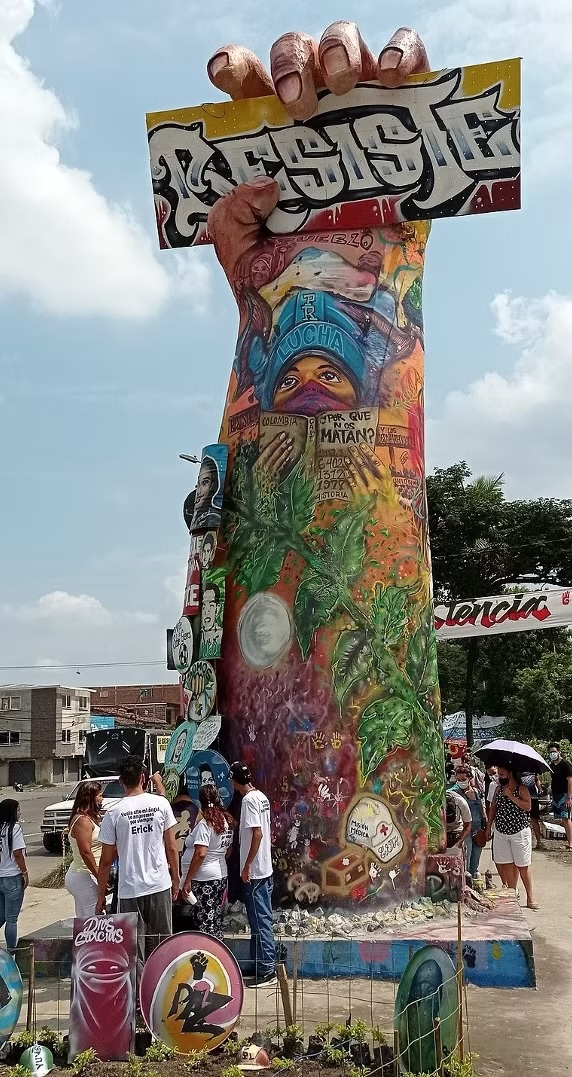
organization in this neighborhood, a group of young people, most of whom had participated in the protests, decided that they were going to create a public monument to the resistance in the neighborhood. They raised money from within and during that process they encountered an architect and an engineer who both said, “Okay, we're gonna help you.” Suddenly, they found themselves with the technical support and the resources to actually create this monument, and they did. It has references to the protesters, those in the front line of the protest who would improvise shields out of things like trash can lids. The monument now has some of those shields embedded into one side of it. And this was controversial because the mayor's office didn't want to leave it standing. They said they didn’t think it was safe and it might collapse. That led to protests from the community because people wanted it to remain there permanently. They ended up convincing the city officials and now it's a permanent monument.
EJ: I find that fascinating.
RY: Yeah, so it's not highbrow art, it's not super sophisticated contemporary art, but it is tremendously meaningful.
EJ: Also, as you said, the affect of the artwork is also very important.
RY: Right, exactly. It becomes this rallying center for the community. It reminds them of what they did and to some extent of what they accomplished. There were actual accomplishments coming out of this protest and they can feel that when they can see this monument in the community space.