Eyal Weinberg
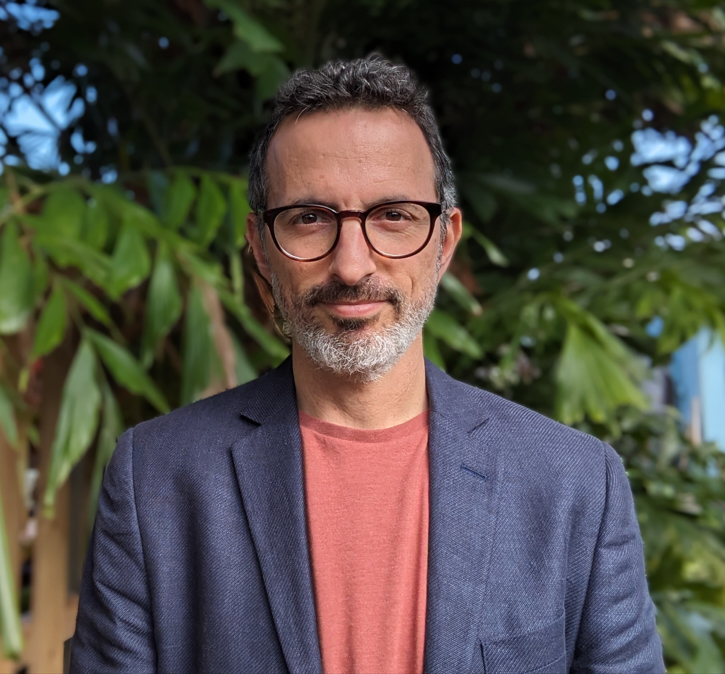
Assistant professor of history at Florida Atlantic University whose research explores health, medicine, and authoritarianism in Cold War Latin America, with a focus on Brazil. His work appeared in journals such as the The Americas, International Labor and Working-Class History, Estudios Interdisciplinarios de América Latina, and The Oxford Research Encyclopedia of Latin American History. He recently served as the guest-editor of a special issue on the histories of health in modern Latin America, published in Estudios Interdisciplinarios de América Latina. Weinberg's book manuscript, Tending to the Body Politic: Health, Dictatorship, and Transitional Justice in Brazil (1960s-1990s), is expected to be published later this year by the University of Texas Press.
Elton Johnson : Your academic research focuses heavily on Brazil and the Cold War. Is there a particular academic or, potentially, personal rationale for those two focuses?
Dr Eyal Weinberg : When I was very young, I did a backpacking trip across Latin America, and something drew me to Brazil. I think it was a mixture of the music and the language. Later when I was in grad school, I developed an interest in the history of political violence and Brazil’s dictatorship. An interest in the Cold War evolved from there. I write extensively about the Cold War period, but more specifically about the histories of health, medicine, and violence around that period.
EJ : So, I was looking at your book. I didn't get to read it, but I did read about the book, Body Politic–
EW : Yeah, that you cannot read because it's not out yet. Hopefully by the end of this year.
EJ : This is kind of a two-part question. The first part is just curiosity to hear what the book is about because I read that it was based on your dissertation. And then also the dissertation to publishing pipeline. Wondering if you want to talk about your particular journey.
EW : The book began as a dissertation and now is a book manuscript called Tending to the Body Politic, to be published by the University of Texas Press. It is generally about the period of dictatorship in Brazil, but, more specifically, a history of health and medicine and how that history is connected with authoritarianism and medical ethics. In the book, I'm examining the dictatorship through the prism of medicine, health and doctors. I explore how doctors and medicine played a role in the rise of the dictatorship, but also how doctors confronted authoritarianism. So, for instance, I show that some doctors collaborated with the repressive mechanism of the regime, but I also illustrate how some opposed the regime by bolstering medical ethics and advancing investigations against doctors who were complicit in repression. In other words, I examine how doctors used their regulatory power and specifically violations of medical ethics to challenge the regime.
EJ : Before we move to part two of the question, I just wanted to say that I appreciate this research focus on the politics of medicine from a historical lens. It interests me quite a bit, especially given the context of the Caribbean now. In Jamaica, with Cuba being our closest neighbor and one of our closest allies, we do collaborate quite a bit in the medical realm. Our medical personnel are trained there, our citizens get medical care there and there are a number of medical personnel from Cuba who support Jamaica’s medical system. However, quite recently, there has been a lot of pressure for Jamaica to reevaluate this partnership and we actually severed the partnership. And it's like years of partnership. Some of the reasons cited as the pressure was being applied for us to cut the partnership included things like horrible working hours, terrible working conditions and Cuban workers being underpaid. I’m not sure how receptive the Jamaican public was to that because, from our standpoint, those are the standard working conditions for medical workers in the third world. Obviously not ideal and more needs to be done to fix that but definitely not evidence of Cuban medical professionals being treated differently than the typical Jamaican medical professional. However, what I think exacerbated the situation was reports of practices like garnished wages and medical professionals being torn from their families and forcibly sent to Jamaica to work. I believe those reports caused people to start to question the “health” of the partnership. However, I've said a lot in establishing the context, but I'm wondering, what are your thoughts on this, the politics of all of this?
EW : Absolutely. Historically, Cuba had a very advanced healthcare system, even before the revolution, and it certainly became a prime objective of Revolutionary Cuba. The state has developed some of the best healthcare in the region and trained an astonishing number of doctors, as you mentioned. It has also been actively sending doctors to support humanitarian operations across the world, known as a form of medical diplomacy. What you say about Jamaica definitely happens across the Caribbean and also in other places like Brazil, which had an agreement with the Cuban government [Mais Médicos] to receive the assistance of Cuban doctors in rural areas of the country. The program was cancelled with the rise of the far right in 2018 and 2019. Some of it was because of politics as you mentioned. The Bolsonaro government accused doctors of being Cuban agents in disguise who sought to spread communism in the countryside. That there was an ideological motivation behind the altruism. Ultimately the withdrawal of Cuba doctors had negative effects because there simply weren’t enough physicians in Brazil’s poor regions.
EJ : So, to the second part of that question in relation to your dissertation and getting it published, what was your journey like?
EW : Publishing a dissertation is sometimes a complex process and I think it depends on the discipline too. In my case, I had to add some research and revise the dissertation into a book manuscript. It takes a little while to understand what worked great for the dissertation but should be changed when you’re writing a book, from the language you use to the framing and types of arguments you advance. You also need to figure out who your audience is. This also helps in identifying one or multiple publishers that fit your project. The next step is writing a book proposal, which typically includes sample chapters of the book. In my case, I had already developed a relationship with the University of Texas Press and knew the editor supports my project. After the proposal is approved, the author submits a full manuscript, which goes through the usual academic publishing process, with feedback from peer review, a revision process, etc.
EJ : It can be pages and pages of feedback, I imagine.
EW : It depends on the reviewer and the specific process of the press. Some have a series of questions they asked the reviewer to address. The process can take time because reviewers read the complete manuscript, the author responds to their reports and revises the work, and the board of editors at the press provide their own view as well. Then there's the mechanism of preparing the manuscript for publication, which involves fixing citations, getting permission for images, creating indexes, etc. It's definitely a prolonged process.
EJ
: I guess it's also worth it because you’ve produced new knowledge and put it into the world.
EW : Yeah, it's a good thing to remember as you go through the process.
EJ : Do you have a potential next project in mind?
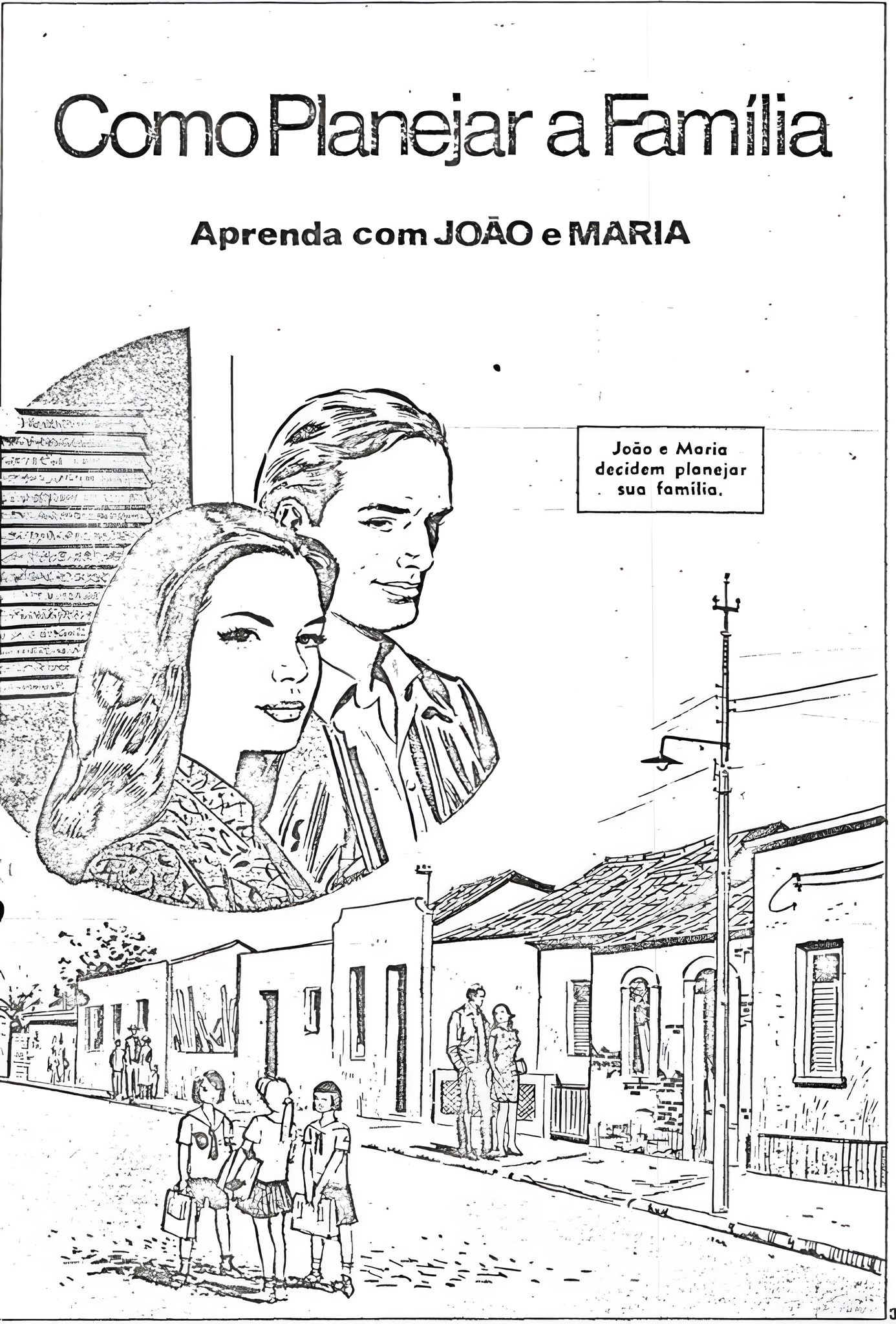
EW : The next project is already in progress. It’s a history of fertility and reproduction in twentieth-century Brazil, with a specific focus on the period of the dictatorship in Brazil. The project looks into how population science, development approaches, nutritional models and Cold War ideologies shaped public health and reproductive health policies in Brazil.
EJ : Is there an ideal impact that you would like for your academic work to have?
EW : We’ve already talked about research. I think the dream of any scholar is that people will read their published material and that it will have a meaningful impact on scholarship and intellectual exchange. Of course, a big percentage of what we do is teach, and that’s extremely important to me as well. I also don't think we can separate these two elements. Research informs my teaching. So, with regards to impact I also think about the daily interaction with students and the effect my teaching has on their intellectual and professional development.