1/30/2026
Art of Science: Science in Motion
Neuroscience Wins Top Award for Video that that Helps Visualize the Invisible
Science doesn’t sit still – and neither does Tyler Sarovich’s research.
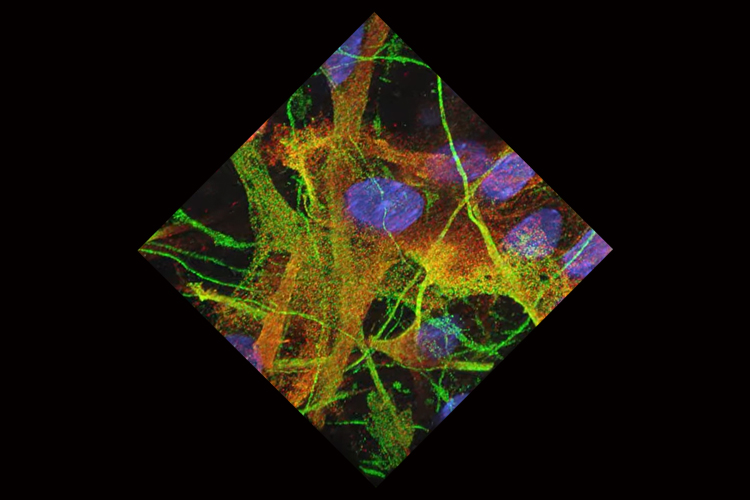
As a doctoral student in the Charles E. Schmidt College of Medicine, Sarovich earned a top honor in the Art of Science for his three-dimensional video of Huntington’s disease neurons.
“I wanted to show that research isn’t static,” said Sarovich, who is studying neuroscience at FAU’s Stiles-Nicholson Brain Institute. “Science is dynamic and sometimes the best way to understand it is to actually see it happening.”
Sarovich’s winning video, called Expanded Insight, uses a technique known as expansion microscopy to magnify neuronal structures and reveal molecular interactions that are otherwise invisible under standard imaging. The result is a vivid and immersive video that blends advanced neuroscience with artistic storytelling.
To push beyond traditional limits of resolution, Sarovich physically expands his samples by embedding them in a hydrogel that swells up to 10 times its original size. This process allows researchers to observe minute cellular activity with remarkable clarity.
While the technique was developed to answer a scientific question, Sarovich said he quickly realized its artistic power.
By combining color, motion and depth, he said his work invites audiences outside the lab to engage with neuroscience in an intuitive way.
Art of Science
Join us in celebrating this year's winners of the 7th annual Art of Science contest during the opening ceremonies of the nearly monthlong exhibition. Free food, wine and giveaways.
4 to 6 p.m., March 31
Exhibition runs through
April 19
Register Now for the 7th Annual Art of Science Gallery opening ceremonies
View all Art of Science winners here.
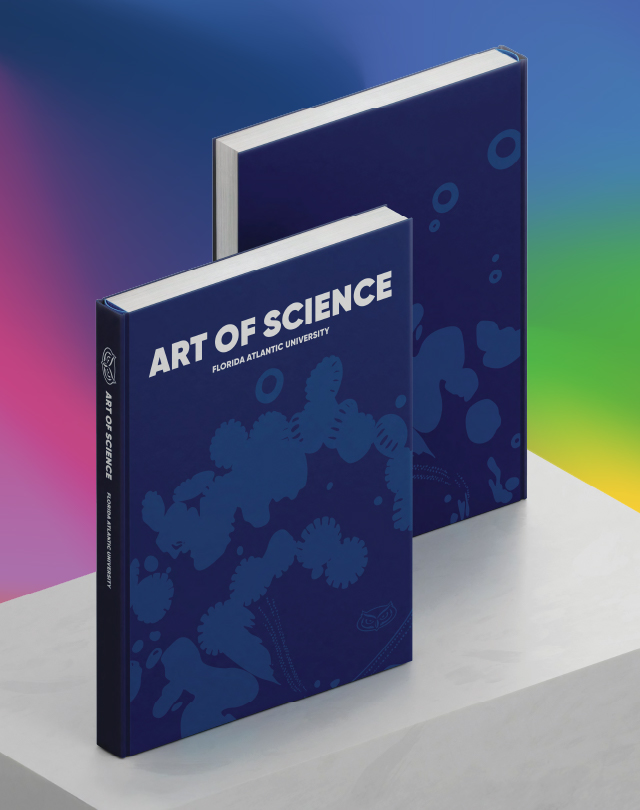
Get your copy of the commemorative Art of Science coffee-table book ...
All of the research
All of the pictures
All of the stories
All yours.