1/15/2026
Art of Science: Life Before it Hatches
Protecting Sea Turtle Hatchlings
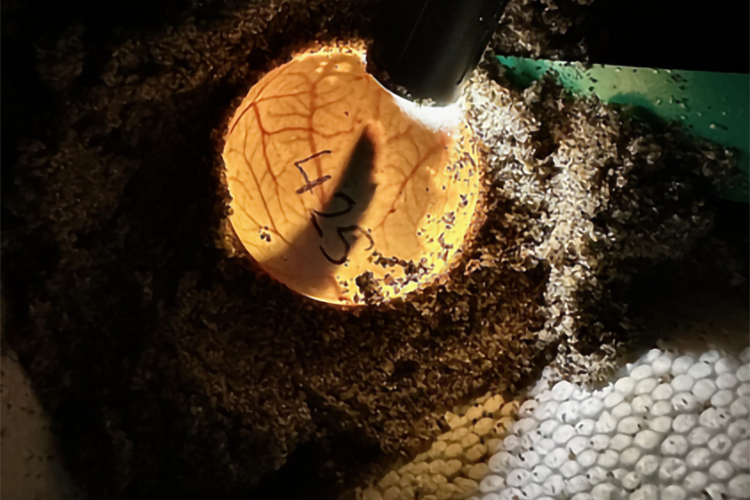
Researchers often get an intimate view inside fragile sea turtle eggs before they hatch. While this view is essential to their research, it could also be called artistically beautiful, according to Gabby Carvajal, a doctoral student at the Marine Laboratory in the Charles E. Schmidt College of Science.
Each glimpse inside such illuminated embryos serves as a step forward in solving a critical puzzle: How to determine a hatchling’s sex quickly and humanely, said Carvajal, who earned second place this year for her image called Sea Turtle Beginning. This photograph shows a late-stage sea turtle embryo silhouetted in its egg with its flipper fully formed and its blood vessels dramatically illuminated. The image, both elegant and intimate, highlights a developmental stage few people ever see, Carvajal said.
Beyond the art of the scientific process, Carvajal is leading a project to accurately and quickly determine the sex of sea turtle hatchlings without harming them. For a species whose sex is determined by nest temperature rather than chromosomes, climate change is creating an imbalance for sea turtles, she said.
“As temperatures continue to rise, and rise quickly, nests are producing far more females than males as turtles have environmentally determined sex,” Carvajal said. “Some years on Boca Raton beaches, we don’t see a single male in our samples. That’s not sustainable long-term, as not producing enough male turtles will eventually push populations towards decline, then extinction.”
One method requires raising a hatchling for months until it’s large enough for laparoscopic sex identification, which is a specialized technique that only a handful of experts worldwide perform.
“There’s no easy, accurate or field-friendly way to do this. So, we’re trying to change that,” Carvajal said. “… (Research is) an essential step for managing sea turtle populations in an increasingly warming world.”
Art of Science
Join us in celebrating this year's winners of the 7th annual Art of Science contest during the opening ceremonies of the nearly monthlong exhibition. Free food, wine and giveaways.
4 to 6 p.m., March 31
Exhibition runs through
April 19
Register Now for the 7th Annual Art of Science Gallery opening ceremonies
View all Art of Science winners here.
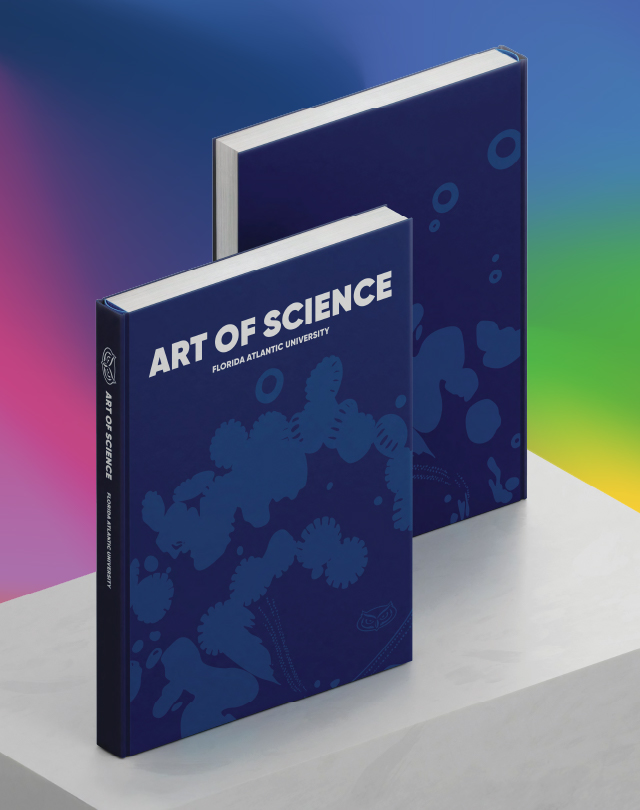
Get your copy of the commemorative Art of Science coffee-table book ...
All of the research
All of the pictures
All of the stories
All yours.