4/3/2026
FAU Awarded $900,000 for Sea-Level Research
The project uses AI, modeling, and sensors to provide flood data and tools for long-term community resilience.
The Gulf of America is experiencing accelerated sea-level rise due to ocean dynamics, vertical land motion and steric effects. These changes pose serious challenges for coastal communities, particularly rural and under-resourced areas that often lack the data and infrastructure to plan for flooding and long-term adaptation. Understanding regional sea-level variability and providing actionable forecasts is essential for supporting resilience and decision-making.
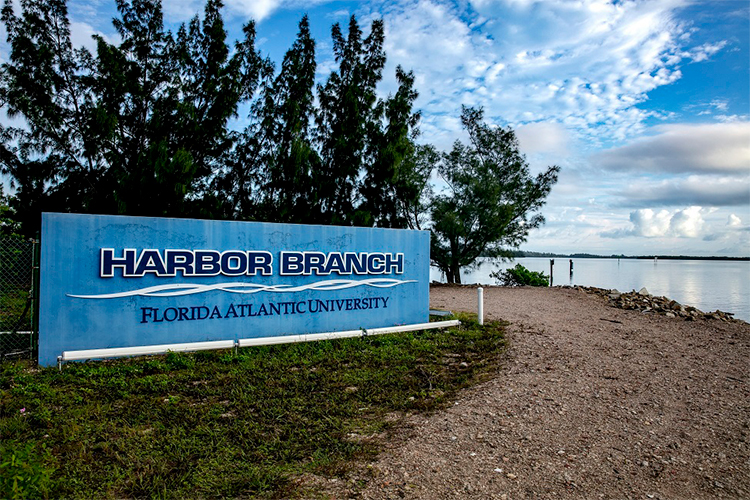
FAU’s Harbor Branch Oceanographic Institute has been awarded a $900,000, four-year grant from the Gulf Research Program of the National Academies of Sciences, Engineering, and Medicine. The project will use high-resolution modeling, machine learning, and community engagement to produce precise, local sea-level projections, deploy water sensors, and develop a user-friendly AI platform. By integrating science and local knowledge, the team aims to equip Gulf Coast communities with the tools they need to plan for flooding and enhance long-term resilience.
“Being selected for this project is an incredible honor and a great opportunity,” said Laurent Chérubin, Ph.D., principal investigator and a research professor at FAU Harbor Branch. “Our team is committed to advancing the scientific understanding of regional sea-level rise, while translating that knowledge into practical tools that communities can use to plan for the future. I am especially excited to collaborate with our co-investigators and partner institutions to combine physics-based modeling with machine learning approaches. By working closely with Gulf Coast communities, we aim not only to improve forecasting capabilities but also to enhance public awareness and preparedness. Our ultimate goal is to empower stakeholders with the data and insights they need to make informed, future-oriented decisions in the face of rising seas.”