FAU Awarded $900,000 for Gulf of America Sea-Level Research
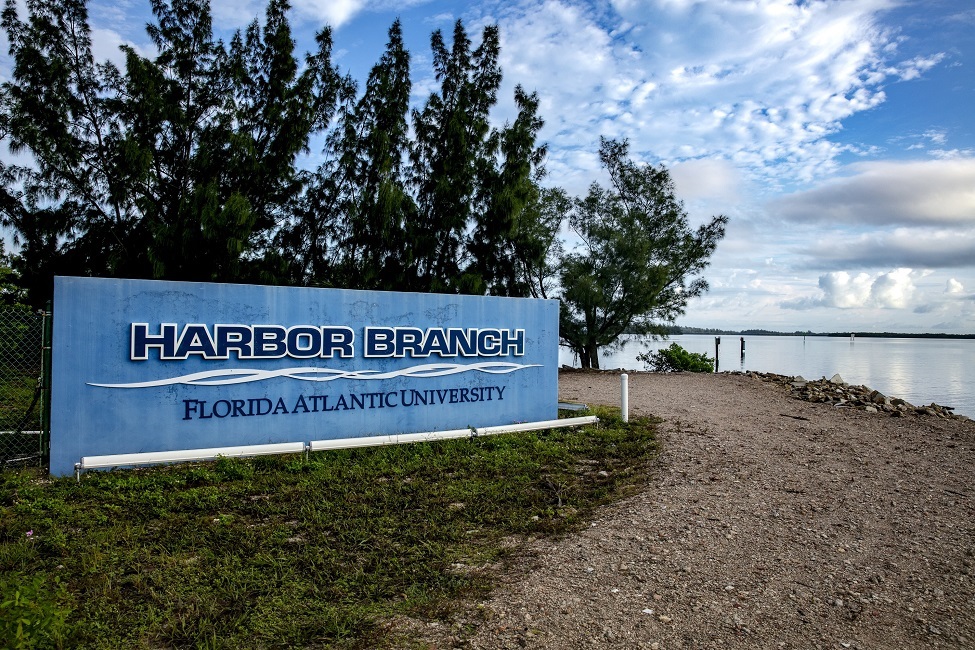
(Photo by Alex Dolce)
Grant Snapshot: The Gulf of America is experiencing accelerated sea-level rise due to ocean dynamics, vertical land motion and steric effects. These changes pose serious challenges for coastal communities, particularly rural and under-resourced areas that often lack the data and infrastructure to plan for flooding and long-term adaptation. Understanding regional sea-level variability and providing actionable forecasts is essential for supporting resilience and decision-making.
FAU’s Harbor Branch Oceanographic Institute has been awarded a $900,000, four-year grant from the Gulf Research Program of the National Academies of Sciences, Engineering, and Medicine. The project will use high-resolution modeling, machine learning, and community engagement to produce precise, local sea-level projections, deploy water sensors, and develop a user-friendly AI platform. By integrating science and local knowledge, the team aims to equip Gulf Coast communities with the tools they need to plan for flooding and enhance long-term resilience.
The Gulf of America is experiencing accelerated sea-level rise due to a complex interplay of ocean dynamics, steric effects and vertical land motion. These changes pose serious challenges for coastal communities, particularly rural and under-resourced areas that lack the infrastructure and data to plan for flooding and long-term adaptation. Understanding the drivers of regional sea-level variability and developing actionable forecasting tools is critical for supporting decision-making and resilience planning.
Florida Atlantic University’s Harbor Branch Oceanographic Institute has been awarded a $900,000, four-year grant from the Gulf Research Program (GRP) of the National Academies of Sciences, Engineering, and Medicine to address these challenges through advanced modeling, machine learning, and community-focused decision support.
The National Academies’ GRP is an independent, science-based program founded in 2013 as part of legal settlements with the companies involved in the 2010 Deepwater Horizon disaster. The GRP’s mission is to develop, translate and apply science to enhance the safety of offshore energy, the environment and the well-being of the people of the Gulf region for generations to come. It supports innovative science, guides data design and monitoring, and builds and sustains networks to generate long-term benefits for the Gulf region and the nation.
“Reliable, actionable and regionally focused sea-level information is a cornerstone of resilience planning in the Gulf,” said Michael Feldman, program director of GRP’s Gulf Environmental Protection and Stewardship Unit. “The research supported through these awards will provide planners, agencies and communities with the science they need to make forward-looking decisions.”
The FAU project, titled “High-Resolution, Scenario-Based Sea-Level Projections: Integrating Vertical Land Motion, Ocean Dynamics, and Atmospheric Forcing,” will integrate high-resolution modeling, observational data and advanced machine learning to improve understanding of regional sea-level variability in the Gulf of America.
Using Community Earth System Model high-resolution simulations under various climate scenarios, combined with nested Semi-implicit Cross-scale Hydroscience Integrated System and Finite-Volume Community Ocean models for localized projections, the project will produce decision-relevant scenario outputs. Vertical land motion data will be incorporated to generate precise, location-specific forecasts, while a graph-based probabilistic machine learning framework will analyze multivariate predictors – such as ocean heat content, atmospheric indices, and dynamic sea-level trends – to forecast extreme sea-level events and regional variability under deep uncertainty.
“Being selected for this project is an incredible honor and a great opportunity,” said Laurent Chérubin, Ph.D., principal investigator and a research professor at FAU Harbor Branch. “Our team is committed to advancing the scientific understanding of regional sea-level rise, while translating that knowledge into practical tools that communities can use to plan for the future. I am especially excited to collaborate with our co-investigators and partner institutions to combine physics-based modeling with machine learning approaches. By working closely with Gulf Coast communities, we aim not only to improve forecasting capabilities but also to enhance public awareness and preparedness. Our ultimate goal is to empower stakeholders with the data and insights they need to make informed, future-oriented decisions in the face of rising seas.”
A key component of the project is community engagement, particularly in rural and unincorporated areas along the Gulf Coast that often lack sufficient resources for adaptation planning. Partnering with Florida Sea Grant, FAU researchers will conduct outreach programs in four communities to increase knowledge of sea-level rise, provide scenario-specific decision-making tools, and deploy water level sensors to enhance local data availability. The team will also co-develop a user-friendly, artificial intelligence-based platform tailored to local needs, offering forecasts and guidance for planning and response.
“This is a prestigious recognition for Florida Atlantic University and a testament to the scientific excellence and societal relevance of our work,” said James Sullivan, Ph.D., executive director of FAU Harbor Branch. “Projects like this exemplify how research can directly support communities, providing actionable information that strengthens resilience against coastal flooding. By integrating high-resolution modeling, advanced machine learning and stakeholder engagement, this project not only deepens our understanding of Gulf Coast sea-level dynamics but also ensures that this knowledge is applied where it matters most – helping local governments, planners and residents make informed, data-driven decisions that protect lives, property and ecosystems.”
Co-investigators of the project are Xingquan “Hill” Zhu, Ph.D., a professor in the Department of Electrical Engineering and Computer Science within FAU’s College of Engineering and Computer Science; Robert Burgman, Ph.D., an associate professor in the College of Arts, Sciences and Education at Florida International University; and Anna Braswell, Ph.D., an assistant professor in the School of Forest, Fisheries, and Geomatics Sciences at the University of Florida.
The National Academies of Sciences, Engineering, and Medicine are private, nonprofit institutions that provide independent, objective analysis and advice to the nation to solve complex problems and inform public policy decisions related to science, engineering, and medicine. The National Academies operate under an 1863 congressional charter to the National Academy of Sciences, signed by former U.S. President Abraham Lincoln.
-FAU-
Tags: engineering | faculty and staff | research | harbor branch | technology