12/23/2025
Art of Science: Deep Dive with ‘OctoGirl’
Researcher’s Underwater Images Educate
About a decade ago, Dr. Chelsea Bennice was on a night dive researching nocturnal marine life when she spotted an octopus with arms stretched out like a parachute.
“I was in awe of this animal's extraordinary color patterns (an octopus with a teal hue) and its seemingly effortless movements across the reef,” said Bennice, a postdoctoral fellow at the Marine Laboratory in the Charles E. Schmidt College of Science.
It was that moment that marked the start of a deeper dive into Bennice’s dedication to study the animal, one of the ocean’s most intelligent and adaptable creatures. She said that observing these animals in their natural environment sparks curiosity and an endless number of scientific questions.
Her most recent research shows how octopuses use their eight arms to interact with the world. In a study analyzing about 4,000 arm movements, Bennice gained international attention for her discovery of subtle behavioral patterns that could shed light on the evolution of motor control and decentralized nervous systems.
In addition to her research, Bennice, also known as OctoGirl online, said she tries to educate the world by bringing marine science to life through underwater photographs and videos.
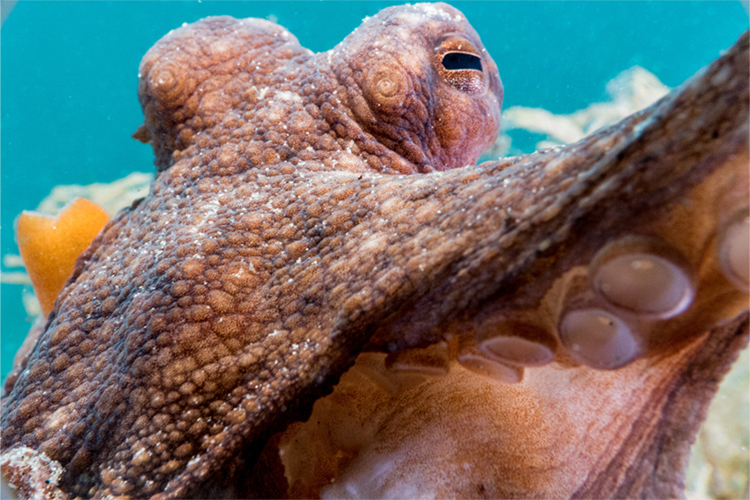
One of her photographs, titled Selfie … Cephie, won first place in this year’s Art of Science. The image captures a rare underwater encounter where the octopus (also known as cephalopod) reaches for the camera to seemingly take a selfie.
From identifying species to inspiring conservation, Bennice uses underwater imagery to tell stories that make science accessible. Her advice to young researchers: Balance data collection with creative communication, adding that images can transform how people perceive your work.
Beyond research, Bennice is an active science communicator dedicated to marine conservation. Octopuses, she said, are powerful ambassadors for ocean health. Their presence often reflects the condition of ecosystems like reefs, mangroves and seagrass beds.
Through fieldwork, art and education, Bennice said she aims to educate the world about the hidden lives of octopuses, one dive, one image and one story at a time.
Art of Science
Entries are open for the 8th annual Art of Science contest.
View the 7th annual Art of Science Virtual Tour
View all Art of Science winners here.
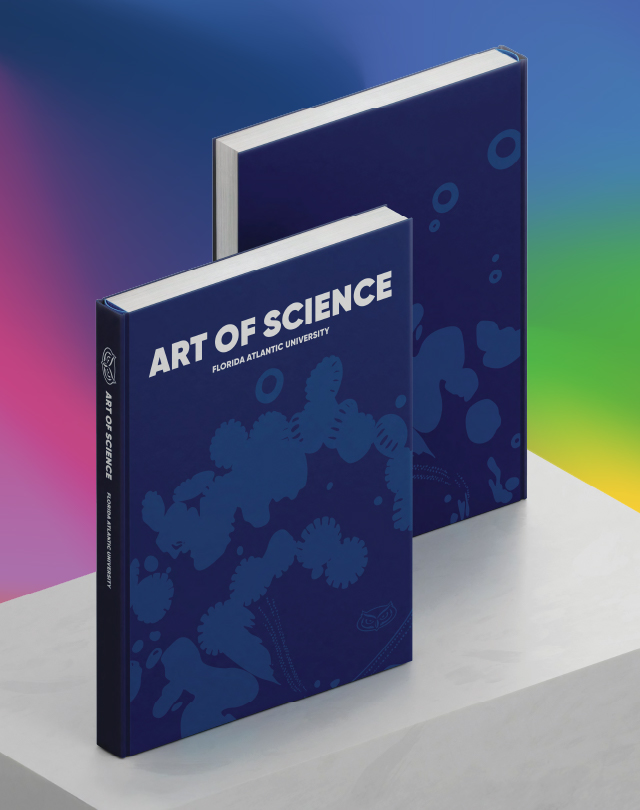
Get your copy of the commemorative Art of Science coffee-table book ...
All of the research
All of the pictures
All of the stories
All yours.