9/12/2024
Science in Seconds: Citizen Science
FAU Harbor Branch Offers Public Opportunity to Contribute to Dolphin Research
At Florida Atlantic University’s Harbor Branch Oceanographic Institute marine biologists study Atlantic bottlenose dolphins.
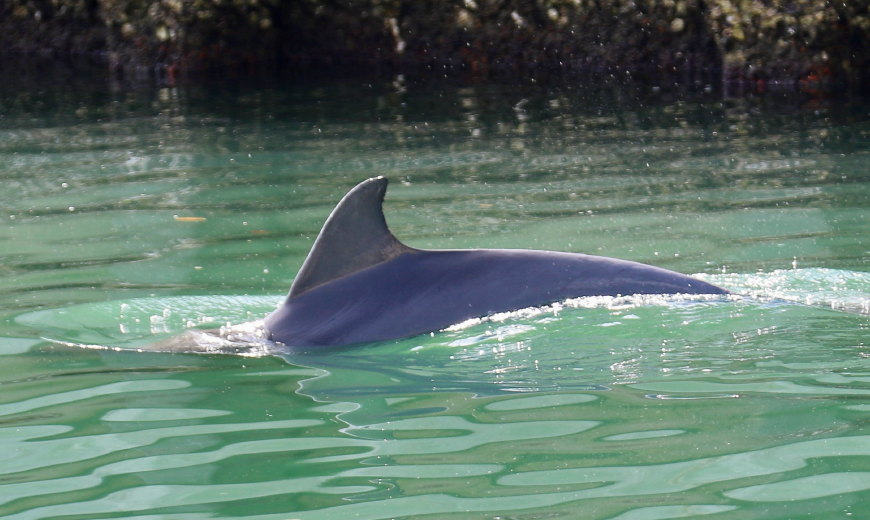
They have discovered a lot by looking at their fins. Every dolphin’s dorsal fin (the triangle-shaped fin on their backs) is unique to them, the same way each person’s fingerprints are unique to him or her. Each dolphin has a different set of nicks, notches and scars on their fin which helps tell them apart.
FAU Harbor Branch scientists conduct field research on the water looking for dolphins and use a high-powered camera to snap photos of the fins they see. About 2,000 dolphins live in the Indian River Lagoon (IRL), a 156-mile waterway that runs along the East Coast of Florida, and the FAU Harbor Branch database includes more than 400 identified individuals from Sebastian to Jupiter Inlet. Through this research, they learn about dolphin behavior. For instance, dolphins have neighborhoods just like people. The dolphins that live in the IRL like to hang out in certain areas and don’t usually travel more than 30 miles from their home. There are six dolphin communities spread throughout the IRL.
Knowing the home ranges for these dolphins is helpful for FAU Harbor Branch’s Marine Mammal Stranding and Population Assessment, who are on-call 24 hours a day, seven days a week to respond to reports of distressed dolphins or whales. Sometimes animals are entangled in trash that ends up in the water. So far, the rescue team has helped save over 300 dolphins and whales!
Become a Dolphin Spotter
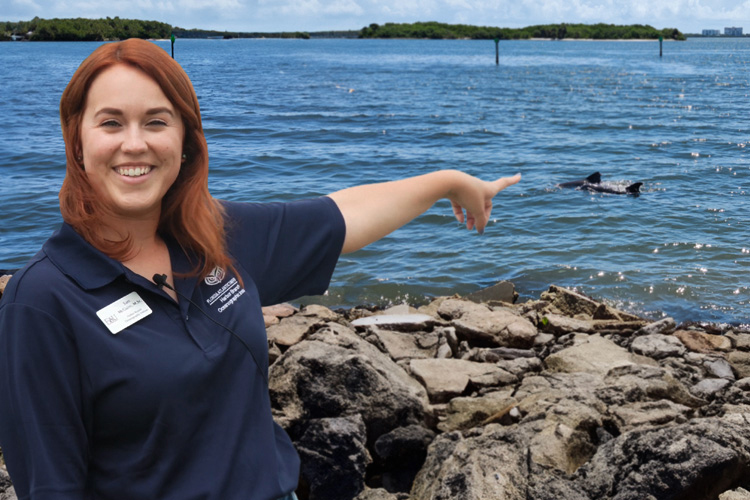
Anyone can help FAU Harbor Branch’s dolphin research by becoming a Dolphin Spotter Citizen Scientist. Dolphin Spotters standing along the shoreline take photos of dolphins they see swimming nearby. They then upload their photos to an online database along with information about when and where the photo was taken. These sightings help the Marine Mammal Team better understand the home ranges and social behaviors of dolphins, because they can be taken in areas outside of the regular survey zones, such as canals and marinas.
So far, Dolphin Spotter sightings have been matched to 32 dolphins in the Harbor Branch database. One citizen scientist contributed a photo of a dolphin that didn’t match any in the database. The new dolphin was dubbed “Rhonda" after the Dolphin Spotter who discovered it. This Spotter has contributed 70 sightings out of the total 443 to date.
This summer, two Dolphin Spotters photographed entangled dolphins and contributed their sightings to assist rescue efforts with FAU Harbor Branch’s partner, Hubbs-SeaWorld Research Institute.
Click here to learn more and to get started as a Dolphin Spotter Citizen Scientist.
If you ever see a dolphin or a whale in trouble, call the Florida Fish and Wildlife Commission Hotline at (888) 404-3922. Always remember to stay at least 50 yards away from dolphins when you see them in the water.
FAU Harbor Branch’s Photo ID work is permitted under NOAA NMFS LOC No. 23069-01 and stranding response is conducted under a Stranding Agreement with NMFS and FAU Harbor Branch under the authority of the Marine Mammal Protection Act. All citizen science land-based photos have been submitted through the FAU Harbor Branch Dolphin Spotter project in accordance with the program’s guidelines and the Marine Mammal Protection Act.