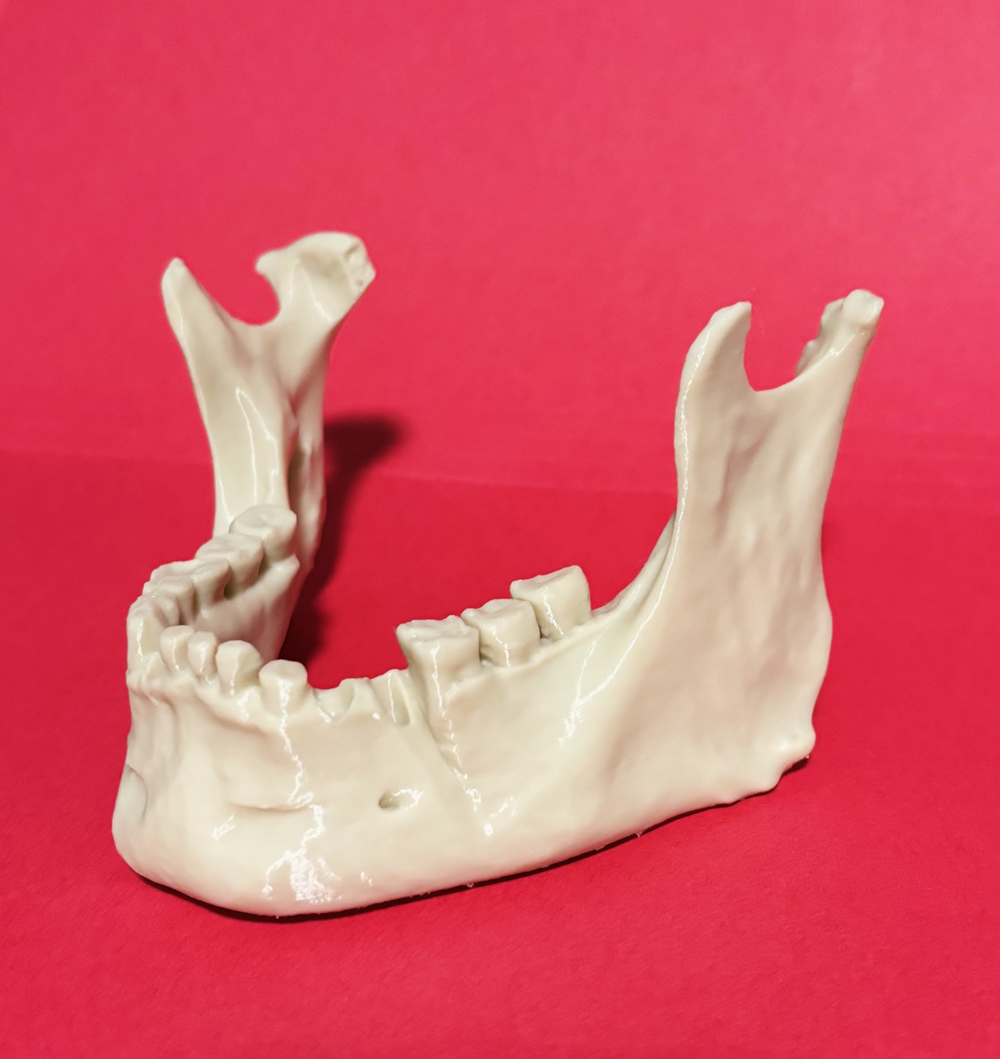
Honorable Mention: Past Reprinted
Harriet L. Wilkes Honors College
This reproduction of a Viking jawbone was printed using biodegradable filament in the anthropology lab. 3D printing archaeological reproductions offers hands-on learning that brings history to life. Students and researchers can physically interact with accurate replicas of fragile or rare artifacts, deepening understanding through touch and close examination — something often impossible with originals. These reproductions make ancient objects accessible in classrooms, museums and public spaces worldwide, promoting inclusivity and engagement. They also preserve the form of artifacts that may be too damaged or delicate for handling. For archaeologists, 3D prints support experimental research and reconstruction without risking the original pieces. Additionally, digital models used in printing allow for easy sharing, collaboration and even virtual reality integration, making archaeological education more dynamic, immersive and globally connected. Through technology and prints like this the past is made tangible.