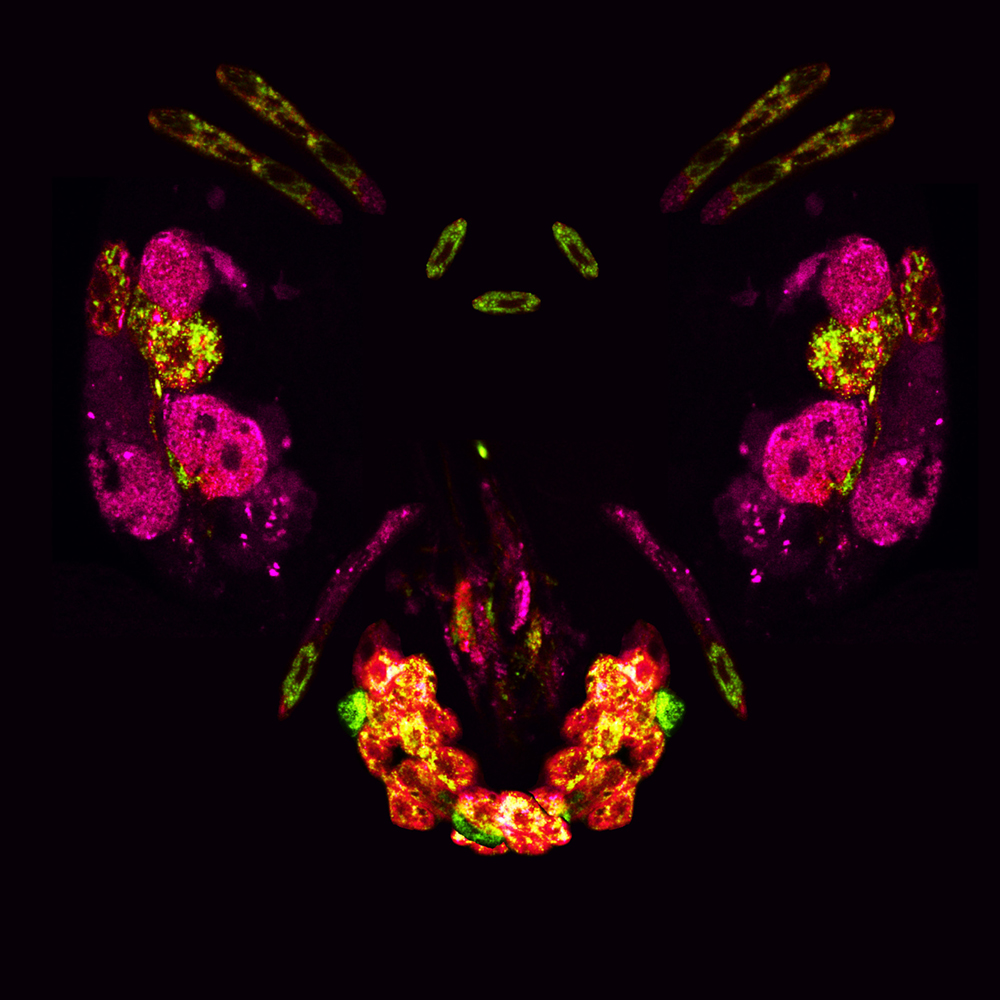
Honorable Mention: Fruit Fly Desire
Charles E. Schmidt College of Science
Mentor: Tanja Godenschwege, Ph.D.
The image depicts the Insulin Producing Cells (IPCs) and Diuretic Hormone 44 (DH44) neurons of Drosophila melanogaster (the common fruit fly), arranged to resemble the fly’s head. Initial images were captured using a 40x objective lens on a confocal microscope. Most of the head structure was comprised of a 13-day-old, starved female Drosophila melanogaster, while the lower proboscis was an 8- to 9-day-old male fly that was fed on a glucose and sucrose rich diet. The cells were genetically modified to express two different fluorescent markers: Drosophila Distracted protein in pink and Drosophila insulin like peptides in green. IPCs (pink) are analogous to mammalian pancreatic beta cells, which release insulin or insulin-like hormones to regulate high blood sugar levels. DH44 neurons (green) are analogous to mammalian corticotrophin-releasing hormone (CRH) which play a crucial role in detecting dietary amino acids (the building blocks of proteins) and promote food searching and consumption behaviors. Both IPCs and DH44 neurons play essential roles in maintaining metabolic homeostasis — keeping the body’s internal environment balanced to support optimal metabolic function. Dysfunction in these cell types can contribute to metabolic disorders such as diabetes and obesity, as well as increase the risk of neurodegenerative diseases. This project aims to uncover the mechanisms that drive endolysosomal trafficking — the process which vesicles, called endosomes, transport cellular material to lysosomes for sorting, recycling, or disposal — with a focus on the Distracted protein. The research was supported by the Jupiter Life Sciences.