SMART Health Seed Grant Supports Discovery of Motor Control Shifts After COVID-19
by Behnaz Ghoraani | Monday, Jan 26, 2026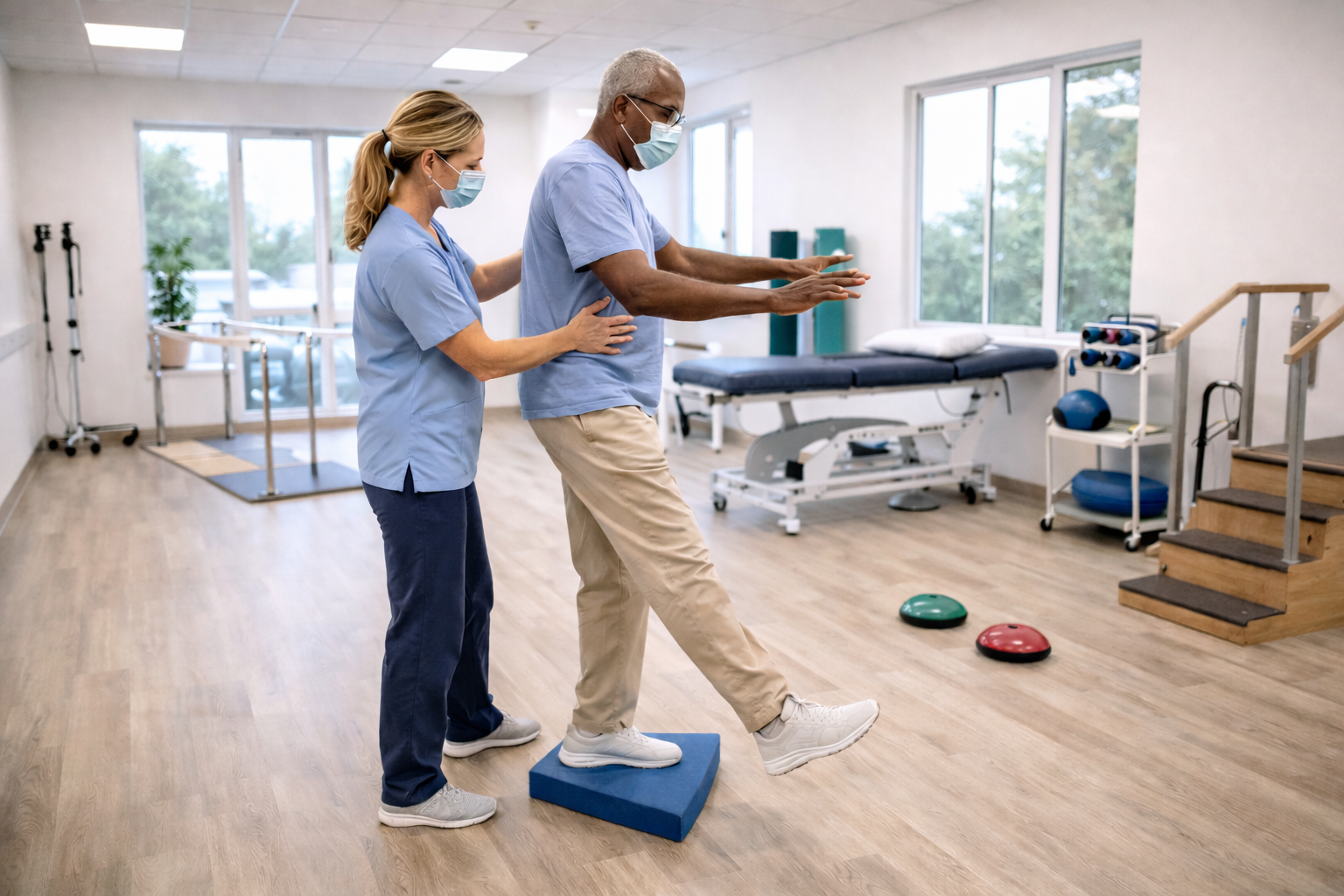
Dr. Adar Pelah, Research Professor in the Department of Electrical Engineering and Computer Science and the Center for Complex Systems, continues to lead pioneering work at the intersection of movement science, cognition, and data-driven health. With a career spanning foundational neuroscience discoveries and translational medical technologies, his recent study—enabled by seed funding from FAU’s Center for SMART Health—brings new insights into post-COVID recovery and the hidden neurological impact of the virus.
Working across institutions including FAU and the UK’s York and Cambridge Universities, Dr. Pelah’s research focuses on advancing diagnostics and interventions for movement- and cognition-related conditions such as osteoarthritis, Parkinson’s disease, and Long COVID. His prior innovations include patented rehabilitation systems, novel pediatric diagnostic devices, and studies exploring unconscious visual-motor coupling—even in cortical blindness.
In his latest work, Dr. Pelah and collaborators investigated balance and motor control in individuals recovering from COVID-19, particularly under conditions involving simultaneous cognitive demands. Using unsupervised learning techniques and motion capture, the study revealed a counterintuitive phenomenon: while cognitive distraction typically impairs balance in healthy individuals, those recovering from COVID-19 showed a paradoxical stiffening in balance responses under dual-task conditions. These findings hint at lingering, possibly adaptive or compensatory, alterations in neural control mechanisms, even in those who appear to have clinically recovered.
This project was made possible through seed funding awarded by the Center for SMART Health, which enabled the formation of a diverse interdisciplinary team. The dataset originated from the early years of the pandemic, collected under the FAU COVID-19 Registry and Repository Study led by Dr. Gregg Fields and Dr. Ximena Levy. The study itself was led by Dr. Pelah, with motion capture and data analysis conducted by Dr. Alisa Kunapinun (Harbor Branch Oceanographic Institute), Dr. Peter Ellison (University of York), and PhD researcher Xin Chen Cai. Clinical insight was provided by Dr. Ali Danesh (FAU’s Department of Communication Sciences and Disorders).
The implications of the findings are broad. Long COVID affects an estimated 15 million Americans, with symptoms like fatigue, brain fog, and motor-cognitive difficulties persisting for months or even years. By identifying subtle, otherwise undetected changes in movement and balance, this study opens the door to non-invasive, motion-based assessments that could one day assist in diagnosis or rehabilitation for post-viral conditions.
This work, presented at the 18th International Convention on Rehabilitation Engineering and Assistive Technology (I-CREATe 2025), exemplifies the mission of the Center for SMART Health: to support interdisciplinary, translational research that bridges bench science with clinical application. Dr. Pelah’s work not only advances our understanding of post-acute COVID-19 sequelae but also contributes to a growing toolkit of technologies for smart, personalized health monitoring and rehabilitation.