
Featured English Courses: Spring 2026
Jewish-American Literature
AML 4663.001|A. Furman|Cat 1|Boca Raton|In-Person|T/R 2pm–3:20pm
This course will provide you with the opportunity to explore the work of several major (and emergent) Jewish-American fiction writers. We will pay attention to the aesthetic issues informing this literary tradition, with a keen eye toward its synergies and rivalries with other literary traditions (e.g., modernism, “American” literature, postmodernism). In addition, the novels and short-stories should provide you with a richer understanding of Jewish-American culture in this century than afforded by the more popular and pervasive media images of the Jew in America.
World Literature: Critical Approaches
LIT 4225.001|M. Ma|Cat 1|Boca Raton|In-Person|W/F 11am–12:20pm
This course offers a critical exploration of world literature through a variety of theoretical lenses, focusing on how texts reflect and contest global histories, power structures, and cultural geographies. We will examine literature not just as artistic expression but as a form of knowledge shaped by imperialism, migration, and environmental change. Through authors such as Nnedi Okorafor and Amitav Ghosh, we will consider how narrative form, language, and genre mediate experiences of place and identity. Students will engage with critical frameworks including Ecocriticism, New Materialism, Feminist Theory, and Postcolonial Theory to interrogate how literature can disrupt dominant narratives and reimagine what the “world” in world literature means.
Postcolonial Literature: 
Ghosts and Hauntings in the Afterlife of Empire
LIT 4233.001|S. Lettman|Cat 1|Boca Raton|In-Person|W/F 11am–12:20pm
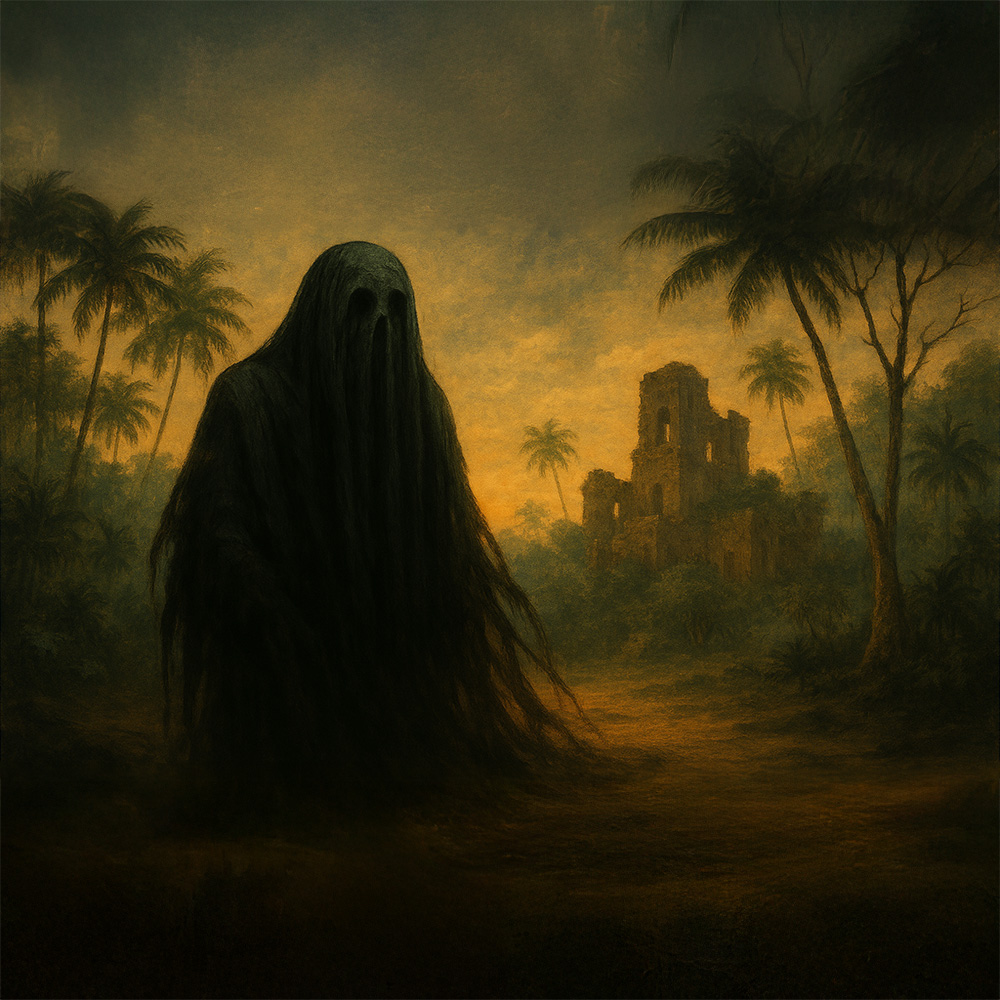
This course ventures into the haunted landscapes of postcolonial literature from Africa, Asia, and the Americas, where ghosts of empire linger long after colonial rule ends. Postcolonial writing asks: What happens when independence arrives, but the dead refuse to stay buried? How do nations and their people live with the echoes of conquest, slavery, and colonialism—histories of exploitation that haunt the present?
By focusing on the ghost, this course invites students to think about how literature gives voice to what official histories silence, and how haunting becomes a metaphor for the persistence of colonial power in supposedly “postcolonial” worlds. Through novels, stories, and essays, we will trace ghosts and hauntings as signs of unresolved violence, cultural dislocation, and the fragile work of imagining new identities. These spectral figures speak for what official histories silence, revealing that the end of empire is never truly an ending—it is an afterlife filled with shadows and phantoms. 
Although literature is our starting point, this course also draws on history, philosophy, sociology, and cultural theory to deepen understanding.
Latinx Caribbean Adaptations
LIT 4001.001|I. Zamora|Cat 2|Boca Raton|In-Person|T/R 12:30pm–1:50pm
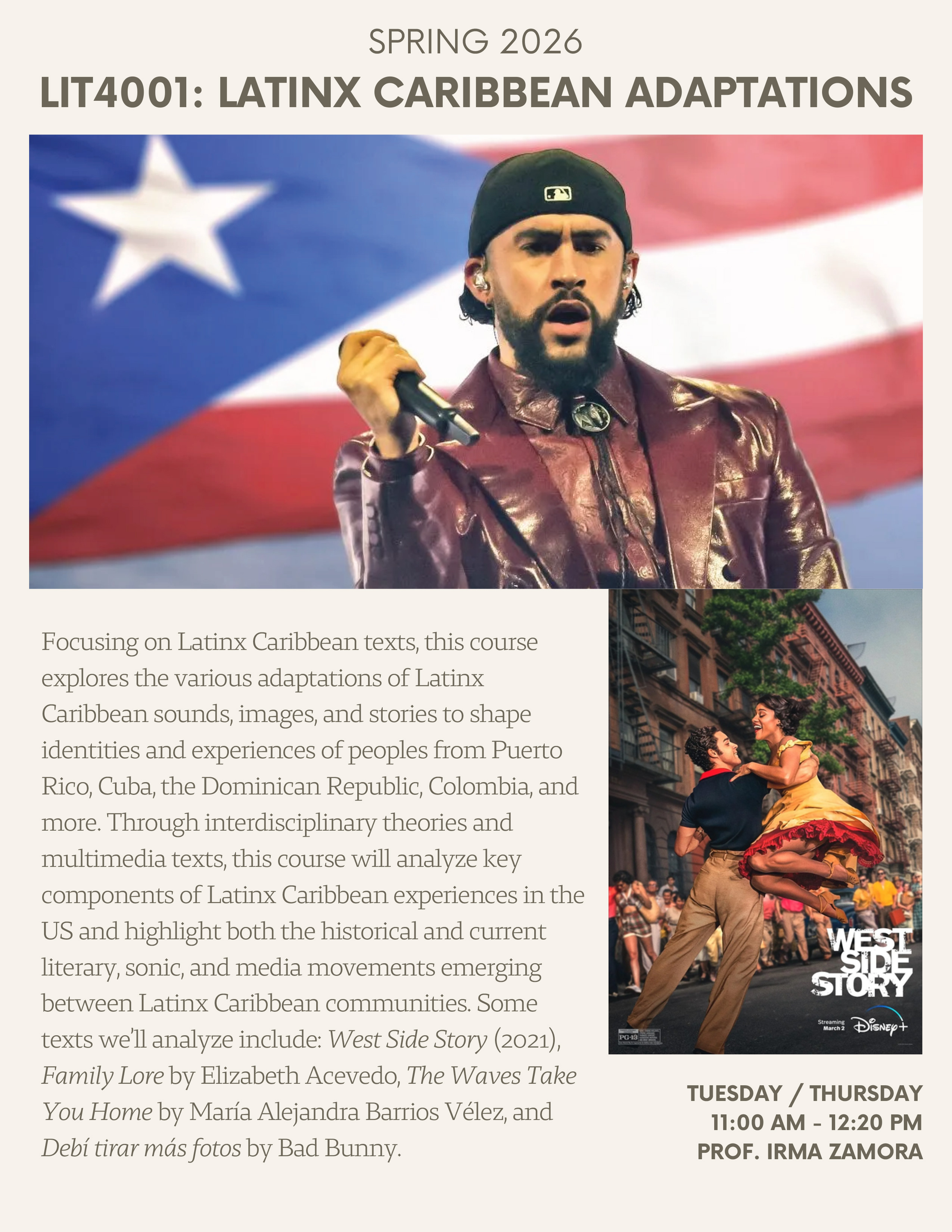
Focusing on Latinx Caribbean texts, this course explores the various adaptations of Latinx Caribbean sounds, images, and stories to shape identities and experiences of peoples from Puerto Rico, Cuba, the Dominican Republic, Colombia, and more. Through interdisciplinary theories and multimedia texts, this course will analyze key components of Latinx Caribbean experiences in the US and highlight both the historical and current literary, sonic, and media movements emerging between Latinx Caribbean communities. Some texts we’ll analyze include: West Side Story (2021), Family Lore by Elizabeth Acevedo, The Waves Take You Home by María Alejandra Barrios Vélez, and Debí tirar más fotos by Bad Bunny.
NEW “MINIMESTER” COURSE FOR SPRING 2026!
Spy Fiction and Film
LIT 4001.003|O. Buckton|Cat 2|Distance|Online Live Lecture|W 4pm–6:50pm | Second Half of Spring Semester

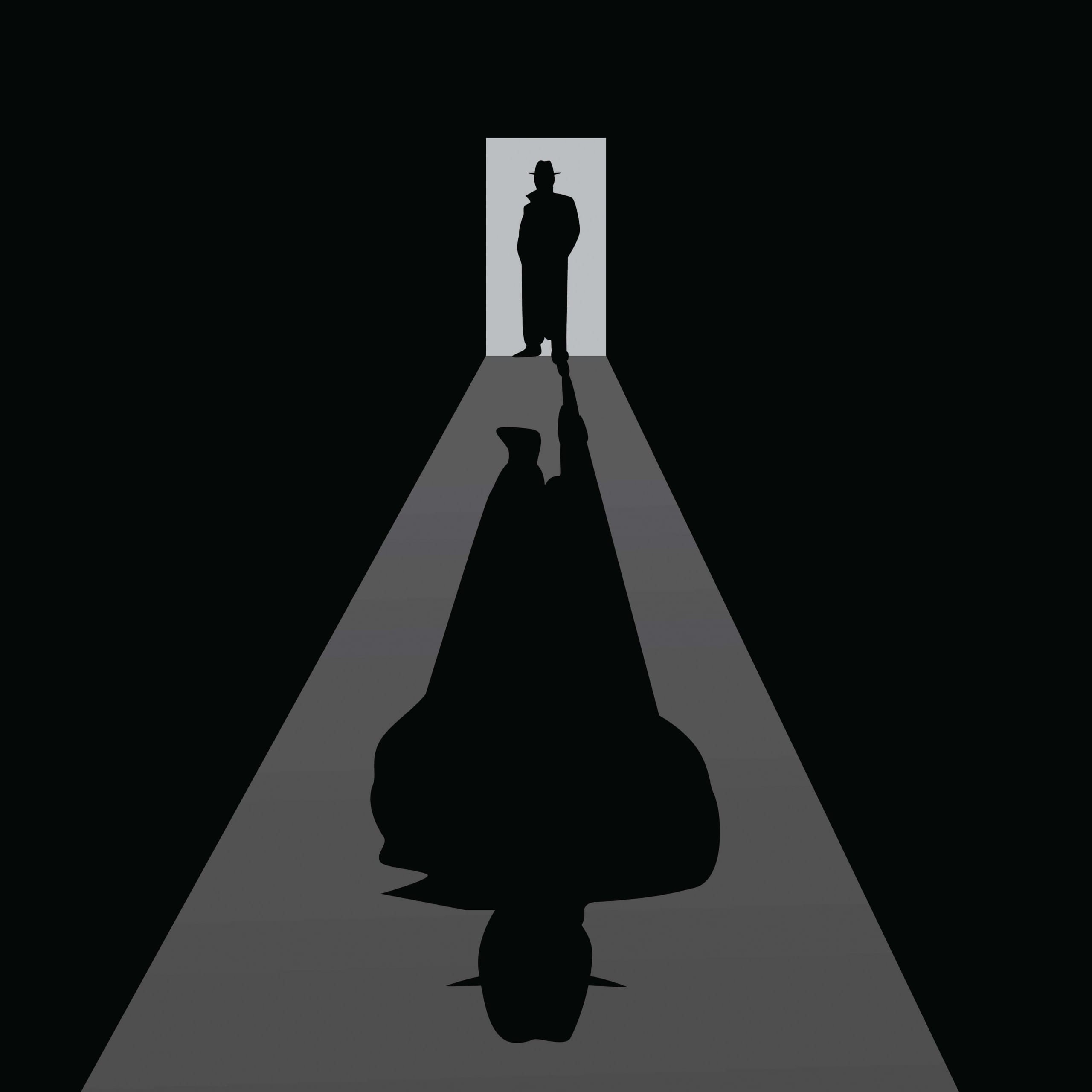
From James Bond’s martinis and gadgets to George Smiley’s quiet betrayals and modern cyber espionage, spy novels and films have has always offered more than thrilling missions and mysterious agents—they have revealed the anxieties, ambitions, political conflicts and moral ambiguities of their times. This course delves into the shadowy world of espionage fiction and film, tracing its evolution from early adventure tales and World War II propaganda to Cold War psychological warfare and 21st century technology. We'll explore a range of spy novels and films such as James Bond in Casino Royale (Ian Fleming’s first Bond novel), The Spy Who Came In From the Cold, Alfred Hitchcock’s North by Northwest, Three Days of the Condor, The Courier, The Bourne Identity, and Stella Rimington’s (Director of MI5) At Risk. We'll study film adaptations to show how espionage shuttles between page and screen, seducing audiences with glamour even as it exposes corruption. Assignments include quizzes, reports, and creative spy briefs. Whether you’re drawn to the adrenaline-fueled thrills of covert operations, or intrigued by the moral puzzles of betrayal, this course offers an adventure through the literature and film of secrecy, espionage, and deception that will leave you questioning what—and who—you can trust!

 For more information please contact Prof. Buckton (obuckton@fau.edu)
Bible as Literature
ENL 3425.001|R. McKay|Cat 2 (pre-1800)|Boca Raton|In-Person|W/F 12:30pm–1:50pm
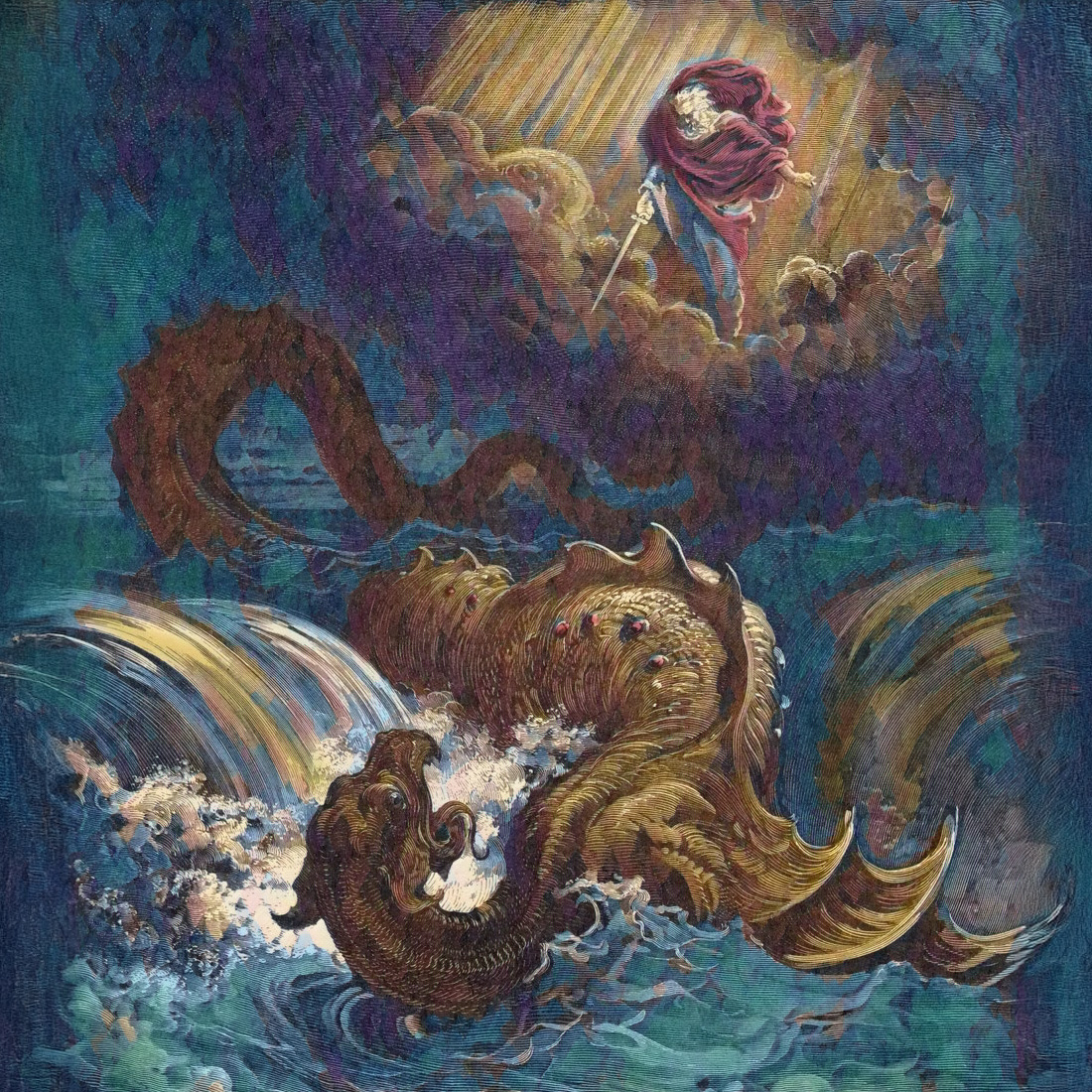
In case you are worried that this class will be too religious, not religious enough, or just plain boring, I can assure you that we will be looking at the Bible stories you are familiar with—from Adam and Eve to the monsters of Revelation—in a new way! I am mostly interested in how these stories persist in our culture today, in everything from books to comics to movies to video games.
Poetry Workshop 1
CRW 4310.001|O. Oriogun|Cat 3|Boca Raton|In-Person|W/F 2pm–3:20pm
This workshop is designed for students interested in exploring contemporary poetry and developing their own unique voices as writers. Through close readings of diverse poets from around the world, we will engage with new perspectives, styles, and forms that challenge conventional ways of seeing and writing. Students will explore poets such as Tomas Tranströmer, John Burnside, and Ada Limón, whose works push the boundaries of language, nature, and the self. Emphasis will be placed on discovering emerging poets, blending the personal and the political, and crafting poems that reflect both individual experience and a broader global context.
Poetic Forms
CRW 4311.001|R. McKay|Cat 3|Boca Raton|In-Person|W/F 2pm–3:20pm
Catalog Course Description: Students develop appreciation for poetic forms by writing sestinas, sonnets, villanelles, blank verse and a variety of other forms. Emphasis on contemporary poets experimenting in medieval, Renaissance, 17th-century forms and romantic forms such as the ode.
Honors Creative Writing Seminar
CRW 4932.001|A. Furman|Cat 3|Boca Raton|In-Person|W 2pm–4:50pm
This is an advanced course in creative writing (mixed genres) in which students study technique and craft in order to produce an honors thesis of creative work. This course provides a structured framework for students in the Creative Writing Honors track to complete their honors thesis (either a work of fiction, nonfiction or a collection of poetry). It examines works of fiction, poetry and creative nonfiction in more depth and with more of an eye toward craft than may have been possible in previous coursework. We will also discuss possibilities for graduate programs in creative writing.
 
top