Muscadine Grape (Vitis rotundifolia )
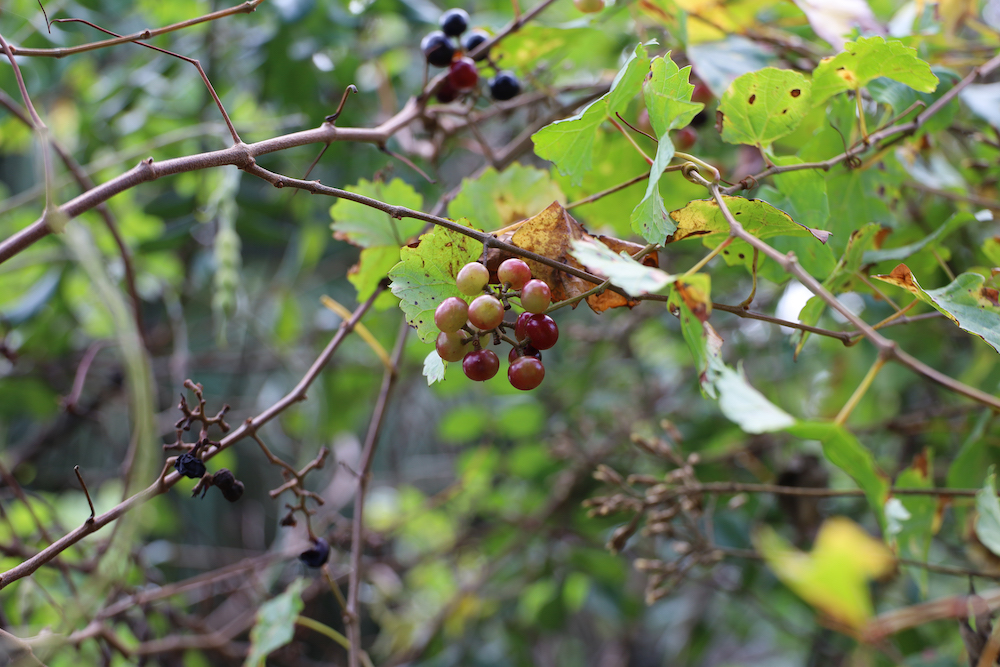 During the Fall, mourning doves, mockingbirds, cardinals, opossums, raccoons, and gray foxes flock to the FAU Ecological Preserve to feed on the Muscadine Grape. (Austin)
The Muscadine Grape is a high-climbing, vigorous vine that can reach lengths of over 90 feet in good conditions. The leaves are large and shiny, with broad, blunt teeth. The berries can range in color from purple-black to bronze, and they ripen in September and October. (“Vitis rotundifolia .”)
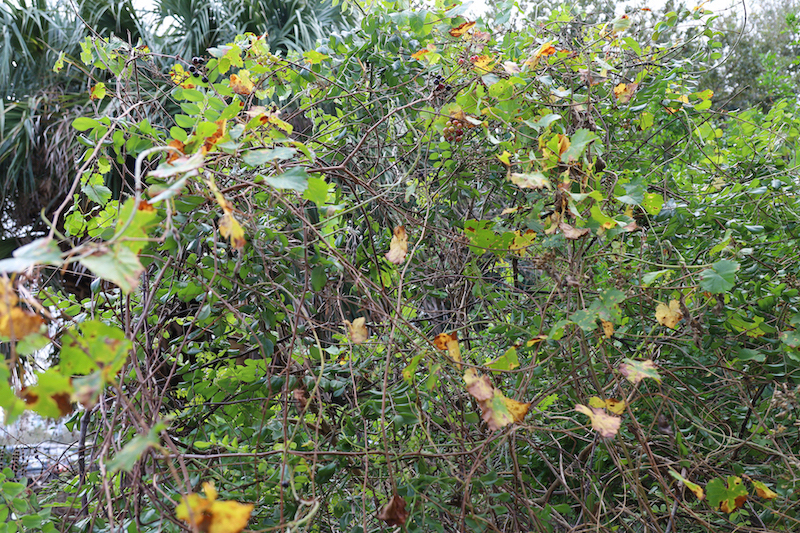 There are three basic, well-documented uses for grapevines. The young leaves and stems are cooked and eaten as greens, old stems can have safe drinking water extracted from them, and the fruits are edible and tasty. Old grape vines have a structure that keeps water inside so long as they are kept upright. A foot long stem that is cut and inverted could give up to a liter of drinking water.
The Creek and Seminole people used grapevines in the treatment of “Snake Disease”, an interesting malady that involved itching, dreams of snakes, and snakebites. The Creeks also used a concoction of parts of the plant combined with ginseng to treat issues in the throat. (Austin)
Austin, Daniel F. Florida Ethnobotany. Boca Raton, CRC Press, 2004.
Vitis rotundifolia.” Lady Bird Johnson Wildflower center , 12 Sep. 2014, https://www.wildflower.org/plants/result.php?id_plant=viro3 .