2/18/2026
Shrinking Shellfish?
Risks of Acidic Water in the Indian River Lagoon
Florida’s Indian River Lagoon is facing growing environmental stress from nutrient runoff, freshwater discharges, and harmful algal blooms. In addition, increasing atmospheric CO2 is causing acidifying waters, which make it harder for shell-building organisms like oysters and clams to grow and maintain their shells. When the water can’t support shell growth, these organisms become stressed, and their shells can even start to dissolve.
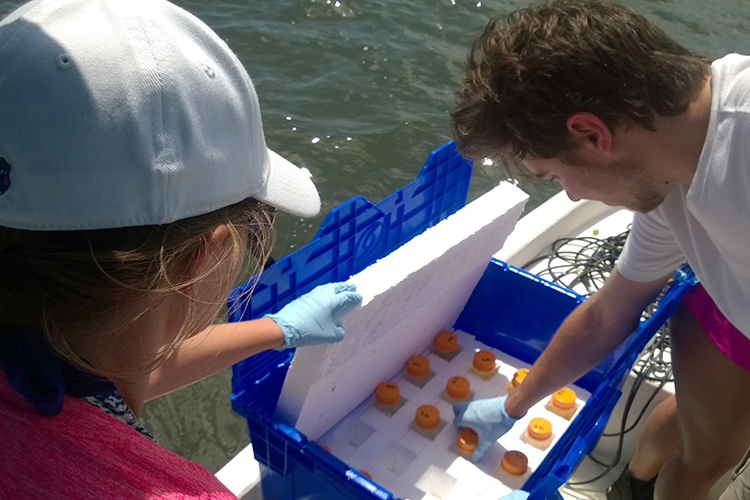
A new study by FAU’s Harbor Branch Oceanographic Institute measured aragonite saturation – a key indicator of water’s ability to support calcifying organisms – throughout the lagoon. The research found that areas with higher nutrients and lower salinity have lower aragonite levels, putting shellfish and other marine life at risk. This is the first study to map these conditions across the entire lagoon and provides critical information for future monitoring and restoration efforts.
“Protecting the Indian River Lagoon requires understanding not just what we can see on the surface, like algae blooms or seagrass loss, but also the invisible chemical changes affecting marine life,” said Megan Conkling, Ph.D., research scientist at FAU Harbor Branch. “This study provides essential insight into one of the less visible but critical threats facing estuaries today.”