8/30/2025
Virtual Get Togethers Ease Isolation in Older Adults
Group chats, video games and shared online moments help feel more connected
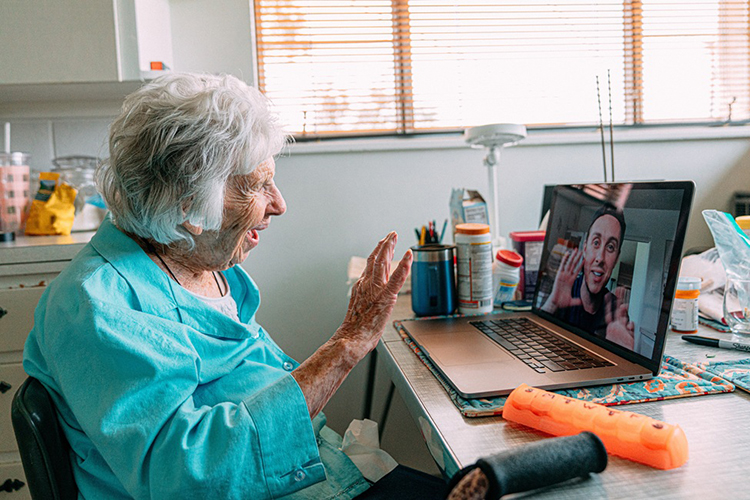
Social isolation is a major problem in older adults, as it speeds up memory loss and can even shorten lives. That’s why Florida Atlantic researchers wanted to see if online gatherings could help stay socially engaged.
A study of older adults with mild to moderate cognitive challenges showed that online meetings - even quiet participants stayed connected. And certain actions made a big difference; things like humor, praise or even just sharing open, judgment-free topics. Activities like singing, showing pets on camera, or playing casual, equal-turn-taking games like Boggle sparked lively and spontaneous chats lasting longer than most.
"One of the greatest strengths of our study is the amount of data we were able to collect,” said Christopher Beetle, Ph.D., senior author and an associate professor of physics, Charles E. Schmidt College of Science. "What makes our work especially unique is that all of this data comes from interactions among older adults living with ADRD – something that hasn’t been explored at this scale before."
Co-author Christine Williams, DNSc, APRN, agreed. "We also saw that interaction with the younger facilitator made a significant difference," said Williams, professor emerita, Christine E. Lynn College of Nursing. "Our findings highlight the importance of training facilitators to recognize and respond to ADRD-related language deficits thereby supporting those with ADRD to socialize in groups."
This study shows that virtual social time can be a powerful tool to reduce isolation, boost memory and improve emotional well-being for older adults with dementia. It also offers clear, practical ideas for how caregivers and session leaders can help make online time more meaningful.