10/16/2025
Strengthening Sponge Populations
FAU Research to Improve Oceanic Eco-Resilience in Florida Bay
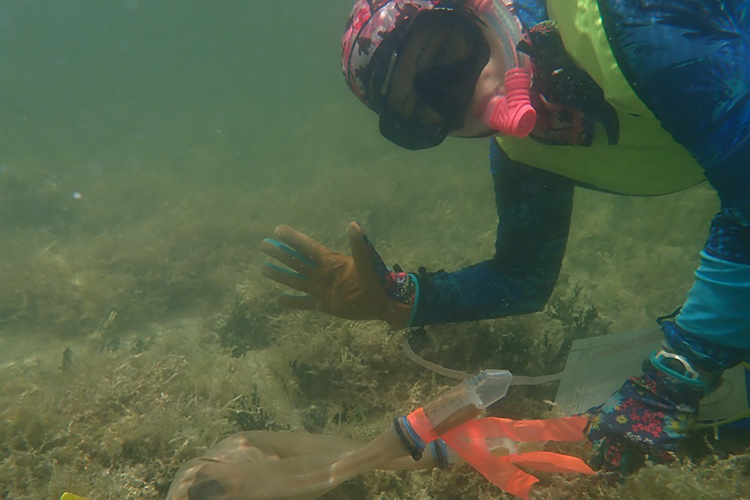
Florida Atlantic received a five-year, $720,446 grant from the U.S. Environmental Protection Agency to pioneer a new approach to restore sponge communities in Florida Bay.
Unlike traditional restoration methods (which simply transplant sponge cuttings), this new approach will use genetic tools – methods that analyze DNA to ensure restored sponges have the diversity needed to reproduce, adapt and survive environmental pressures.
This effort marks the first time genetic science will be applied to sponge restoration in the region, aiming to strengthen the long-term resilience of one of the nation’s most vulnerable marine environments. By giving restored sponges the genetic variety to thrive alongside wild populations, researchers hope to build stronger and more adaptable ecosystems.
Florida’s coral reef systems, where sponges play a critical role, fuel more than $1 billion annually in tourism and recreational activities. Reef-related fishing generates more than $150 million in sales each year, supporting thousands of jobs across the state.
“Receiving this EPA grant is incredibly significant because it means that we can move from simply rebuilding sponge numbers to restoring sponge populations with the genetic strength to withstand a shifting climate, disease, and other growing threats,” said Andia Chaves-Fonnegra, Ph.D., an associate professor of biology at Florida Atlantic University’s Harbor Branch Oceanographic Institute and Harriet L. Wilkes Honors College. “For the region, that means more stable fisheries, healthier reef ecosystems, clearer waters, and a safeguard for communities and businesses that depend on a thriving Florida Bay. It’s not just science – it’s an investment in resilience, for our ecosystems and for our people.”