Scientist Model Brain’s Blood Flow
Computer Simulation Reveals How Brain Vessels Regulate Pressure, Offering Insights into Stroke, Alzheimer’s and Brain Injury.
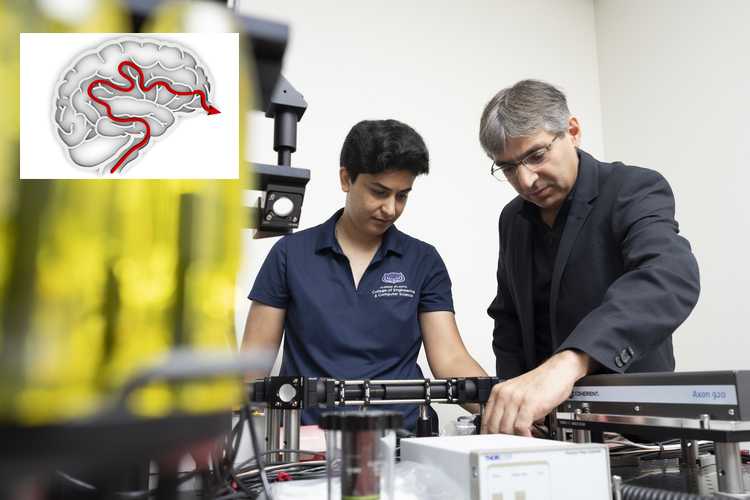
Researchers at Florida Atlantic University have developed a detailed computer model that simulates how blood flows through the brain, offering new insights into neurological conditions such as stroke, Alzheimer’s disease and traumatic brain injury.
Led by Ramin Pashaie, Ph.D., College of Engineering and Computer Science and the Institute for Sensing and Embedded Network Systems Engineering, the study focuses on small blood vessels between arteries and capillaries and how they respond to changing conditions.
Published in PLOS ONE, the model shows how different vessels regulate pressure and blood flow under various physiological states, from low pressure to heightened brain activity. The team found that some vessels play a critical role in protecting the brain from harmful fluctuations.
The work also supports efforts to detect Alzheimer’s early by analyzing similar blood flow patterns in the eye, which may mirror changes in the brain.
This cross-disciplinary research combines engineering, neuroscience and computation to better understand brain health. Researchers said they hope to refine the model further using human data, potentially paving the way for new diagnostic tools and treatments for brain disorders.
For more information, email dorcommunications@fau.edu to connect with the Research Communication team.