Spring 2025
Florida Atlantic: Redefining the Golden Years in Paradise
Researcher Challenges Traditional Retirement Stereotypes
Paradise takes on new meaning in Florida, where retirement transcends the traditional image of endless leisure. According to the U.S. Census Bureau, 1 in 5 Floridians are now 65 or older, and they are changing what it means to age gracefully.
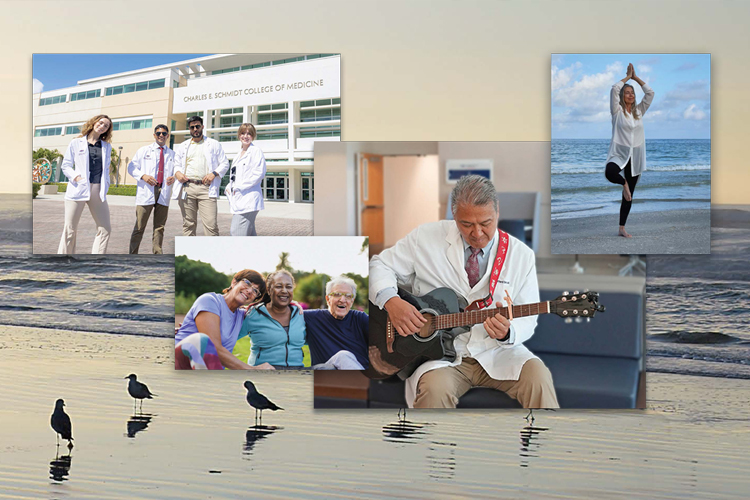
At Florida Atlantic University’s Charles E. Schmidt College of Medicine, researchers like Richard D. Shih, M.D., are challenging traditional retirement stereotypes.
“Aging well extends beyond avoiding illness,” Shih said. “It’s about staying active, engaged and mentally sharp.”
Gone are the days when retirement meant slowing down. Today’s seniors are rewriting the aging playbook, embracing physical activity, social connection and preventive care to maintain independence and joy well into their later years.
Movement as Medicine
Regular physical activity remains the cornerstone of healthy aging, but it doesn’t require marathon training. Even moderate activities like daily walks, gentle yoga or tai chi can significantly boost strength, balance and cognitive function. According to Shih, consistency matters more than intensity — small amounts of regular movement help combat age-related health challenges.
The key lies in finding activities that bring both health benefits and pleasure, he said. Whether it’s swimming in community pools, joining dance classes, or tending community gardens, movement can be a source of joy rather than obligation.
Safety First: Preventing Falls
While Florida offers abundant opportunities for active living, home safety remains crucial. The Centers for Disease Control and Prevention reports that 1 in 4 older adults falls annually. These incidents account for 95% of hip fractures in seniors.
“Your home should support your independence,” Shih said.
Simple modifications — such as secured rugs, bathroom grab bars and enhanced lighting — can transform living spaces into safe sanctuaries. He urged seniors to discuss fall prevention with health care providers, making safety part of their wellness routine.
The Social Connection
Physical wellness tells only half the story. Social engagement plays an equally crucial role in healthy aging. Whether through volunteering, pursuing hobbies or participating in community events, staying connected helps ward off depression and cognitive decline.
“Isolation can have serious consequences,” Shih said. “But maintaining relationships and community ties has incredible benefits for both mental and physical health.”
Social engagement can take many forms, from walking groups to book clubs to community events that foster meaningful connections. These activities do more than fill calendars — they create support networks that contribute to overall well-being.
Innovation Meets Aging
The Schmidt College of Medicine leads in innovative senior care, Shih said. Its Florida Geriatric Head Trauma CT Clinical Decision Rule helps doctors make smarter choices about diagnostic imaging after falls. Meanwhile, wearable technology is revolutionizing how seniors monitor their health, offering early warning signs of potential problems.
This blend of cutting-edge medical care and preventive strategies enables seniors to take charge of their health proactively. Technology becomes a tool for independence, helping residents maintain their active lifestyles with confidence.
The path to healthy aging starts with small, intentional steps — a morning walk, a safer home environment, or reaching out to old friends. Florida’s seniors demonstrate that transformative aging is about creating a lifestyle where wellness, community and joy intersect to define a new version of retirement.
Shih wants his message about healthy aging to remain clear, as he believes the golden years are what people make of them — and it’s never too late to embrace a more active, connected lifestyle.
“In Florida, the golden years truly shimmer with purpose, connection and vitality,” he said. “The state’s growing senior population proves that retirement can be a time of growth and adventure, especially when supported by forward-thinking medical care and strong community bonds.”