Spring 2025
Florida Atlantic: New Parasite Threatens Recovery of San Miguel Island Fox
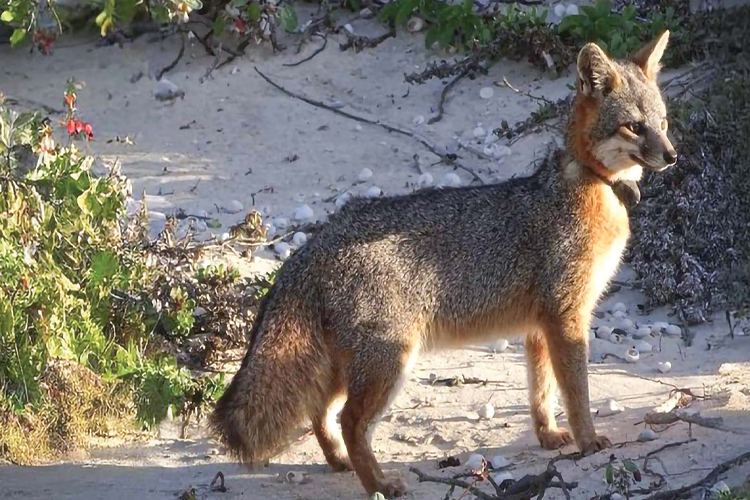
The San Miguel Island fox, a cherished species unique to California’s Channel Islands, faces a new threat after decades of conservation success. Although the fox rebounded from near extinction in the 1990s, its population plummeted by 30% between 2014 and 2018.
Researchers have linked this decline to the emergence of a newly identified parasite, commonly known as a thorny-headed worm. The worm was found in 69% of necropsied foxes on San Miguel Island, but not in fox populations on the other Channel Islands. The discovery emerged from a highly collaborative and comprehensive study led by a team that included Florida Atlantic University researchers.
The parasite’s impact on fox health is significant, causing issues such as intestinal damage, inflammation, weight loss, and in some cases, death. Nearly half of the infected foxes showed severe symptoms, with drought conditions exacerbating the effects.
“This parasite likely arrived via infected arthropods transported by humans,” said Ale Aleuy, DVM, Ph.D., assistant professor in Florida Atlantic’s Charles E. Schmidt College of Science. “This discovery raises concerns about the impact of human activity on isolated ecosystems.”
Using data from more than 4,000 fox captures spanning 16 years, researchers analyzed health trends before and after the parasite outbreak. Before the worm’s arrival, foxes exhibited low mortality and good overall health despite other parasites. Its introduction, combined with environmental stressors like drought, drastically altered these dynamics. Fortunately, improved rainfall after 2018 appears to have helped the foxes recover partially.
“While their condition is still not back to pre-parasite levels, the overall health of the foxes is stabilizing, and they are showing signs of improvement,” said Aleuy. “This resilience gives us hope for their continued recovery.”
Preventing the parasite’s spread to other Channel Islands is now a top priority. Strategies like controlling non-native invertebrates and monitoring fox diets are critical for protecting this vulnerable species. The study underscores the need for rigorous biosecurity measures and ongoing research to ensure its long-term survival.