8/11/2025
Neuroscience of Spiritual Experiences
Medical Director Brings Brain Science of Spirituality to The Mel Robbins Podcast
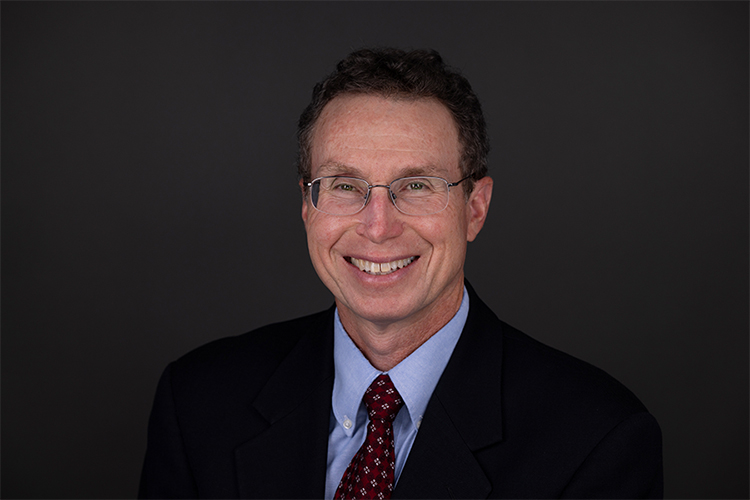
Dr. Andrew Newberg, director of the MRI Research Center at Florida Atlantic, was recently featured on the Mel Robbins Podcast, one of the nation's top-ranked podcasts and self-development platforms, where he shared insights from his decades of research into the neuroscience of spiritual experiences.
In the hour-long interview, "The Science of Spiritual Experiences: How to Rewire Your Brain for More Happiness & Purpose," Newberg discussed how he uses imaging technology to capture individuals' brains during spiritual practices, thereby gaining a better understanding of what happens to the brain and how it processes connection and transcendence.
"We've scanned hundreds of people doing all different kinds of practices," Newberg said on the podcast. "Some of them are secularized practices like mindfulness or yoga. Some of them are deeply meditative, like Buddhist meditation, and others are deeply spiritual. We've studied people speaking in tongues."
The findings show how specific regions of the brain respond during these complex spiritual states and experiences. The partial lobe, being a key area responsible for spatial awareness and one's sense of self, becomes less active during intense spiritual experiences, contributing to feelings of oneness or unity.
"If this area normally turns on to give us our sense of self, what's going to happen when it shuts down?" Newberg said. "We lose our sense of self and we don't see the boundary between ourselves and something that's out there in the world."
Newberg also mentioned that these spiritual states are not specific to one section of the brain. Instead, it involves multiple systems working together; cognitive, emotional and sensory areas all play a role in creating complex spiritual experiences.
"For any of the people listening who have had spiritual experiences, they probably know that it's not just one kind of thing that's happening to them," Newberg said. "It could be emotions, it could be thoughts, it could be feelings, it could be things that you sense."
Repetitive practices, such as meditation and prayer, he said, are fundamental to human beings and critical to human life, influencing both spiritual and everyday activities.
Throughout the interview, Newberg emphasized that these experiences are not exclusive to any one belief system. His research focuses on identifying the shared neurological patterns behind spiritual states, regardless of religious background or specific practice.
While Newberg’s research on spirituality experiences has gained national attention, his role at Florida Atlantic focuses on broader scientific research. As director of the MRI Research center, he collaborates with researchers across the university, helping them conduct studies using the imaging machinery.
Ultimately, Newberg’s said his overall goal is to encourage a deeper understanding of both the human experience and the brain.
“We’re all looking at the same world, but we’re not seeing it the same way,” Newberg said.
By studying the brain and how it shapes perceptions and beliefs, he aims to help people better understand themselves and one another.
Mel Robbin’s podcast is available to listen to on Apple Music, Spotify, Youtube and https://www.melrobbins.com/episode/episode-231/