10/7/2025
Do Turtle Nesting Temperatures Impact IQ?
Research Finds Hatchlings Retain Learning Abilities Despite Higher Incubation Temperatures
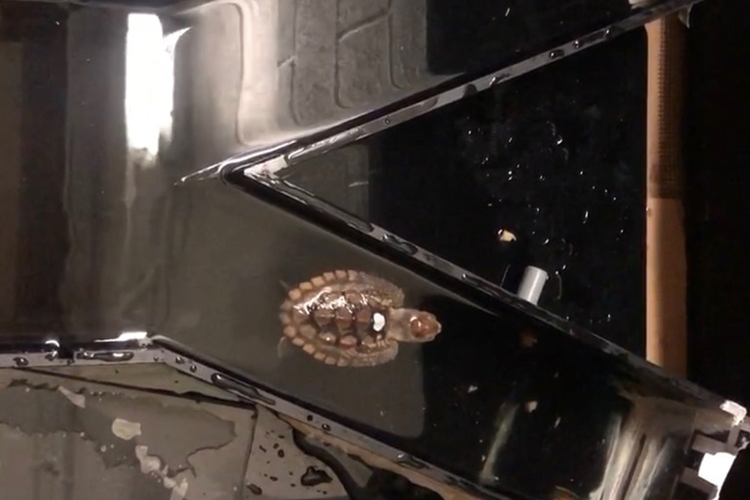
A new Florida Atlantic study is the first to test whether incubation temperature shifts cognitive ability in loggerhead hatchlings. Researchers utilized a Y-maze partnered with visual discrimination tasks to train the hatchlings to see how they learned, adapted and problem-solved.
Researchers incubated eggs at two female-producing temperatures - about 88 degrees Fahrenheit and 91 degrees F - and later trained hatchlings in the Y-maze to associate a visual cue (stripes or a bullseye) with a food reward. After they learned this “acquisition” task, the setup was reversed so they had to relearn the cue.
This tested their behavioral flexibility: whether they could abandon a learned response and adapt to new rules. To the team’s surprise, hatchlings from both temperature groups performed similarly, in fact, some reversal trials were completed more quickly than the original training rounds.
“This surprising level of behavioral flexibility suggests that these young turtles may be better equipped to navigate and adapt to rapidly changing environmental challenges than we previously understood,” said Sarah L. Milton, Ph.D. senior author and chair and professor in the Department of Biological Sciences, Charles E. Schmidt College of Science. “Such adaptability could prove crucial for their survival in an increasingly unpredictable world.”
Despite the mental resilience, higher incubation temperatures still took a physical toll. Hatchlings developed more anomalies in their shell scales (scute defects), hatched faster, grew more slowly and were smaller overall. These traits may undermine survival in the wild, which is why it remains crucial to protect nesting conditions to safeguard sea turtle resilience.