11/3/2025
Better Tech, Better Measures
Researchers Make 'Strides' in Gait Analysis Technology
A first-of-its-kind study explored whether more accessible technologies – foot-mounted wearable sensors and a 3D depth camera – could accurately measure how people walk, offering a practical alternative to traditional gait analysis tools. Gait, or walking pattern, is a key health indicator used to detect fall risk, monitor rehabilitation and identify early signs of conditions like Parkinson’s and Alzheimer’s. Traditional systems like the Zeno Walkway, the gold standard for gait analysis, are accurate but expensive, bulky and not easily used outside of lab settings.
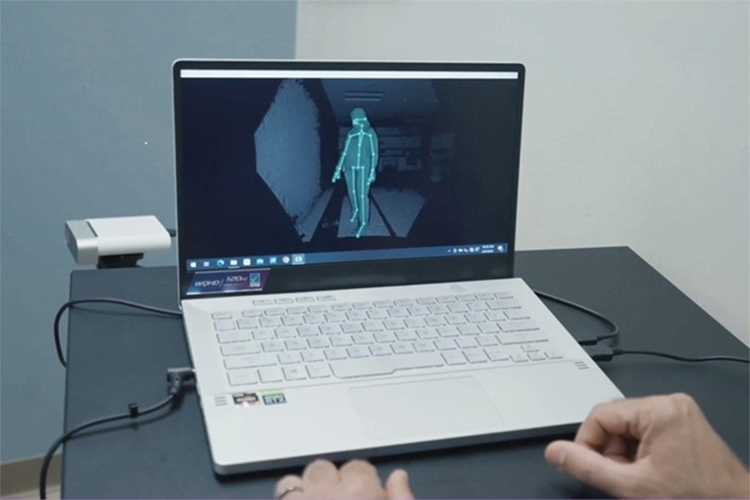
Florida Atlantic researchers tested three systems side-by-side in a real clinical environment: wearable foot sensors, the Microsoft Azure Kinect depth camera, and the Zeno Walkway. They found that the foot-mounted sensors and depth camera matched the gold standard’s accuracy across most gait metrics, even in complex settings with people moving in the background. In contrast, lower-back sensors were less reliable. These results suggest that wearable and camera-based systems could make detailed gait analysis more scalable, cost-effective and suitable for remote or routine clinical use.
“The implications of this research are far-reaching,” said Stella Batalama, Ph.D., dean of the Florida Atlantic College of Engineering and Computer Science. “As health care systems increasingly embrace telehealth and remote monitoring, scalable technologies like wearable foot sensors and depth cameras are emerging as powerful tools. They enable clinicians to track mobility, detect early signs of functional decline, and tailor interventions – without the need for costly, space-intensive equipment.”
For more information, email dorcommunications@fau.edu to connect with the Research Communication team.