8/25/2020
Evolution of Eye Loss in Mexican Cavefish
Researchers from FAU Jupiter campus are investigating the evolution of eye loss in Mexican cavefish. Itzel Sifuentes-Romero, Ph.D., a postdoctoral fellow of FAU’s Brain Institute, working in the lab of Johanna Kowalko, Ph.D., assistant professor of biology at Harriet L. Wilkes Honors College, led the study published in the July issue of Journal of Experimental Zoology Part B. Michael Solomon, a 2020 Wilkes Honors College graduate and Alex Keene, Ph.D., an associate professor of biological sciences in Charles E. Schmidt College of Science, collaborated on the study.
The paper titled, "Repeated Evolution of Eye Loss in Mexican Cavefish: Evidence of Similar Developmental Mechanisms in Independently Evolved Populations," investigates how eye loss has evolved repeatedly in multiple cave populations of the blind Mexican cavefish.
"We were interested in if, when the same trait, eye loss, evolve multiple times, if it does so the same way each time, or if there are different ways to get to this same evolutionary endpoint," Kowalko said.
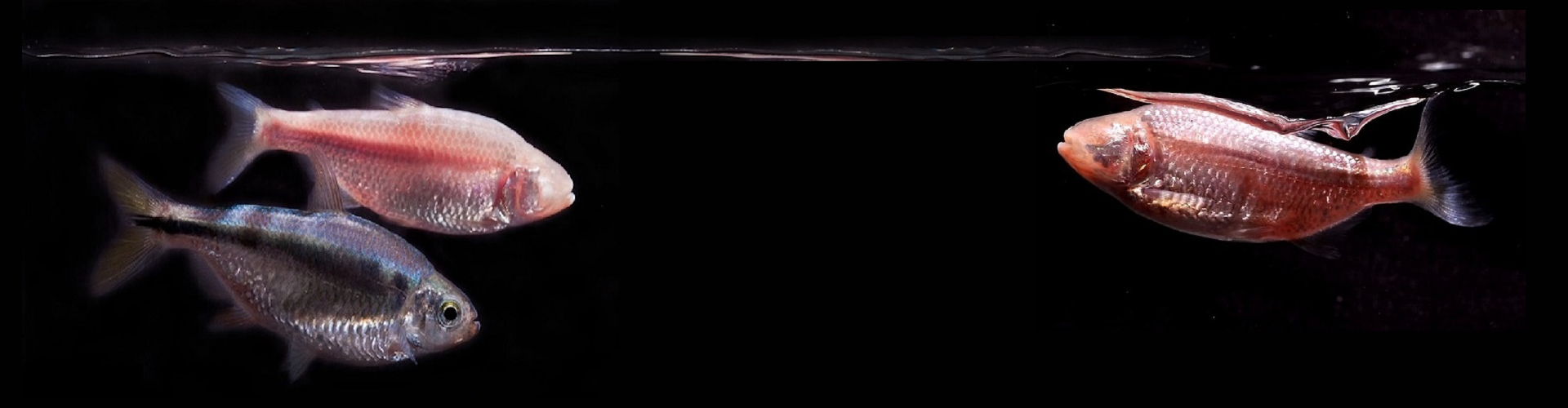
The small freshwater fish, Astyanax mexicanus, provides an opportunity to investigate the repeated evolution of cave traits. Astyanax mexicanus exists as two forms, a sighted, surface-dwelling form and at least 29 populations of a blind, cave-dwelling form that initially develops eyes that subsequently degenerate.
Researchers compared eye morphology and the expression of eye regulatory genes in developing surface fish and two independently evolved cavefish populations Pachón and Molino.
“We found that many of the previously described molecular and morphological alterations that occur during eye development in Pachón cavefish are also found in Molino cavefish,” Sifuentes-Romero said. “However, for many of these traits, the Molino cavefish have a less severe phenotype than Pachón cavefish. Further, cave-cave hybrid fish have larger eyes and lenses during early development compared with fish from either parental population, suggesting that some different changes underlie eye loss in these two populations.”
Together, the data support the hypothesis that these two cavefish populations evolved eye loss independently, yet through some of the same developmental and molecular mechanisms.