4/10/2026
Endangered Smalltooth Sawfish Make a Comeback
New research suggests Florida’s Indian River Lagoon is once again serving as a vital nursery for juvenile smalltooth sawfish.
During the winters of 2024 and 2025, widespread “spinning fish” events in the Florida Keys affected more than 80 marine fish species and likely led to the deaths of hundreds of endangered smalltooth sawfish, compounding long-standing declines driven by habitat loss and fishery bycatch. Once common throughout tropical and subtropical Atlantic waters and historically abundant in Florida’s Indian River Lagoon (IRL), the species now survives in only a small portion of its former range. Recovery depends heavily on the availability of intact nursery habitats, where young sawfish rely on shallow, mangrove-lined shorelines for protection and feeding during their earliest and most vulnerable life stages.
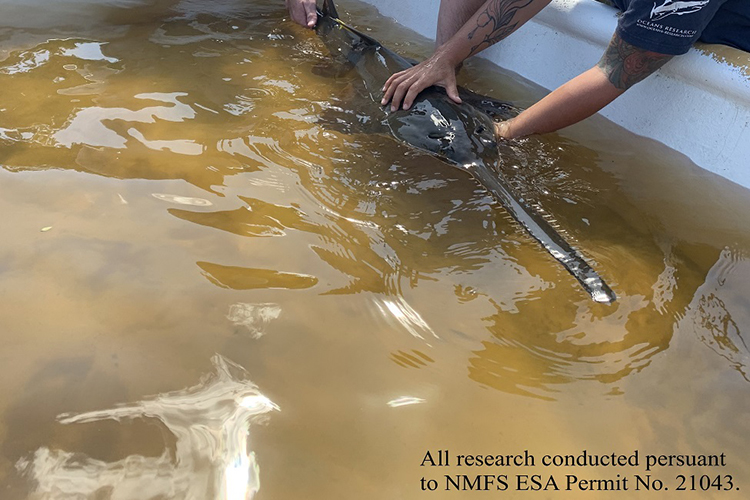
Amid these challenges, new research by FAU’s Harbor Branch Oceanographic Institute, in collaboration with the Florida Fish and Wildlife Conservation Commission, provides evidence that the IRL may once again be functioning as a nursery for juvenile smalltooth sawfish. Using acoustic tagging data and verified public reports, the study found that small juveniles showed strong site fidelity to a limited area of the Saint Lucie River, repeatedly using the same habitats across seasons and years under specific environmental conditions. The findings suggest that, despite recent losses, targeted protection and careful water-quality management in these high-use areas could play a critical role in supporting early survival and advancing recovery of this endangered species.
“These findings provide the first evidence that the Indian River Lagoon is once again functioning as a nursery for this endangered species,” said Sarah Torre, first author and a Ph.D. candidate at FAU Harbor Branch. “High-use areas within the broader nursery, such as the upper Saint Lucie River, are essential for the early survival of smalltooth sawfish and underscore the importance of protecting specific habitats to support their recovery. While other coastal species, like juvenile bull sharks, also use broad estuarine nurseries, the strong fidelity of smalltooth sawfish to relatively small sections of the nursery during their first two years is unique.”