4/24/2026
Effects of "Solo" Screen Time on Preschoolers
New study finds that unsupervised screen time worsens challenges confronting young children with limited language skills.
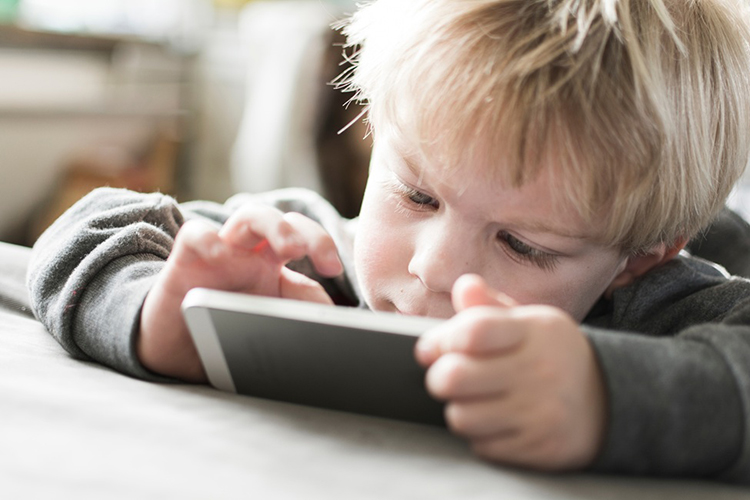
Strong evidence ties early language difficulties to later adjustment challenges. Can environmental factors make these problems worse? In a new study, FAU researchers, in collaboration with Aarhus University in Denmark, find that unsupervised or “solo” screen time worsens the behavioral and emotional challenges confronting young children with limited language skills. A total of 546 4- to 5-year-old children from 24 childcare centers in Denmark were followed for six months. Investigators assessed their language abilities, behavioral adjustment and the amount of time the children spent watching screens alone.
The study findings, published in the journal Research on Child and Adolescent Psychopathology, found that solitary screen time acts as an amplifier, exacerbating conduct problems in children with poor communication skills and low productive vocabulary. The results highlight the critical role of the home learning environment in early childhood development. For children who struggle with language skills, time spent alone with a screen is time not spent mitigating risks through healthy social engagement with parents or friends.
“Unsupervised screen time forecloses opportunities for social engagement that might mitigate the behavioral risks that follow from language problems,” said Brett Laursen, Ph.D., senior author and a professor of psychology in FAU’s Charles E. Schmidt College of Science.