English Classes Fall 2022
20th-Century British Literature
ENL
4273.001
J.
Ulin
Cat
2
Boca
In-Person
W/F 11:00am–12:20pm
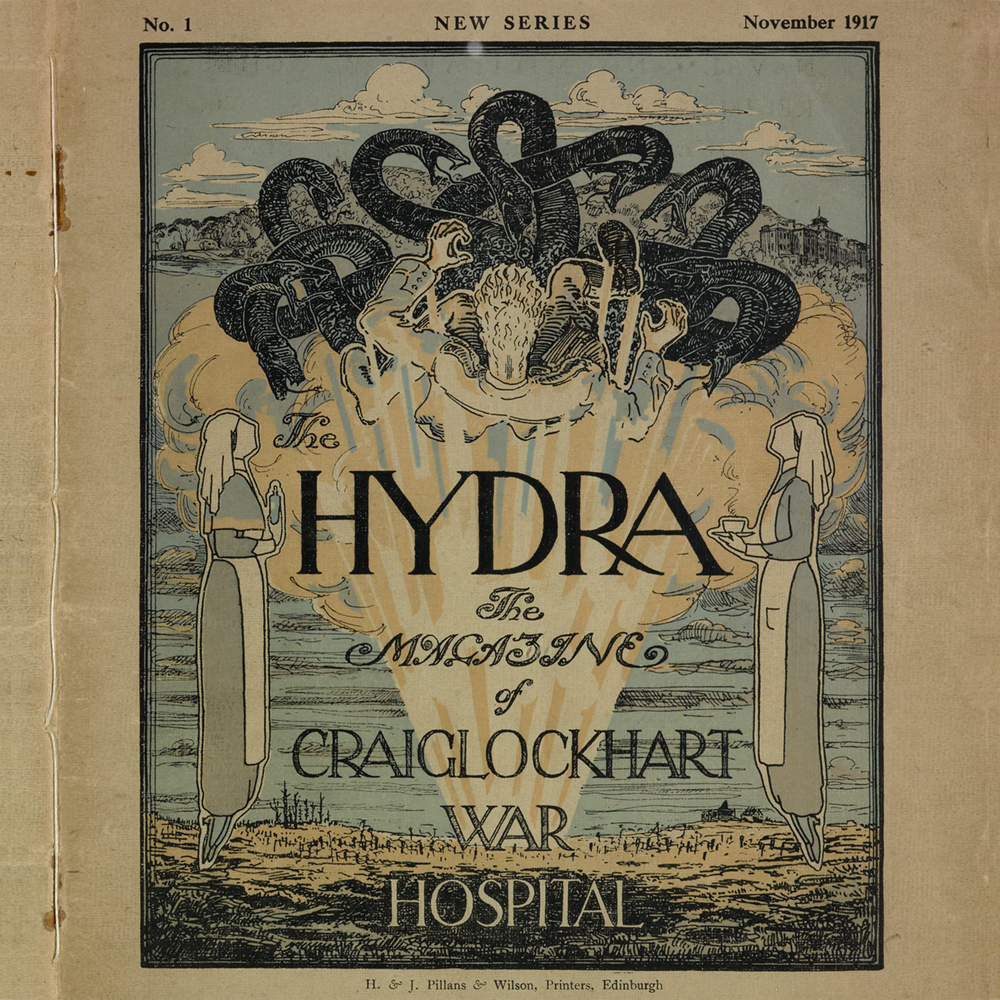
The cover of The Hydra: The Magazine of Craiglockhart War
Hospital was designed by British architect and WWI solider Adrian Berrington while he was
being treated there for what his doctor described as “a privation, or relative absence of
life,” or what was then termed “shell shock” (Revival after the Great
War). In the image, a soldier faces the many-headed monster Hydra, a representation of the
psychological battles that followed the experience of war and that left soldiers “broken
up,” their “unity in space and time both gone.” These phrases could also serve as
a description for many modernist works of art, music, and literature. This course considers how
modern British literature by Rebecca West, Virginia Woolf, Elizabeth Bowen, Samuel Beckett Harold
Pinter, and Kazuo Ishiguro sought to capture the disrupted (and disrupting) postwar consciousness.
Of particular interest to students interested in modernism, psychology and literature, and trauma
studies.
African-American Lit to 1895
AML
4604.001
R.
Fox
Cat
1
Boca
In-Person
T/R 9:30am–10:50am
In August 2019, the 400th anniversary of the arrival of enslaved
Africans on the shores of Virginia, The New York Times published The 1619 Project.
According to the editors, the collection of writings “aims to reframe the country’s
history by placing the consequences of slavery and the contributions of black Americans at the very
center of our national narrative.” In pieces by Nikole Hannah-Jones, Jamelle Bouie, and Bryan
Stevenson among others, scholars and activists analyze the relationship between slavery and
contemporary financial, medical, and penal institutions.
Using The 1619 Project as a springboard for critical reading, this course examines the
philosophical perspectives and worldviews embodied in early African American literature. Surveying
oral traditions, poetry, short fiction, and prose produced before the turn of the twentieth century,
participants in the class will consider the production contexts, literary attributes, and
theoretical implications of some of the most important writing in the field.
Creative Writing:Nonfiction
CRW
4211.001
A.
Furman
Cat
3
Boca
In-Person
T/R 2:00pm–3:20pm
This course is designed to introduce you to exceptional and inspiring models of three of the major
subgenres of creative nonfiction—memoir, literary journalism, and the lyric essay—and to
offer you the opportunity to write in two of these three modes, possibly exploring certain
interconnections between them. During workshops, students will offer helpful critical feedback to one
another. We will pay particular attention to the role of the nonfiction writer as a
“character” in the “story” that he or she tells, and the way/s in which this
character may be developed differently—and with greater or lesser emphasis—in the various
subgenres mentioned above. Hopefully, the readings will inspire you all to move out of what might be
your comfort zone in writing nonfiction, whether your comfort zone is to write intensely personal
memoirs or impersonal journalistic essays.
Intro to Literary Studies
ENG
3822.005
E.
Stockard
Req.
for English Majors
Distance
Online
Live Lecture
M 7:10pm–10:00pm
Students will read examples of the major genres of English literature (drama, poetry, novel, essay)
beginning with writing from the medieval period, and moving to the Renaissance, the 18th Century,
Victorian, and modern literary periods. The readings will focus on the idea of acquisition, and we will
look at how the acquisition of material goods is represented from the medieval to the modern period by
means of characteristic literary techniques and conventions. We will also consider the relation of art,
particularly literary art, to the material world, and the status of women in this world of acquisition.
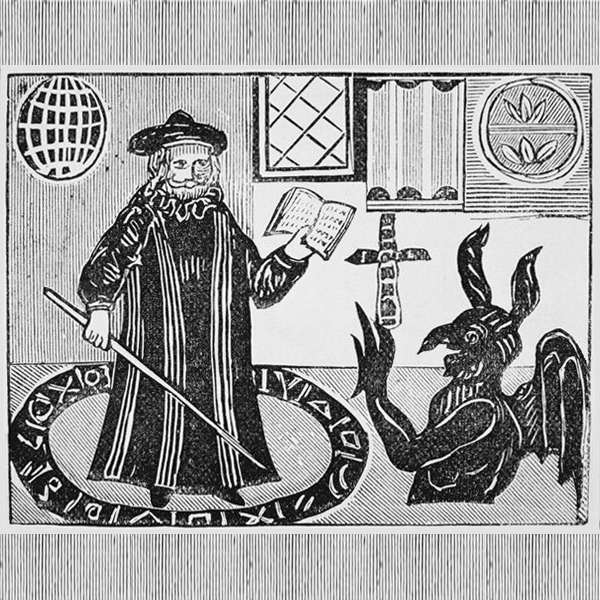
Representative readings include Doctor Faustus (drama), “My Last Duchess” (poetry), The
Forsyte Saga: Man of Property (novel), A Room of One’s Own (essay).
Required for English Majors and fulfills a requirement for the English
Education major.
Honors Seminar: Afterlives of Empire
ENG
4932.001
A.
Kini
Cat 1
or 2
Boca
In-Person
WF 2:00pm–3:20pm
This course grapples with the ongoing structures and legacies of the Atlantic slave trade,
Euro-American empire in Asia and settler colonialism in the Americas. While these topics are usually
studied separately, we will focus on engaging the connections, overlaps and intersections between these
incommensurate and nonequivalent histories of colonialism and gendered racialization. As Lisa Lowe
observes in her groundbreaking study The Intimacies of Four Continents, “The modern
division of knowledge into academic disciplines, focused on discrete areas and objects of interest to
the modern national university, has profoundly shaped the inquiry into these connections. Even the
questions we can ask about these histories are influenced by the unevenly inhabited and inconsistently
understood aftermath of these obscured conditions” (1-2). Following Lowe, we will read
promiscuously across established disciplinary formations—including literature, cultural studies,
history, anthropology, legal studies, sociology, film and performance—to unsettle normative
understandings of white supremacy, colonialism, capitalism and heteropatriarchy. Throughout our study we
will pay particular attention to intersectional, comparative and relational approaches and methods.
Medieval Literature
ENL
4210.004
T.
Miller
Cat
2
Boca
In-Person
WF 9:30am–10:50am
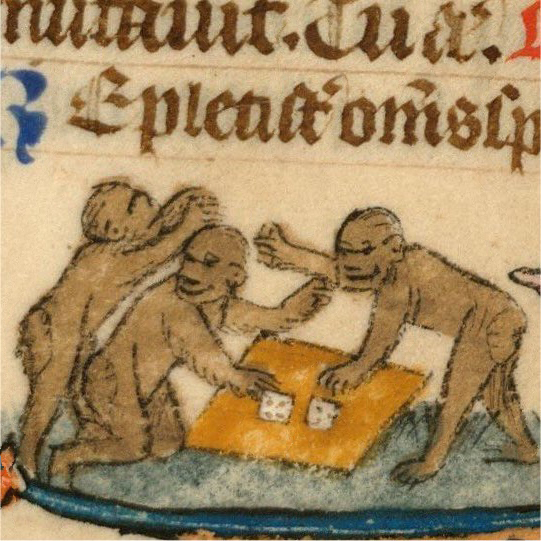
In contrast to popular depictions of the Middle Ages as an era of drab and dull suffering, games and
other forms of play flourished across Western Europe: contemporary games such as chess, backgammon, and
playing cards began to develop into their modern forms during the period. In this course, we will read a
broad survey of medieval literature -- from the Old English heroic poem Beowulf to the Arthurian romance
Sir Gawain and the Green Knight to selections from Chaucer’s Canterbury Tales --
but with an emphasis on how these texts engage with games, gaming, and play, including various kinds of
medieval contests, competitions, sports, entertainments, and even ritualized insult exchanges, a
premodern analogue of the rap battle. We’ll also be asking some simultaneously serious and playful
questions: did 15th-century authors write Chaucer fan fiction, and can Choose Your Own
Adventure novels tell us anything about Chaucer, and vice versa?
17th Century Literature
ENL
4221.001
J.
Leeds
Cat
2
Distance
Online
Live Lecture
R 4:00pm–6:50pm
This course offers an introduction to the major forms and concerns of British literature during the
years 1603-1674, the period of the English Revolution. Materials for the course have been selected so as
to demonstrate how various orthodoxies (religious, political, philosophical, poetic) were challenged,
and also defended, during this period. This emphasis on orthodoxy and reform requires considerable
attention to the historical context of the literature under discussion. The chief literary forms
examined will be the following: lyric poetry, the sermon, the polemical essay, and the philosophical
essay or treatise; authors include Donne, Bacon, Burton, Herbert, and Hobbes. Students will leave the
course understanding the 17th-century origins of modern democracy and modern materialism.
Satisfies pre-1800 distribution requirement for English major; Satisfies
Option 2 in British Literature for English Education major
Digital Protest Rhetorics
ENC
4930.002
A.
Stagliano
Cat
3
Distance
Fully
Online

In this course, we will consider online and other forms of digital
protest, organizing, and general political speech, and how rhetoric changes when it goes online. We
will read and think about digital-specific forms of communication (memes, virality, audio-visual
appeals, “liking” and "retweeting"/recirculating), and about the possibilities (and
risks) of protest in our current world.
Assignments will include written essays and creative/digital projects.
Studies in Rhetoric and Writing
ENG 4020.002
J.
Galin
Cat
3
Boca
In-Person
WF 12:30pm–1:50pm
This class will explore debates over immigration by studying the rhetoric used to convey the
typical arguments surrounding these debates such as “the effects of immigration upon
employment and wage scales; political alignments and the workings of government; schools and other
public institutions; the language spoken in the streets, in the shops, and in the government
offices; public morality and crime, resources allocation and depletion; and population growth itself
. . . with nativists and pluralists repeatedly squaring off against each other (Gerber 4).” In
particular, we will examine the logical fallacies used to characterize US immigration, develop our
own arguments about the impact of immigration on our country and the people who arrive on our
shores, and analyze visual arguments about immigration in three primary assignments: 1) analyze
logical fallacies in political discourse; 2) argue a position that you find compelling; and 3) turn
your assignment 2 into a video argument using freely available tools and sources.
World Lit: Critical Approaches
LIT
4225.001
A.
Kini
Cat
1
Boca
In-Person
WF 11:00am–12:20pm

Race, Migration, Empire. This course offers an introduction to contemporary global literatures in
English by writers from Africa, Asia, Europe and the Caribbean. We will focus on the braided themes of
race, migration and empire as they are explored in literary works that grapple with the histories and
legacies of British and US imperialisms. Reading across multiple intellectual traditions—including
postcolonial literary theory, Black diaspora studies, American studies and feminist
theory—students will be introduced to key debates and questions that have animated the study of
“world literature in English,” including issues of language, representation and imperial
power. Literary and cultural texts will include works by NoViolet Bulawayo, Andrea Levy, Meena
Alexander, Zadie Smith, Dinaw Mengestu and Mira Nair.
Chaucer
ENL
4311.002
E.
Stockard
Cat
2
Davie
In-Person
W 9:30am–12:20pm
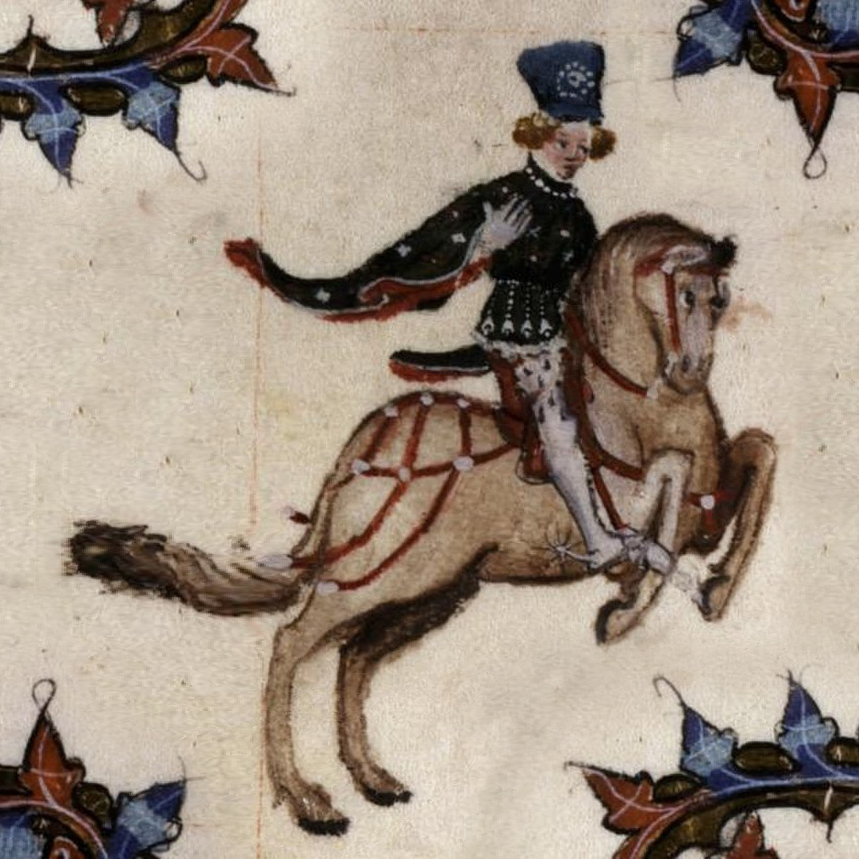
This course provides students with an opportunity for intensive study of selections from The
Canterbury Tales. We will be looking at how the collection of tales, each told by a different
pilgrim, places a number of opposing perspectives in motion. Often-intertwined topics will include love,
war, power, sex, money, and religion. Among the highlights are The Knight’s Tale, The
Miller’s Tale, and The Wife of Bath’s Prologue, but you are invited by
Chaucer to choose the best tale. As we accompany Chaucer’s pilgrims on their journey, students
will develop skill in reading Middle English and become familiar with some historical contexts of
Chaucer’s writing—social as well as literary.
Fulfills Category 2 and pre-1800 requirements for the English major;
Chaucer also fulfills a major author requirement for the English Education major.
Milton
ENL
4341.001
J.
Leeds
Cat
2
Distance
Online
Live Lecture
W 4:00pm–6:50pm
The course introduces students to Milton’s major works in poetry and prose; we will read some of
Milton’s early poems, selections from his prose treatises, and Paradise Lost. The goals
of the course are as follows: 1) to explore the symbolic order of Milton’s Christian Humanism, 2)
to convey the essentials of Miltonic radicalism in matters political, social, ecclesiastical, and
theological, and 3) to assess Milton’s contribution to the forms and style of English poetry.
Because Milton's writings are grounded in the events of his time, students will be required to develop a
basic knowledge of 17th-century English history. Students will leave the course well-schooled in certain
fundamental concepts and concerns of Renaissance and Reformation thought.
Satisfies pre-1800 distribution requirement for English major; Satisfies
major author requirement for English Education major
Structure of Modern English
LIN
4680.006
J.
Leeds
Cat
3
Distance
Online
Live Lecture
M 4:00pm–6:50pm
This course offers a comprehensive study of English grammar and syntax, focusing on analysis of the
structures of English prose. We will examine in detail the elements of English prose at the levels of
the word, the phrase, the clause, and the sentence, and we will analyze sentences of increasing
complexity as the semester proceeds. By strengthening your grasp of grammatical interrelationships
within the sentence, the course will also enhance your abilities as a writer.
Required for English Education majors
Irish Literature
LIT
3184.001
S.
Mitchell
Cat
1
Distance
Online
Live Lecture
TR 11:00am–12:20pm
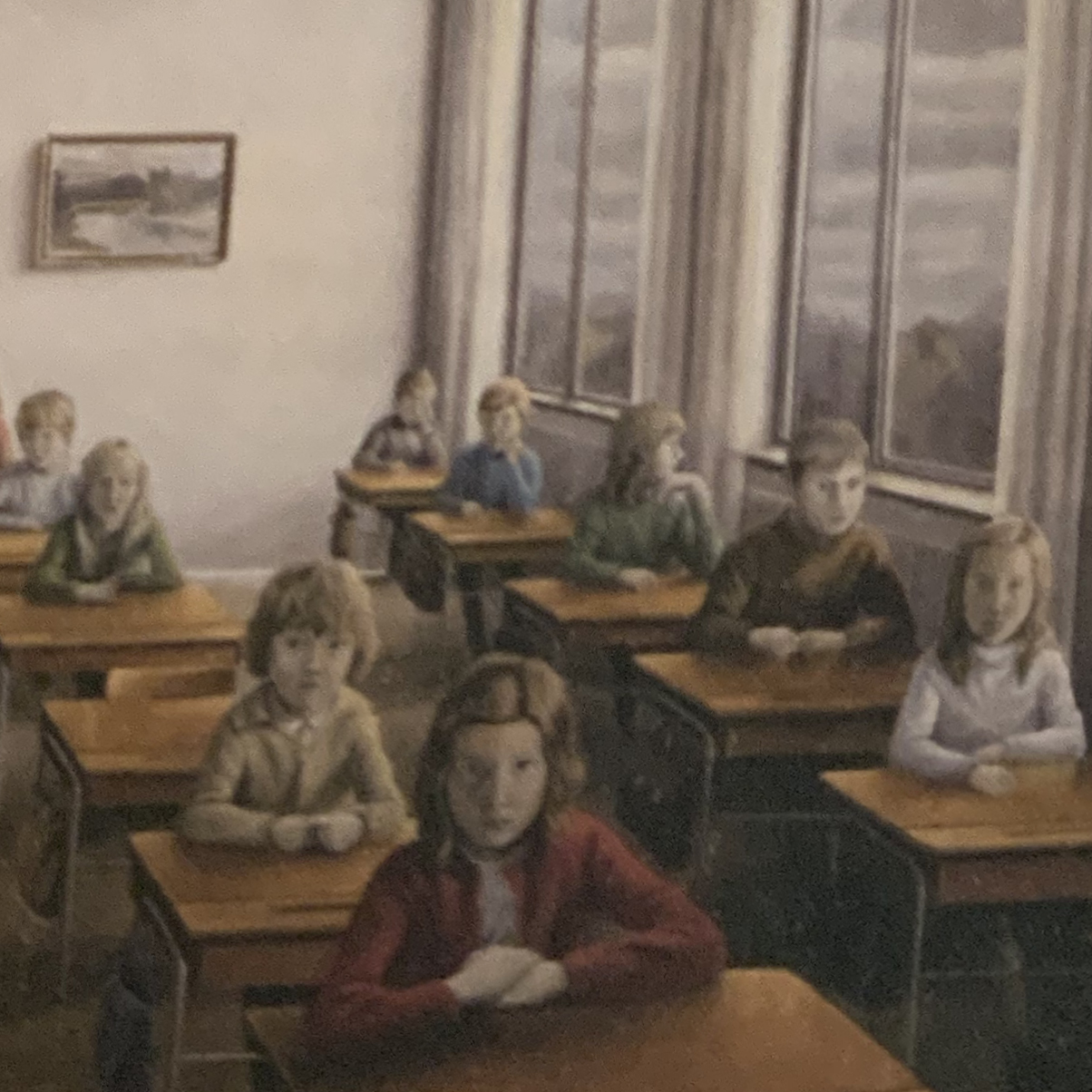
Look at the children and classroom in Peter Tillberg’s ironically titled Will You Be
Profitable, My Dear? In my view (your view might be different), this is the stultifying
classroom that haunted the nightmares of W.B. Yeats, James Joyce, Augusta Gregory, J.M. Synge, Seamus
Heaney, Medbh McGuckian, and Mary O’Malley—writers who resisted the collective expectations
of their society to create poems, plays, and fictions that liberate us as individuals and encourage our
own inventiveness and originality. “The act of poetry / is a rebel act,” writes Irish Poet
Michael Hartnett, and each of the writers we will read was, or is, a rebel. As the protagonist of
Joyce’s A Portrait of the Artist as a Young Man puts it, “I intend to escape three
nets….” To find out what those nets were—and the nets we might need to escape
now— join us in reading and discussing the greatest works of Irish Literature and the two greatest
authors of the twentieth century, Yeats and Joyce. Fáilte roimh an saol! [pronounced: fal-cha rev
ahn seel] For more information, contact Professor Mitchell: <smitch21@fau.edu>
Literary Theory
LIT
3213.002
R.
Fox
Req.
for English Majors
Boca
In-Person
TR 2:00pm–3:20pm
In 1987, Barbara Christian writes, “[…] there has been a
takeover in the literary world by Western philosophers from the old literary elite, the neutral
humanists. Philosophers have been able to so effect such a takeover because so much of the
literature of the West has become pallid, laden with despair, self-indulgent, and
disconnected.” Here, Christian interrogates intellectual practice which works to exclude
particular groups (i.e. women, people of color, immigrants), challenging readers to adopt more
diverse modes of “theory” concerned with matters of accountability and survival.
Importantly, “The Race for Theory” tackles the damaging effects of Poststructuralism,
and imagines a relational way of meaning-making—as found in folktales, humor, and
proverbs—in its stead.
This course considers the productivity and the limits of theory and its relationship to literature.
Specifically, “Literary Theory” introduces approaches such as Psychoanalysis; Marxism;
Feminism; Gender Studies; Queer Theory; Ethnic, Indigenous, Post-colonial, and Transnational
Studies; Cultural Studies; Human-Animal Studies; Disability Studies; and Ecocriticism.
Modern Poetry
LIT
4032.001
S.
Mitchell
Cat
2
Distance
Online
Live Lecture
TR 2:00–3:20pm
When Igor Stravinsky’s The Rite of Spring premiered at the Théatre des
Champs-Elysée in Paris on May 29, 1913, its savage rhythms, brutality, and dissonance
precipitated a brawl as pro and con members of the audience argued so volubly the music was drowned out.
What Stravinsky’s music ushered in was the Modern Period. Between 1913-14, some of the greatest
works of modern literature, music, and art were created. In this course we will focus on poets who
ushered in new feelings—angst, alienation, loneliness, despair, and rage—and broke with
traditional language and traditional forms: Mina Loy, Gertrude Stein, Marianne Moore, Robert Frost, T.S.
Eliot, Ezra Pound, H.D. (Hilda Doolittle), Langston Hughes, Jean Toomer, Wallace Stevens, Hart Crane,
and W.H. Auden. For more information, contact Professor Mitchell <smitch21@fau.edu>.
Literary Theory
LIT
3213.003
E.
Berlatsky
Req.
for English Majors
Boca
In-Person
WF 9:30am–10:50am
As Jonathan Culler writes in Literary Theory: A Very Short Introduction, since the 1960s
“writings from outside the field of literary studies have been taken up by people in literary
studies because their analyses of language, or mind, or history, or culture, offer new and persuasive
accounts of textual and cultural matters. Theory in this sense is not a set of methods for literary
study, but an unbounded group of writings about everything under the sun.” This course will sample
the “unbounded” scope of critical theory by reading foundational theoretical statements on
mimesis, reading, (post)structuralism, psychoanalysis, (post)colonialism, race, feminism, queer theory,
and more. We will also work on applying theoretical principals to primary texts, including short poems
and at least one longer text, possibly Frank Miller’s Batman: The Dark Knight Returns.