7/7/2026
Pixels Preserve Vaquita
Researchers create highly detailed digital record of a rare vaquita skeleton using advanced imaging technologies
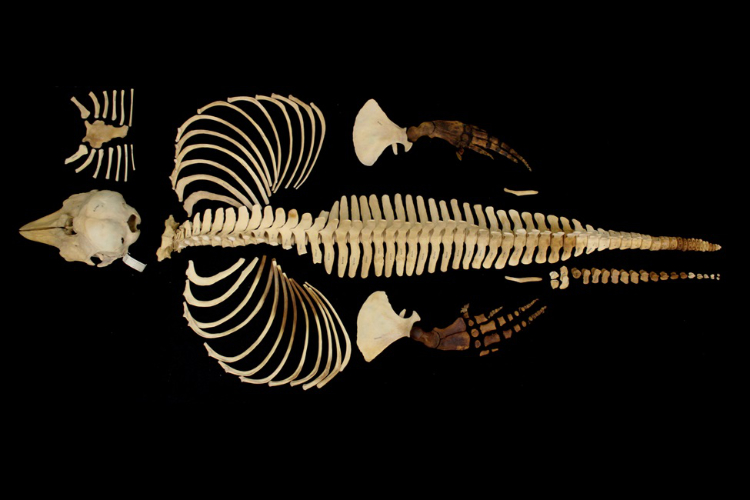
Researchers from Florida Atlantic University, in collaboration with the San Diego Natural History Museum, SeaWorld California, and NOAA Fisheries, have created a highly detailed digital record of a rare vaquita skeleton using advanced imaging technologies. The team combined medical CT scanning, high-resolution micro-CT imaging, and digital photography to capture the specimen at multiple scales, from overall skeletal structure to microscopic bone detail. The resulting datasets were reconstructed into precise 3D models that allow the entire skeleton to be virtually explored, measured and studied without handling the fragile original specimen.
The project, published in Marine Mammal Science, makes all data freely available through the open-access repository MorphoSource, including photographs, scan data and downloadable 3D meshes. These digital resources can be used for scientific research, education and public outreach, including the creation of 3D-printed replicas for museums and classrooms. By transforming a rare physical specimen into a permanent, shareable digital archive, the study expands access to the world’s smallest porpoise and most endangered marine mammal and provides a new tool for conservation and learning.
“By combining advanced imaging technologies with open-access data sharing, the effort not only safeguards a valuable record of one of the planet’s most endangered marine mammals, but also makes that information accessible to anyone,” said Jamie Knaub, first author, imaging lab assistant in the Berlin Family Bioimaging Lab at FAU Laboratory Schools Marcus Research and Innovation Center, and a Ph.D. candidate in the FAU Department of Biology within the Charles E. Schmidt College of Science. “The project will enable the production of scientifically accurate replicas for museums, classrooms and educational programs, helping to raise awareness and support conservation efforts for a species now teetering on the edge of extinction.”