Fall 2026
Florida Atlantic: Paws That Heal
Training Service Dogs May Slow Aging in Female Veterans
Women have served in the United States military since 1948. Yet research on veterans’ health continues to focus largely on men — even though women report higher rates of post-traumatic stress disorder (PTSD).
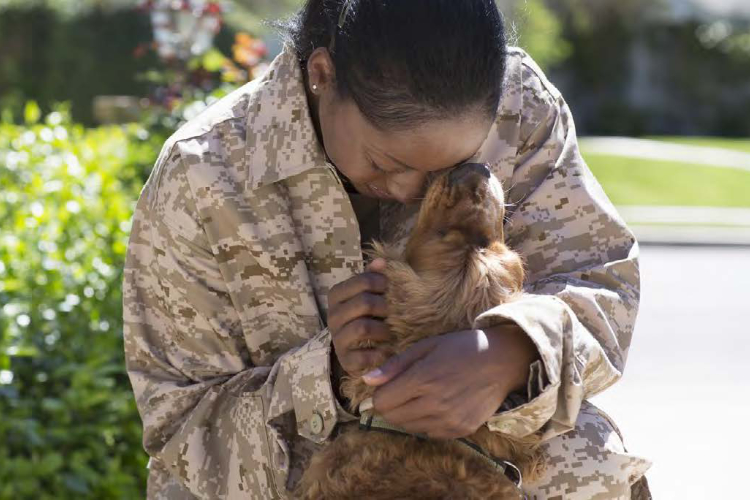
Now, a landmark study that specifically focuses on female veterans suggests that the act of training dogs to be service animals may help slow biological aging in female veterans.
Researchers at Florida Atlantic University were part of a team that explored how training service dogs affects female veterans diagnosed with PTSD. Supported by the Eunice Kennedy Shriver National Institute of Child Health and Human Development, the study examined whether purposeful, mission-driven work could ease both psychological and biological stress.
Rather than receiving service dogs, participants volunteered to train them for fellow veterans. Over eight weeks, women aged 32 to 72 were randomly assigned to either a hands-on, dog-training group or a comparison group that watched dog-training videos. Researchers tracked psychological stress using validated questionnaires and measured biological stress through saliva samples assessing telomere length — a marker of cellular aging — and wearable monitors that recorded heart rate variability.
The study results, published in the journal Behavioral Sciences, were striking Women who trained service dogs showed increases in telomere length, suggesting a slowing of cellular aging. In contrast, those in the control group, who only watched videos, experienced telomere shortening, a sign of accelerated aging. The effect was most pronounced among veterans with combat experience: those who trained dogs saw the greatest gains, while combat-exposed women in the control group had the sharpest declines.
“Female veterans face unique reintegration challenges that are often overlooked, and traditional PTSD treatments don’t always meet their needs,” said Cheryl Krause- Parello, Ph.D., first author, associate vice president for research, associate executive director for FAU’s Institute for Human Health and Disease Intervention, and director of Canines Providing Assistance to Wounded Warriors.
Psychologically, both groups reported reduced PTSD symptoms, anxiety and perceived stress indicating that structured engagement alone may offer therapeutic value. However, only the dog-training group demonstrated measurable cellular benefits. Beyond emotional comfort, the study suggests that purposeful connection — with animals and with a mission — may reach all the way down to the cellular level, reshaping how we understand healing after service.
“This research underscores the power of service dog training as a meaningful, nonpharmacological intervention to support the health and healing of female veterans with PTSD. It opens the door to more personalized approaches that nurture both the mind and body,” Krause-Parello said.