Pompano Broodstock Maturation and Larviculture Protocols
Pompano Broodstock Maturation and Larviculture Protocols
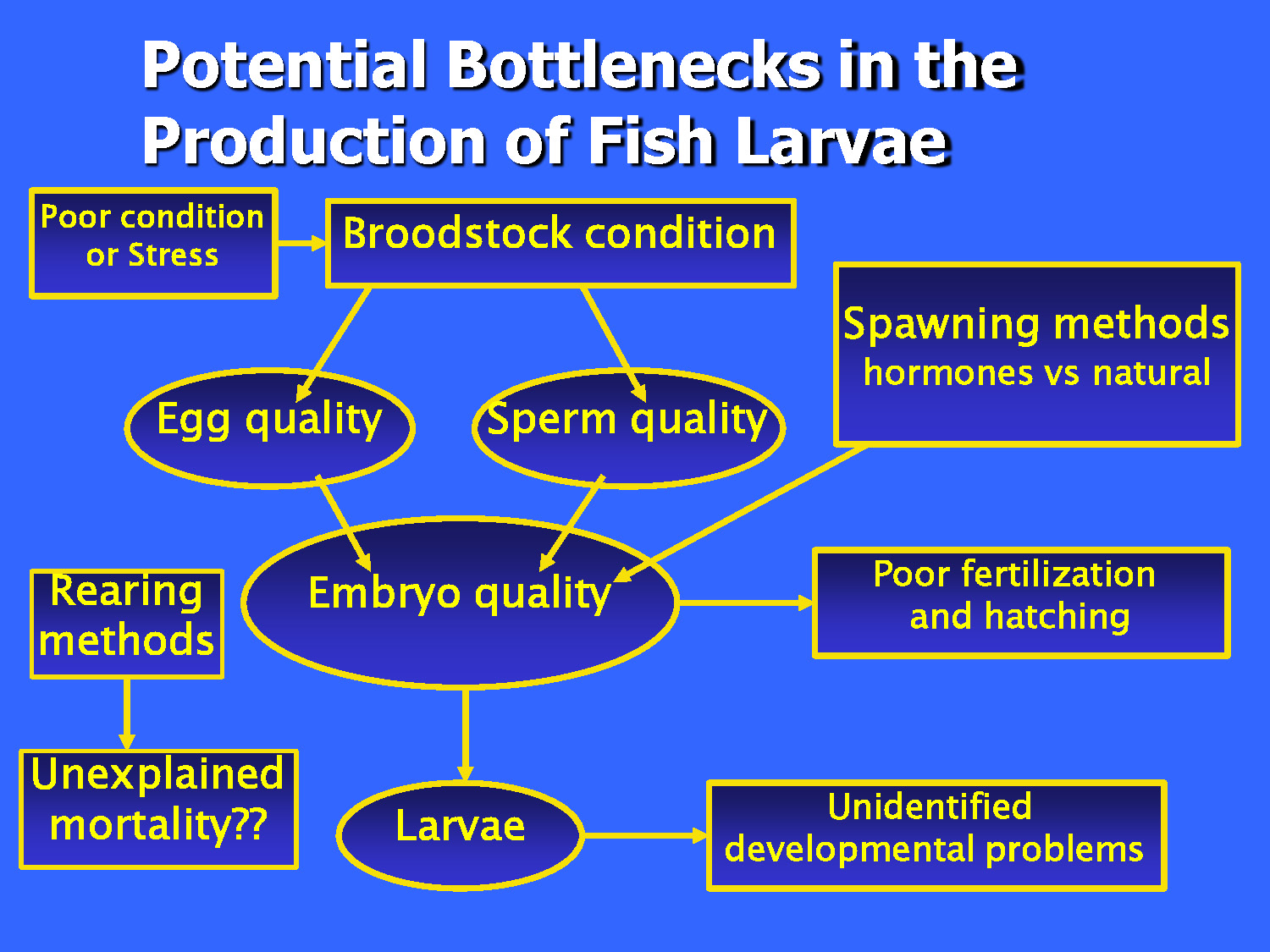
A flow chart titled "Potential Bottlenecks in the Production of Fish Larvae"
The flow begins at the top left with a box labeled "Poor condition or Stress," which points to "Broodstock condition."
From "Broodstock condition," two arrows lead down to two ovals: "Egg quality" and "Sperm quality."
Both quality ovals, along with a box titled "Spawning methods (hormones vs natural)," point toward a central large oval labeled "Embryo quality."
Three paths lead away from "Embryo quality":
- An arrow points right to a box labeled "Poor fertilization and hatching."
- An arrow points down to an oval labeled "Larvae."
- From the "Larvae" oval, an arrow points right to a box labeled "Unidentified developmental problems."
On the far left, a separate vertical flow shows a box labeled "Rearing methods" pointing down to a box labeled "Unexplained mortality??"
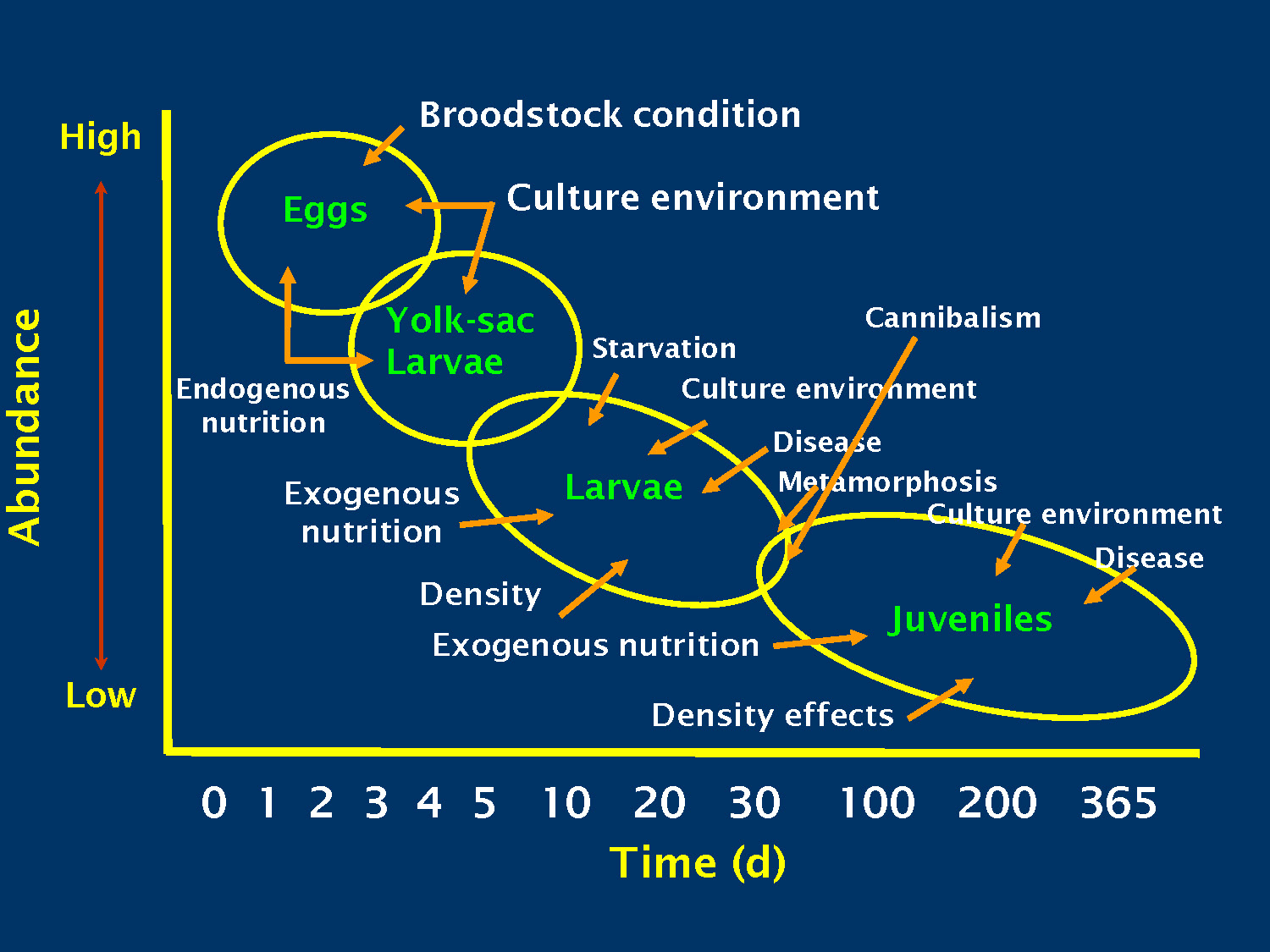
The image shows a graph with a y-axis representing Abundance from Low to High and an x-axis representing Time (d) with increments of 0, 1, 2, 3, 4, 5, 10, 20, 30, 100, 200, and 365.
-
Eggs (located at High Abundance, 0-3 days)
- Influenced by: Broodstock condition
- Influenced by: Culture environment
-
Yolk-sac Larvae (located slightly lower Abundance, 2-5 days)
- Influenced by: Culture environment
- Influenced by: Endogenous nutrition
-
Larvae (located at moderate Abundance, 5-30 days)
- Influenced by: Starvation
- Influenced by: Culture environment
- Influenced by: Disease
- Influenced by: Metamorphosis
- Influenced by: Exogenous nutrition
- Influenced by: Density
-
Juveniles (located at Low Abundance, 30-365 days)
- Influenced by: Cannibalism
- Influenced by: Culture environment
- Influenced by: Disease
- Influenced by: Exogenous nutrition
- Influenced by: Density effects
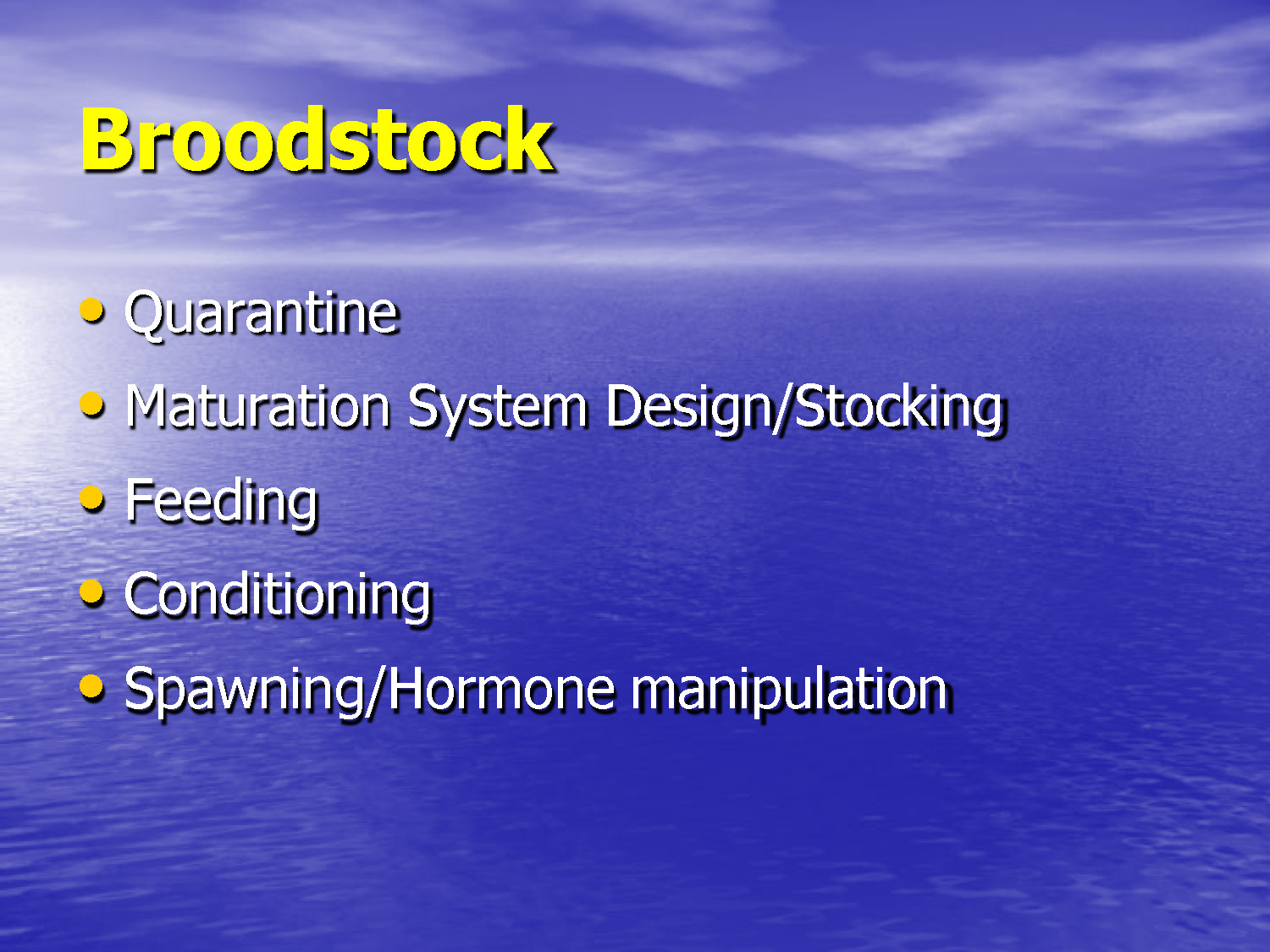
Broodstock
- Quarantine
- Maturation System Design/Stocking
- Feeding
- Conditioning
- Spawning/Hormone manipulation
Quarantine
- All new fish brought into the facility are isolated until cleared of any and all parasites
- This can take up to several weeks
- Disease/acclimation procedures
- Weening/acclimation procedures
Disease/Acclimation Procedures
- Pompano will always come in with capture wounds
- Immediately treat with a freshwater dip for 5 minutes
- After one week, a prophylactic treatment of formalin (250ppm for 1 hour)
- If disease event occurs after this, determine disease agent and treat accordingly (e.g., Amylo- .20-.25ppm Cu for 3 weeks)
Weening/Acclimation Procedures
- Pompano will typically not eat for the first week in captivity
- To get them started, use frozen krill
- Ultimately, you want to get them on the maturation diet food mix
System Design
Tanks should be supplied with own air/LOX and water inlets so that individual tanks can be isolated if chemical treatments are necessary
Recirculating System Components:
- Biofilter
- Cartridge filtration
- UV sterilization
- Temperature control (heat pump)
- Lighting control
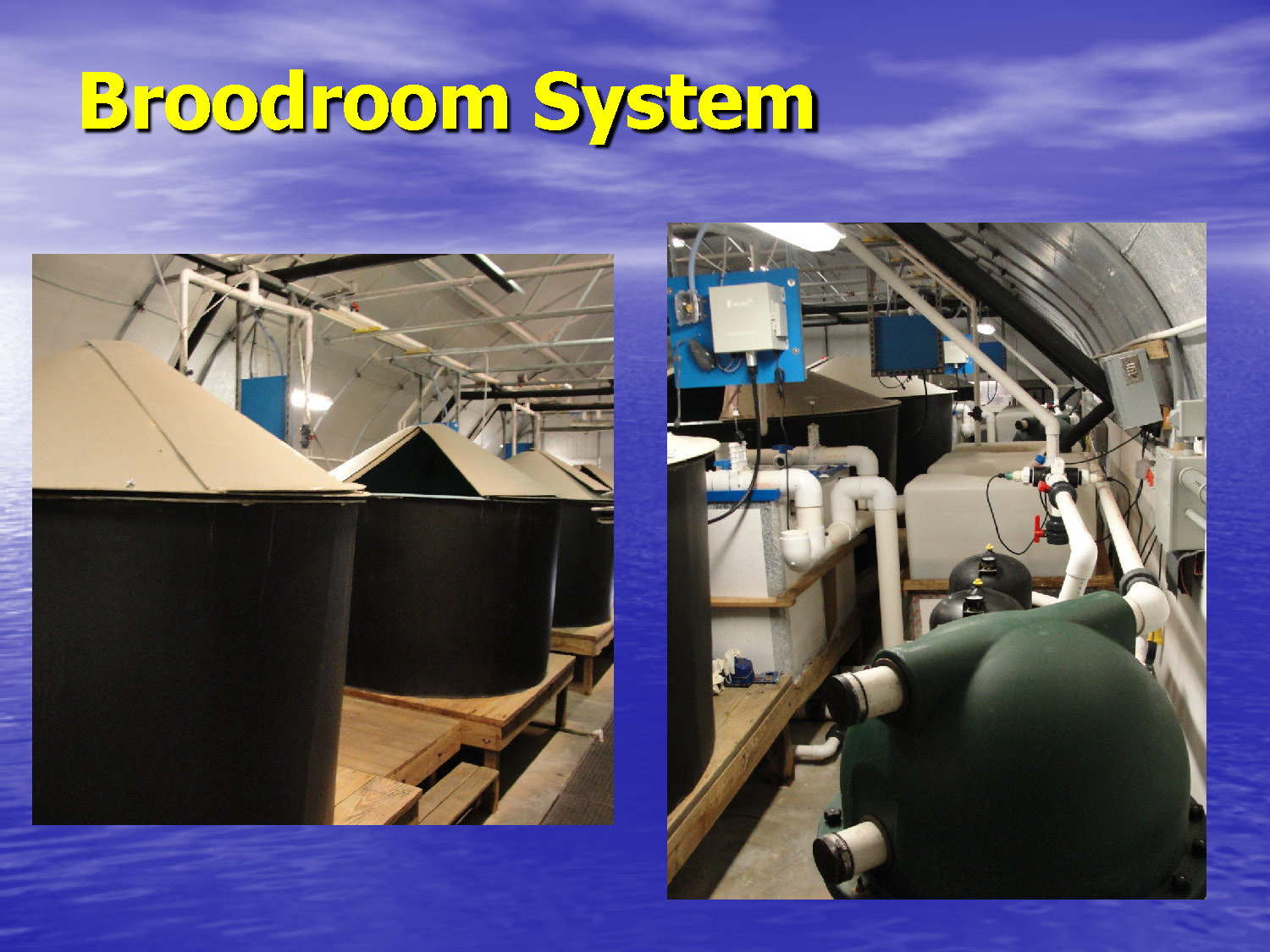
Broodroom System
Image shows multiple circular broodstock tanks arranged in a facility with controlled lighting and water systems.
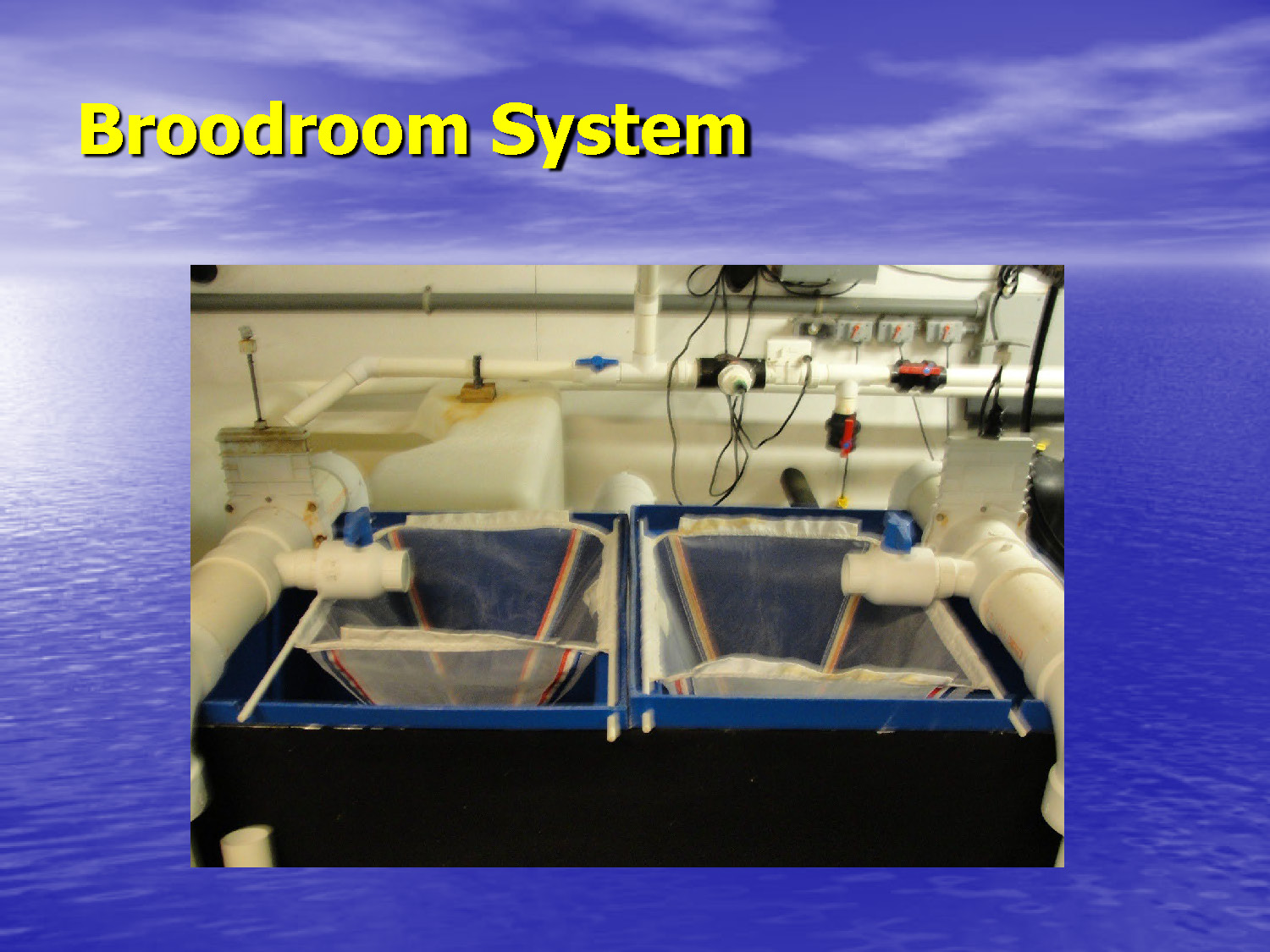
Broodroom System
Image displays overhead view of broodroom showing tank arrangement, piping, and support equipment for the recirculating system.
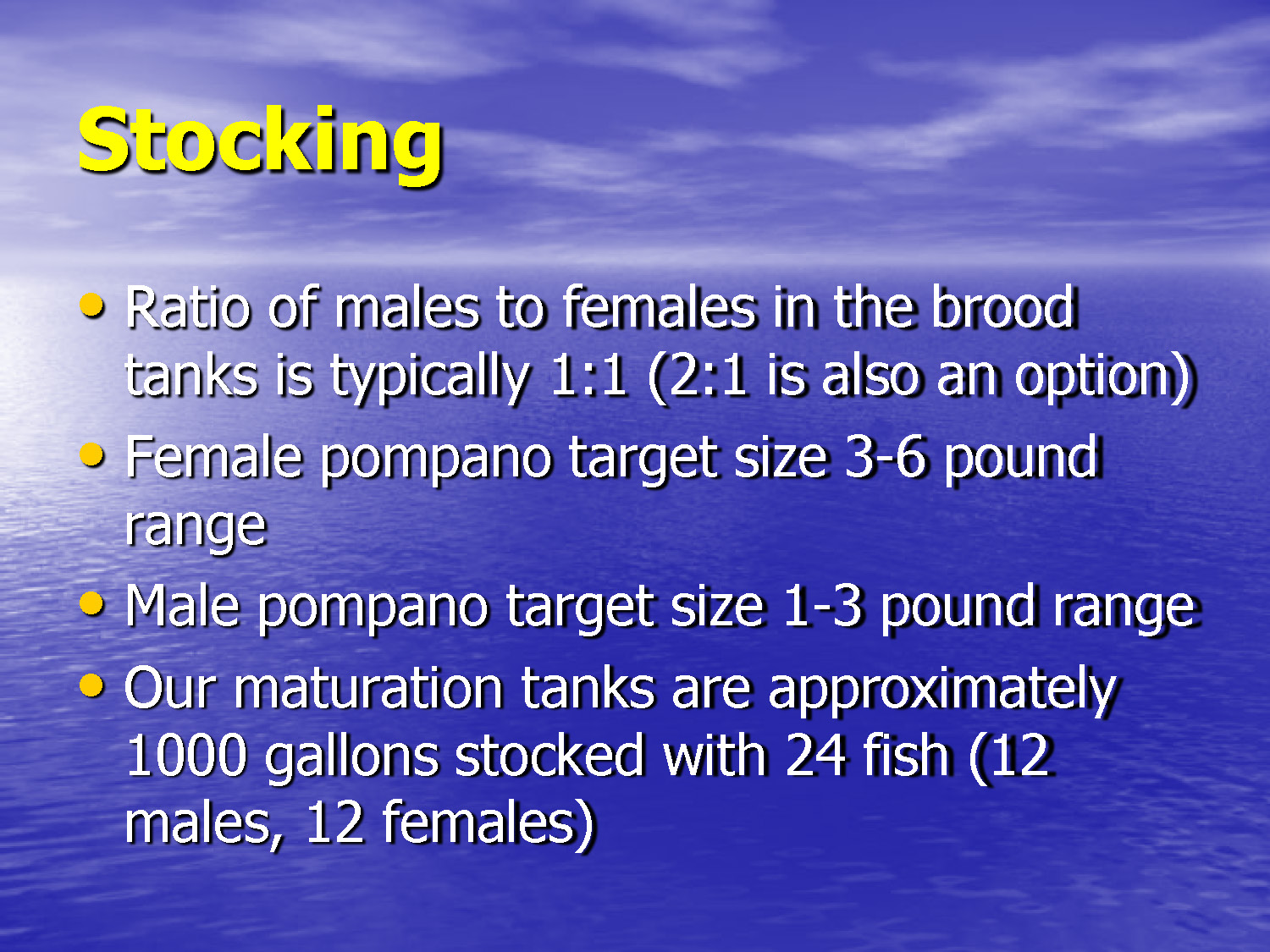
Stocking
- Ratio of males to females in the brood tanks is typically 1:1 (2:1 is also an option)
- Female pompano target size 3-6 pound range
- Male pompano target size 1-3 pound range
- Our maturation tanks are approximately 1000 gallons stocked with 24 fish (12 males, 12 females)
Feeding
- Pompano have a high energy requirement
- Fish are fed 3-5% of the total biomass in the tank per day
- Feeding frequency is twice a day, morning and late afternoon feedings
- Maturation diet is an enriched powder mix (e.g., Florida Aqua Farms- Gelly Belly Food Mix)
Conditioning
- This allows the operator to manage broodstock maturation through photo/thermal manipulation
- Temp/light cycles are changed every week
- It is important that the cycle not be interfered with once started
- If a disease event occurs, hold the fish at the current stage and do not advance any further
- Once they are healthy and eating well, cycle will commence
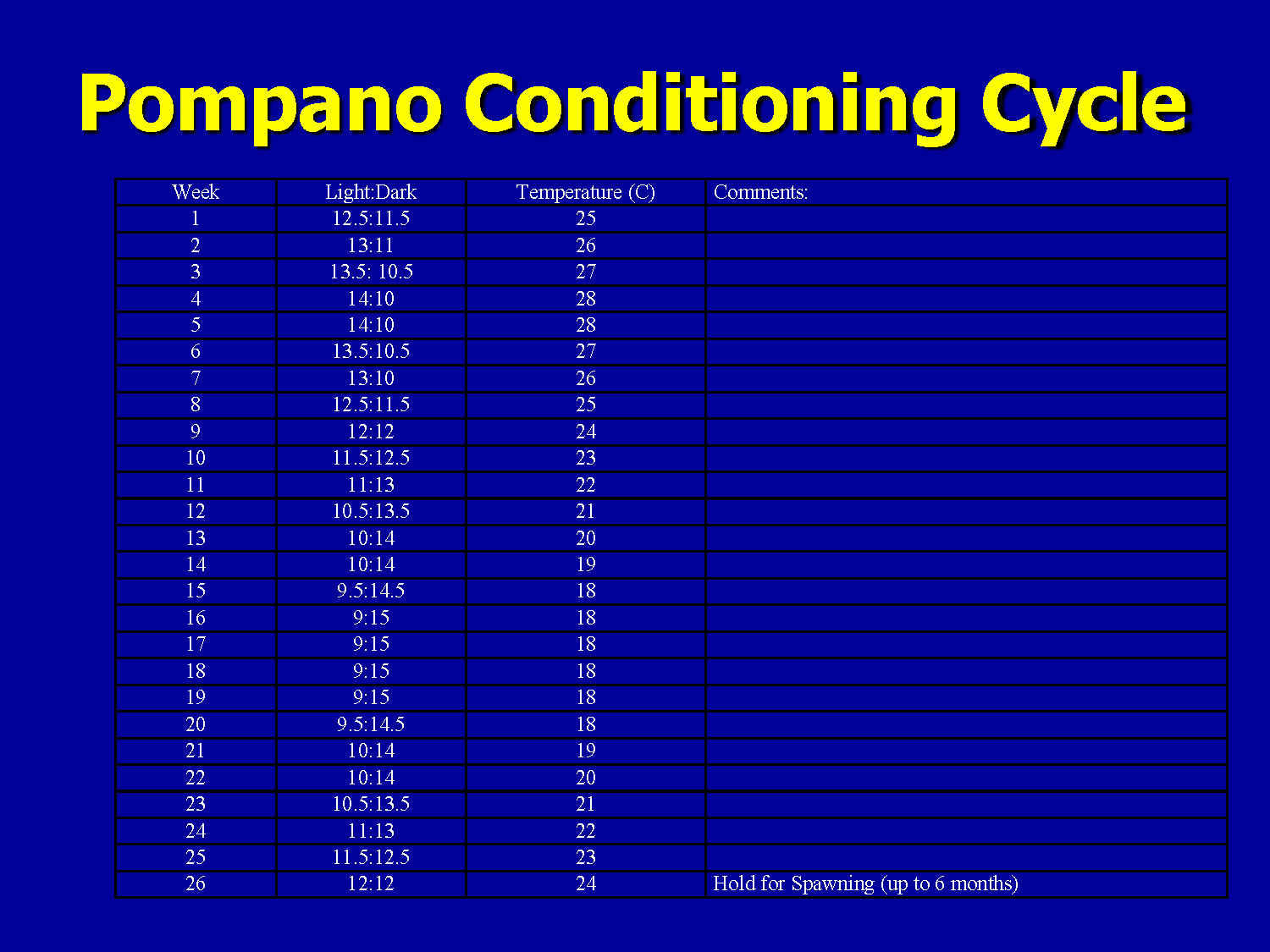
Pompano Conditioning Cycle
| Week | Light:Dark | Temperature (C) | Comments: |
|---|---|---|---|
| 1 | 12.5:11.5 | 25 | |
| 2 | 13:11 | 26 | |
| 3 | 13.5: 10.5 | 27 | |
| 4 | 14:10 | 28 | |
| 5 | 14:10 | 28 | |
| 6 | 13.5:10.5 | 27 | |
| 7 | 13:10 | 26 | |
| 8 | 12.5:11.5 | 25 | |
| 9 | 12:12 | 24 | |
| 10 | 11.5:12.5 | 23 | |
| 11 | 11:13 | 22 | |
| 12 | 10.5:13.5 | 21 | |
| 13 | 10:14 | 20 | |
| 14 | 10:14 | 19 | |
| 15 | 9.5:14.5 | 18 | |
| 16 | 9:15 | 18 | |
| 17 | 9:15 | 18 | |
| 18 | 9:15 | 18 | |
| 19 | 9:15 | 18 | |
| 20 | 9.5:14.5 | 18 | |
| 21 | 10:14 | 19 | |
| 22 | 10:14 | 20 | |
| 23 | 10.5:13.5 | 21 | |
| 24 | 11:13 | 22 | |
| 25 | 11.5:12.5 | 23 | |
| 26 | 12:12 | 24 | Hold for Spawning (up to 6 months) |
Spawning/Hormone Manipulation
- Pompano are spring spawners with an ideal spawning temp of 24°C and 12 hr light
- Natural spawning of pompano in captivity is unreliable
- Hormone manipulation is necessary for consistent and controlled spawning
Spawning/Hormone Manipulation
- Once fish have reached a state of gonadal maturation (vitillogenesis), hormones can be administered to achieve an egg release
- Operator can only get the desired spawn when the oocytes (pre-spawned eggs) reach a certain size
- For pompano that egg diameter is greater than 0.5 mm
- At time of release egg diameter will be approximately 1.0 mm
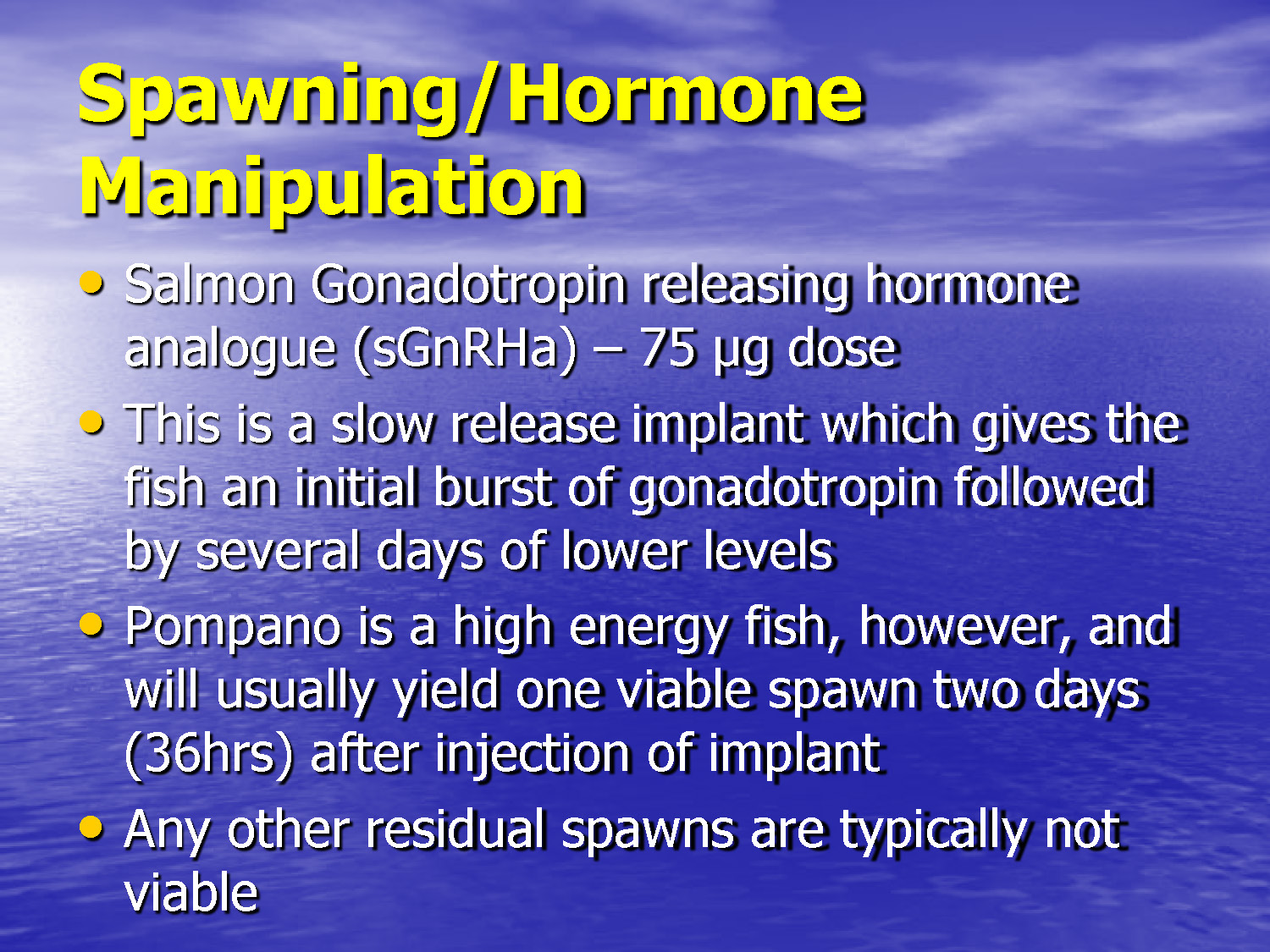
Spawning/Hormone Manipulation
- Salmon Gonadotropin releasing hormone analogue (sGnRHa) – 75 µg dose
- This is a slow release implant which gives the fish an initial burst of gonadotropin followed by several days of lower levels
- Pompano is a high energy fish, however, and will usually yield one viable spawn two days (36hrs) after injection of implant
- Any other residual spawns are typically not viable
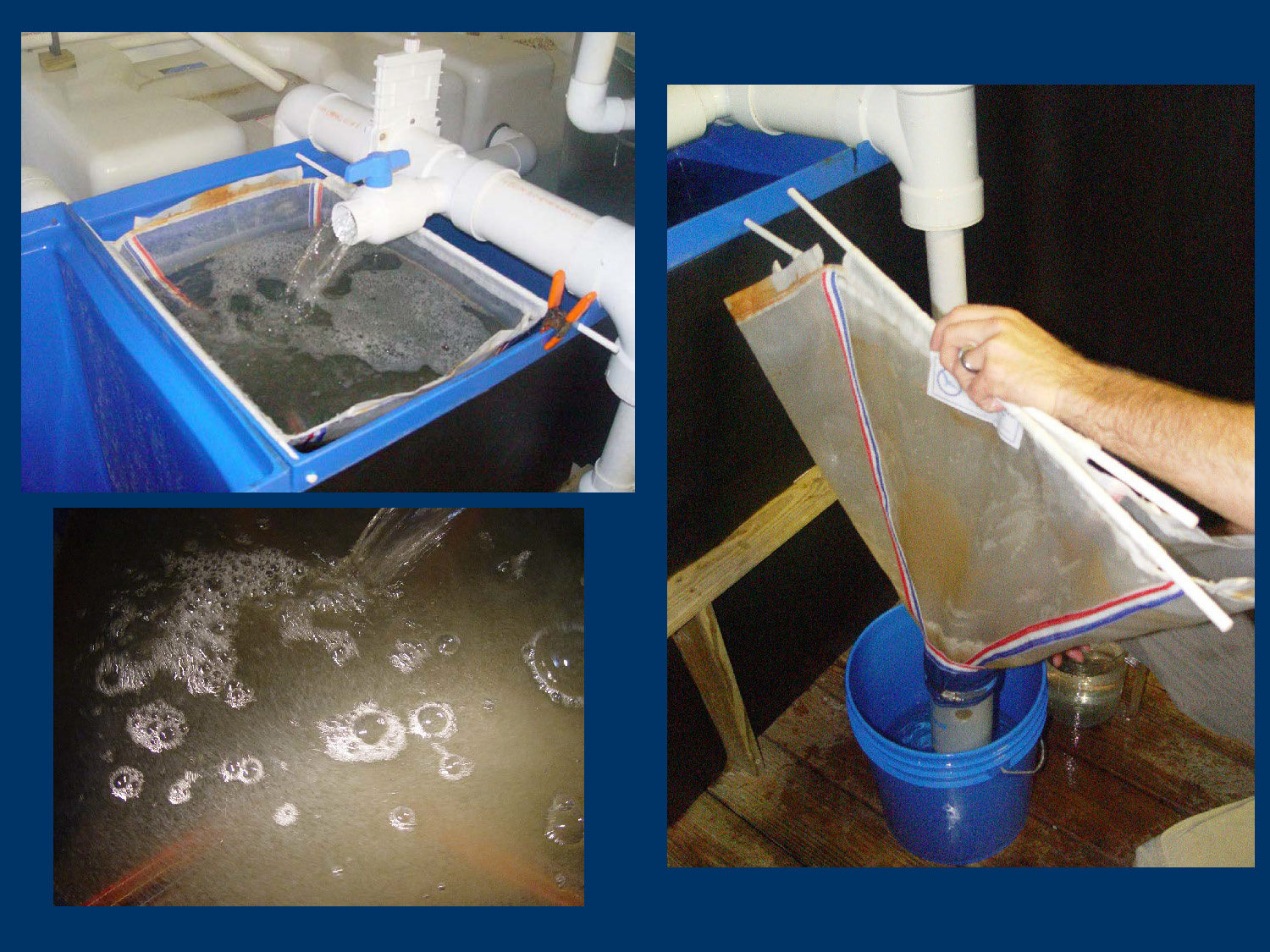
This image consists of three photographs detailing the process of harvesting fish eggs (likely pompano) in a hatchery setting.
Top Left Photo: A blue rectangular tank equipped with white PVC plumbing. Water flows from a large pipe through a blue valve into a fine-mesh collector bag suspended inside the tank. The bag is held in place by orange clamps and white support rods.
Bottom Left Photo: A close-up view of the water's surface inside the collector. Small, translucent, spherical fish eggs are visible floating amongst bubbles and foam, indicating a successful spawn collection.
Right Photo: A person’s arm and hand are shown lifting the rectangular mesh collector bag by its support rods. The bottom of the bag tapers into a small PVC fitting, which is being positioned over a blue plastic bucket to drain and concentrate the harvested eggs.
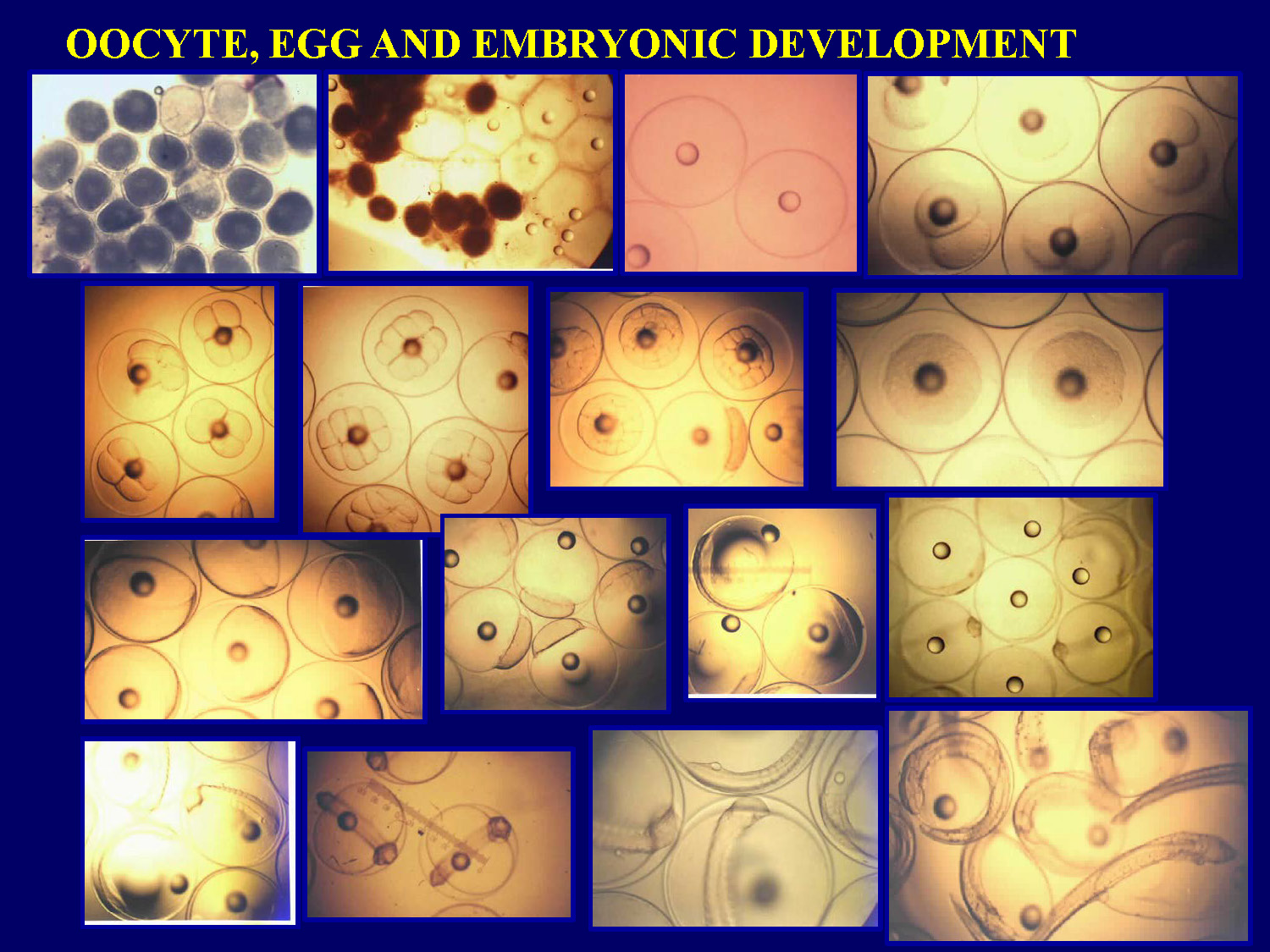
OOCYTE, EGG AND EMBRYONIC DEVELOPMENT
Diagram illustrates the developmental stages from oocyte through fertilized egg to embryonic development in pompano.
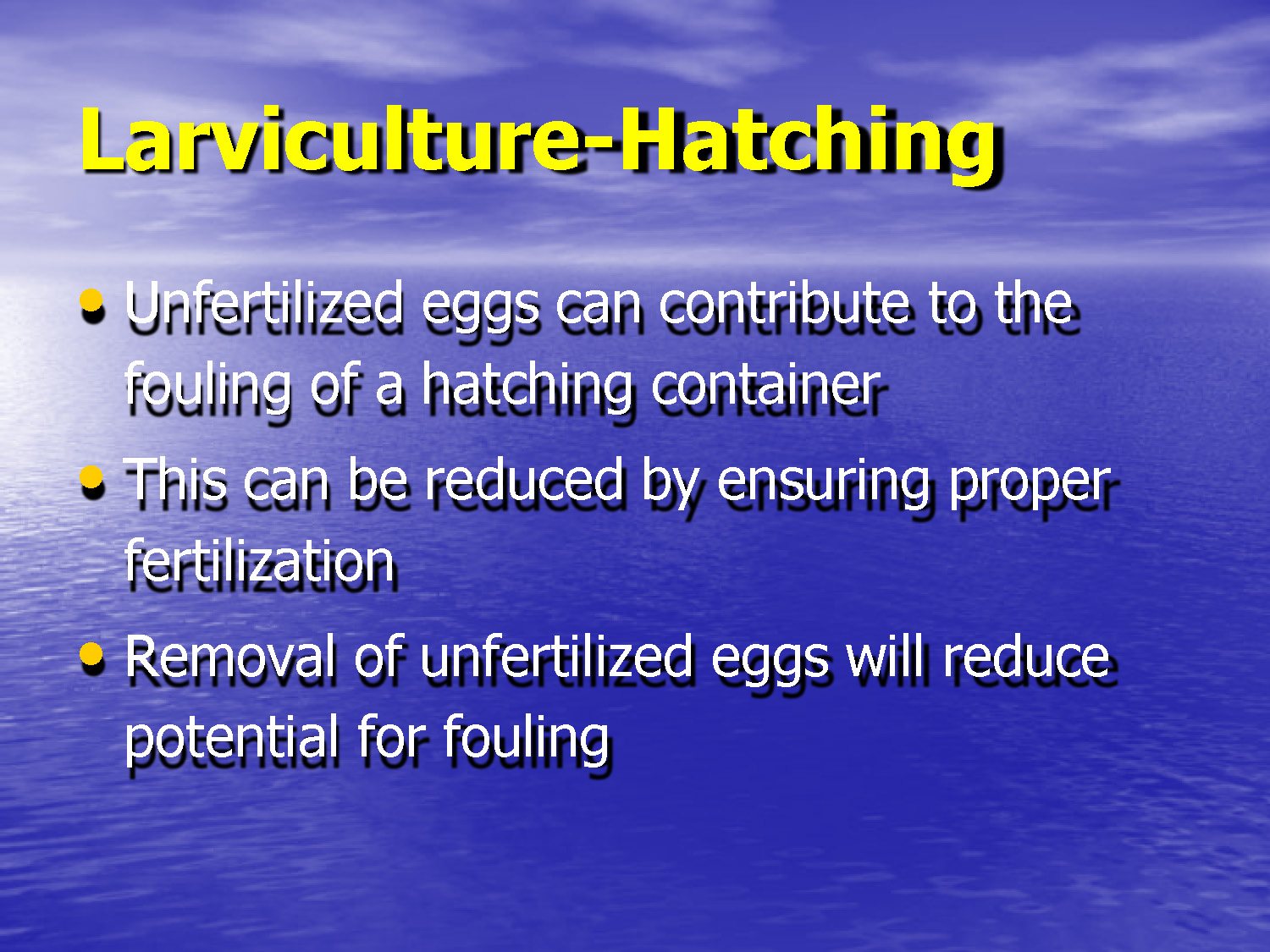
Larviculture-Hatching
- Unfertilized eggs can contribute to the fouling of a hatching container
- This can be reduced by ensuring proper fertilization
- Removal of unfertilized eggs will reduce potential for fouling
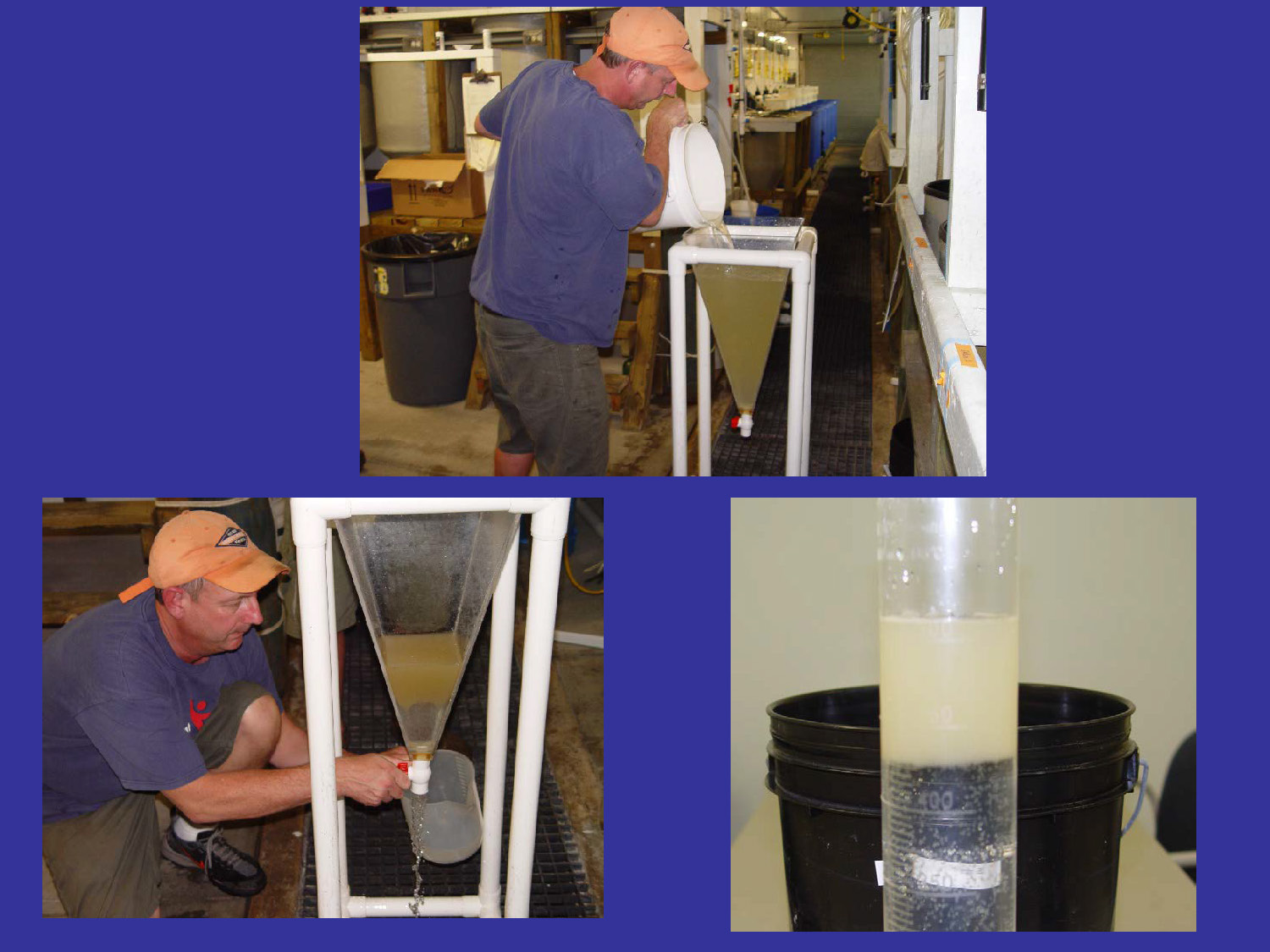
This image consists of three photographs showing the process of separating and measuring fish eggs within a hatchery facility.
- Top Photo: A technician wearing an orange cap and blue shirt is shown in a hatchery aisle. He is pouring water and collected eggs from a white plastic bucket into a clear, cone-shaped separator (Imhoff cone) supported by a white PVC frame.
- Bottom-Left Photo: The technician is crouched beside the conical separator. He is turning a red valve at the narrow bottom of the cone to drain out cloudy water and non-viable eggs (which have settled at the bottom) into a small plastic container, leaving the healthy, floating eggs behind.
- Bottom-Right Photo: A close-up view of a clear graduated cylinder. The cylinder contains water with a dense layer of small, translucent fish eggs concentrated at the top, allowing for an accurate volumetric measurement of the total egg count.
Larviculture-Hatching
Disinfectants for keeping bacteria and fungus off eggs:
Betadine, methylene blue, formalin, nitrofurazone, malachite green, perioxide
With proper water quality, chemicals are rarely needed
Larviculture-Counting of Eggs
- An egg count should be approximated prior to stocking to determine hatch rate and to ensure proper stocking density
- Obviously you are not going to hand count each egg
- Rule of thumb 1 mL of pompano eggs is approximately 1000 eggs (e.g., 40 mL is 40,000 eggs)
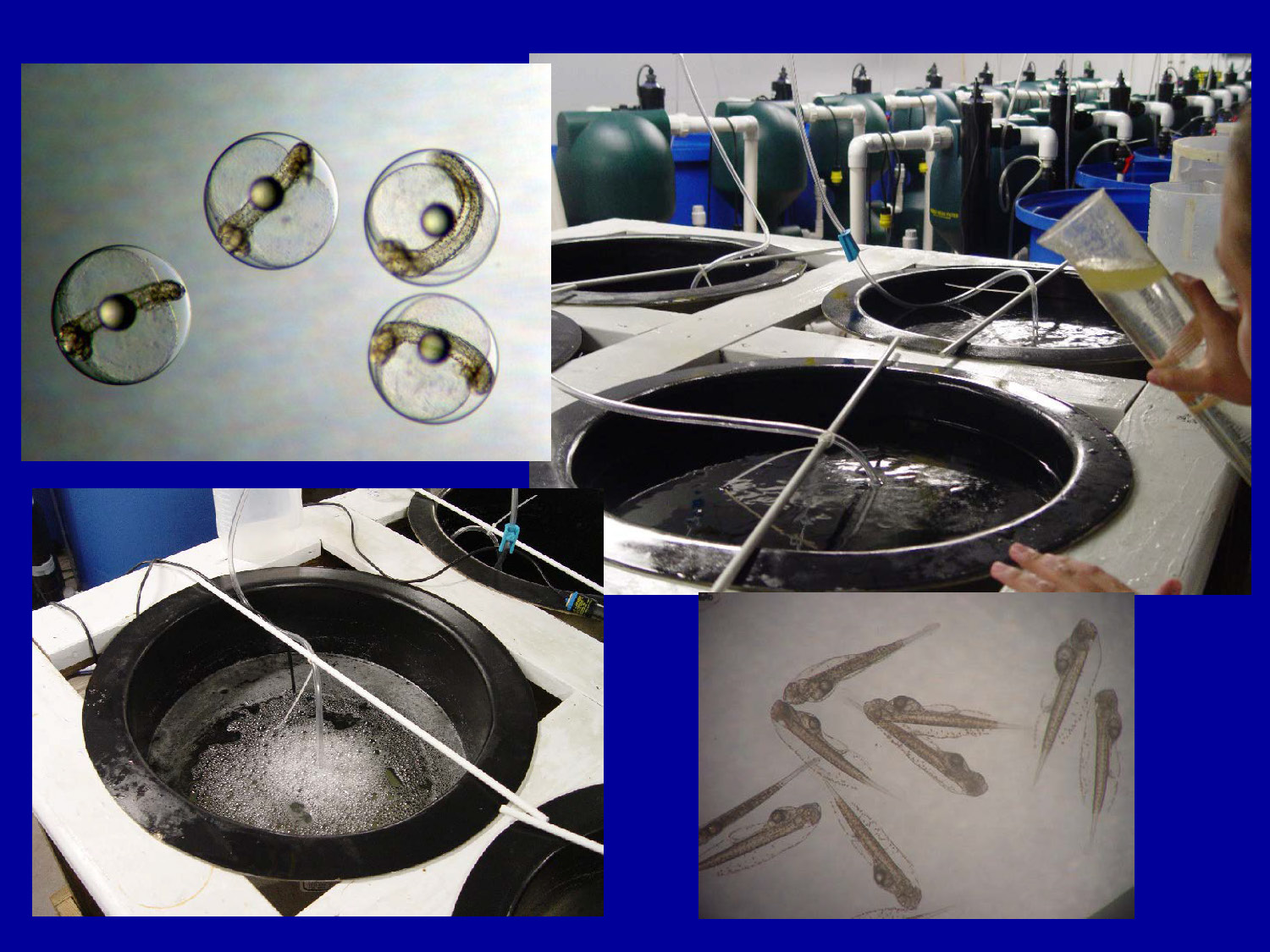
Four images detailing egg development and incubation.
- Top-Left: Microscopic view of four fish eggs showing early-stage embryos curled around the yolk.
- Top-Right and Bottom-Left: Interior views of a hatchery room featuring large black circular incubation tanks with aeration tubes and bubbling water.
- Bottom-Right: Microscopic view of newly hatched, elongated larvae.
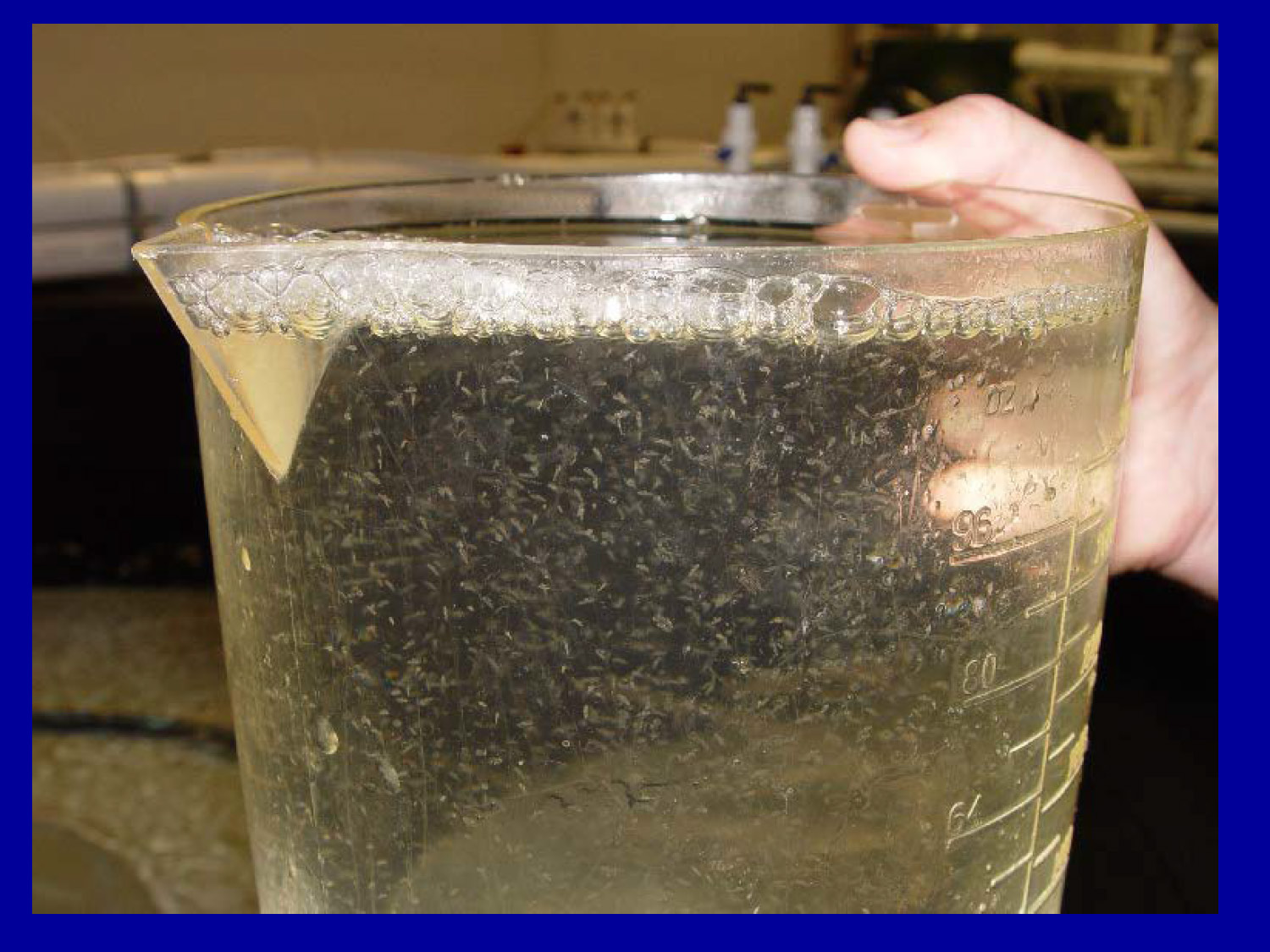
A close-up photograph of a large, clear graduated plastic pitcher. The water inside is densely packed with thousands of tiny, pepper-like specks, which are newly hatched pompano larvae being prepared for transfer to larviculture tanks.
Intensive Tank Culture Larval Rearing Systems
- High stocking densities (50-150 larvae/liter)
- High water exchange rate (minimum 100% turnover rate daily) or intensive recirculating systems
- Live microalgae/microalgae paste (Nannochloropsis spp; "green water")
- Rotifers (Brachionus sp. enriched)
- Artemia (Nauplii + Metanauplii enriched)
- Artificial weaning diets (dry feeds)
Larval Rearing Tanks
- Dark-walled tanks preferred because larvae can see prey better against a dark background.
- Tanks should allow easy viewing, feeding, treatment, and harvesting
- Tank volume: 800 Liters
- Larval exclusion screens of different mesh sizes is required to retain larvae during water exchange (e.g., 150, 350 and 500 micron screens)
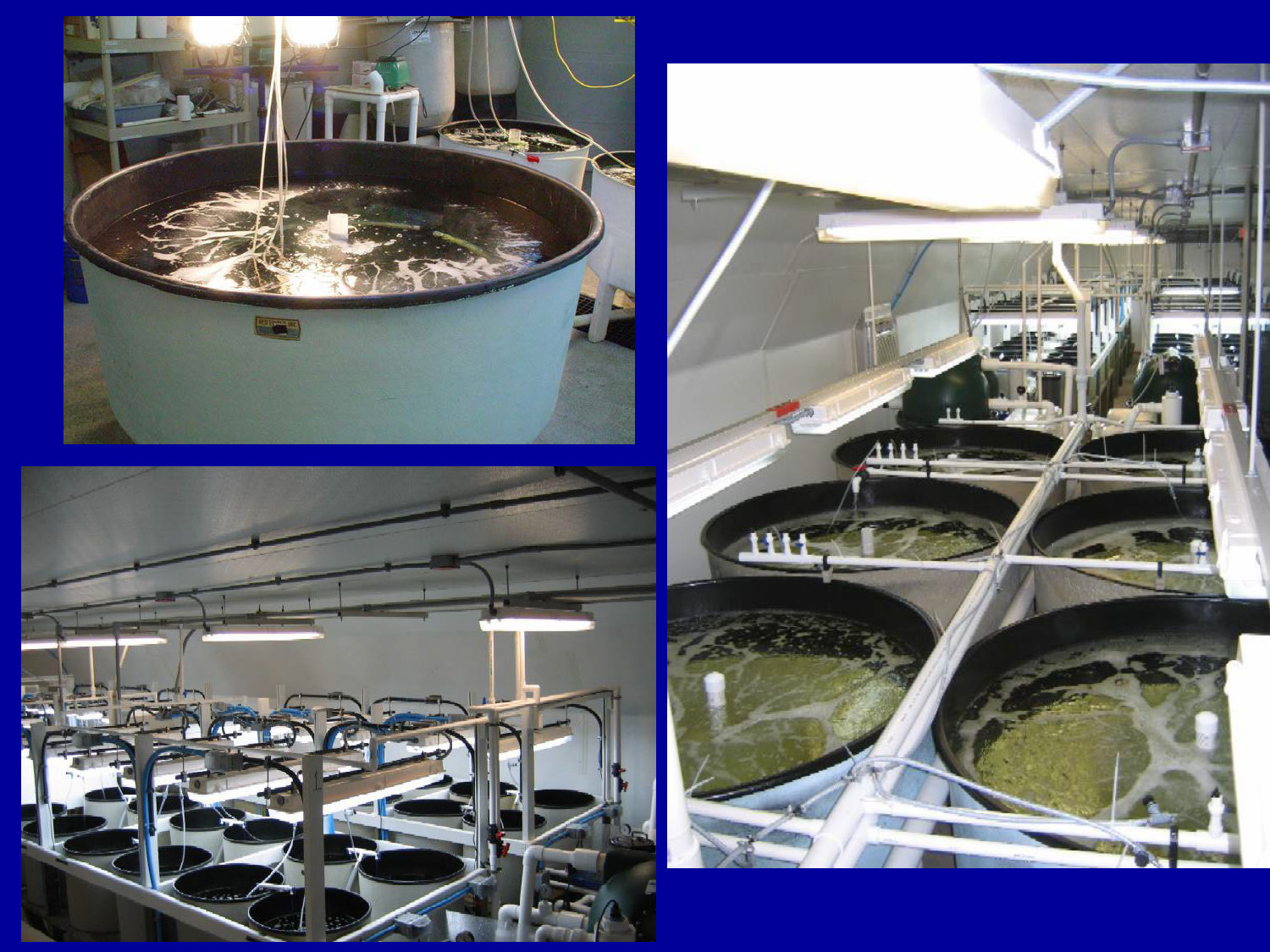
Three photos showing the scale of a larviculture facility.
- Top-Left: A single large, light-colored circular tank filled with water and equipped with overhead aeration lines.
- Bottom-Left and Right: Wide-angle views of the facility room containing dozens of black circular tanks arranged in rows under fluorescent lighting, interconnected by white PVC plumbing.
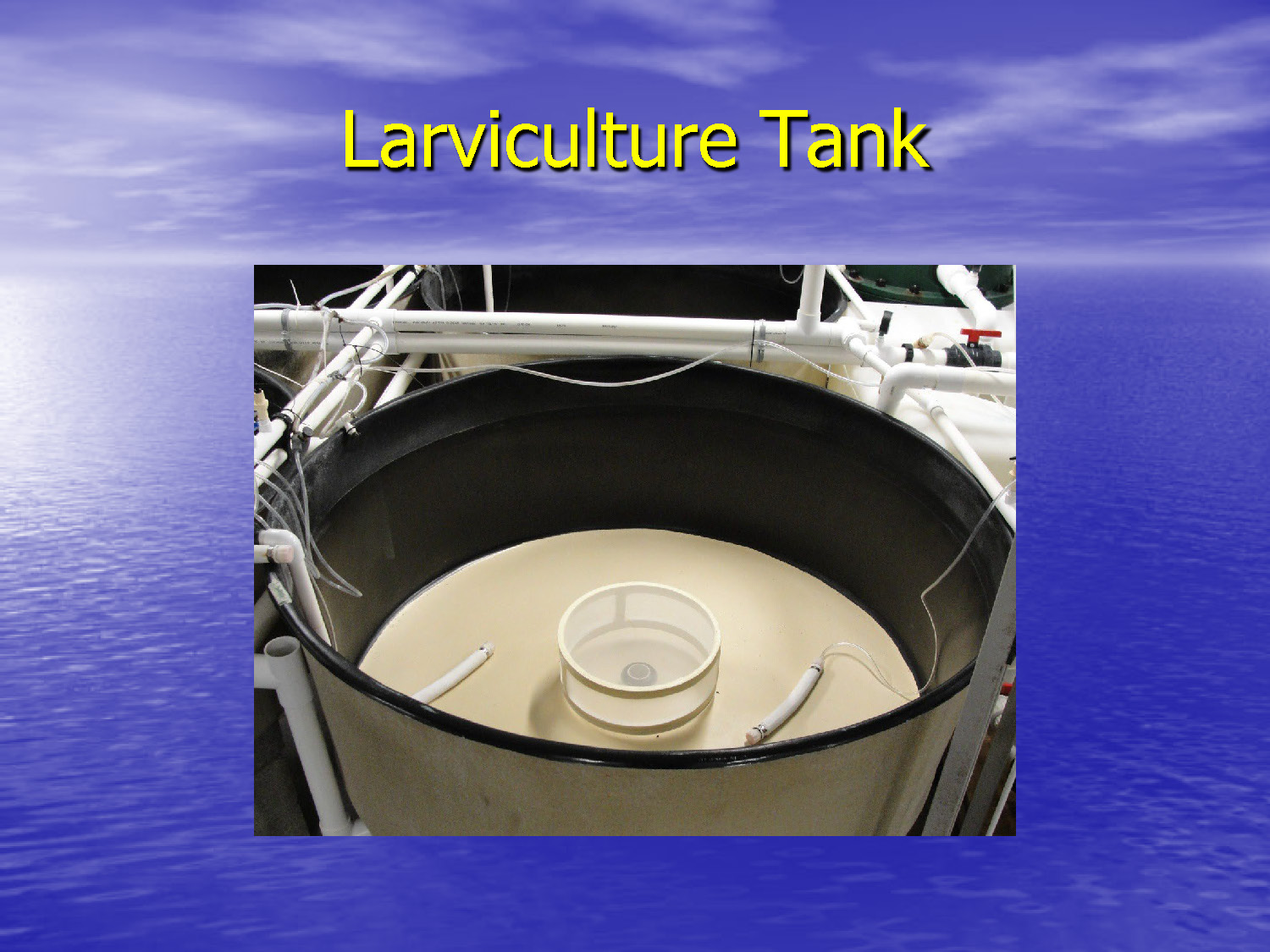
A top-down view of a "Larviculture Tank." The tank is black-walled with a light-colored bottom. In the center is a white cylindrical standpipe screen. Two white aeration stones are positioned on the tank floor to provide oxygen and water circulation.
Larval Rearing Systems
Tanks should be supplied with air/LOX and water inlets so that individual tanks can be isolated if chemical treatments are necessary
Recirculating System Components:
- Biofilter
- Particulate filtration to 5 microns or less
- UV sterilization
- Temperature control (heat pump)
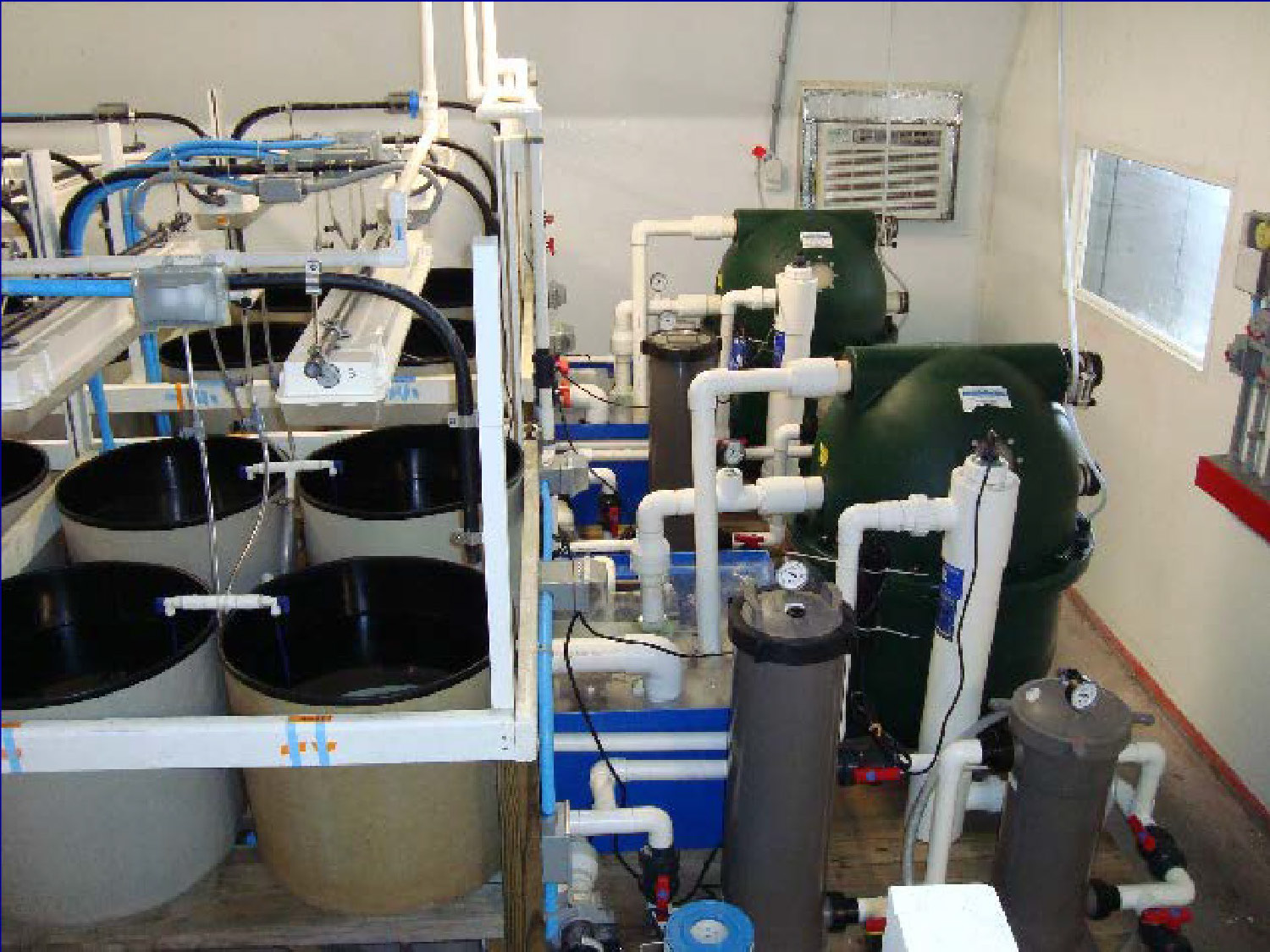
An interior view of the hatchery's life support and filtration infrastructure. The image shows:
- Several large, dark green spherical pressurized filter tanks connected by white PVC piping.
- Multiple tall, grey vertical filtration canisters standing on a wooden platform.
- A complex network of PVC pipes, valves, and gauges designed to maintain water quality for the adjacent larviculture tanks visible on the left.
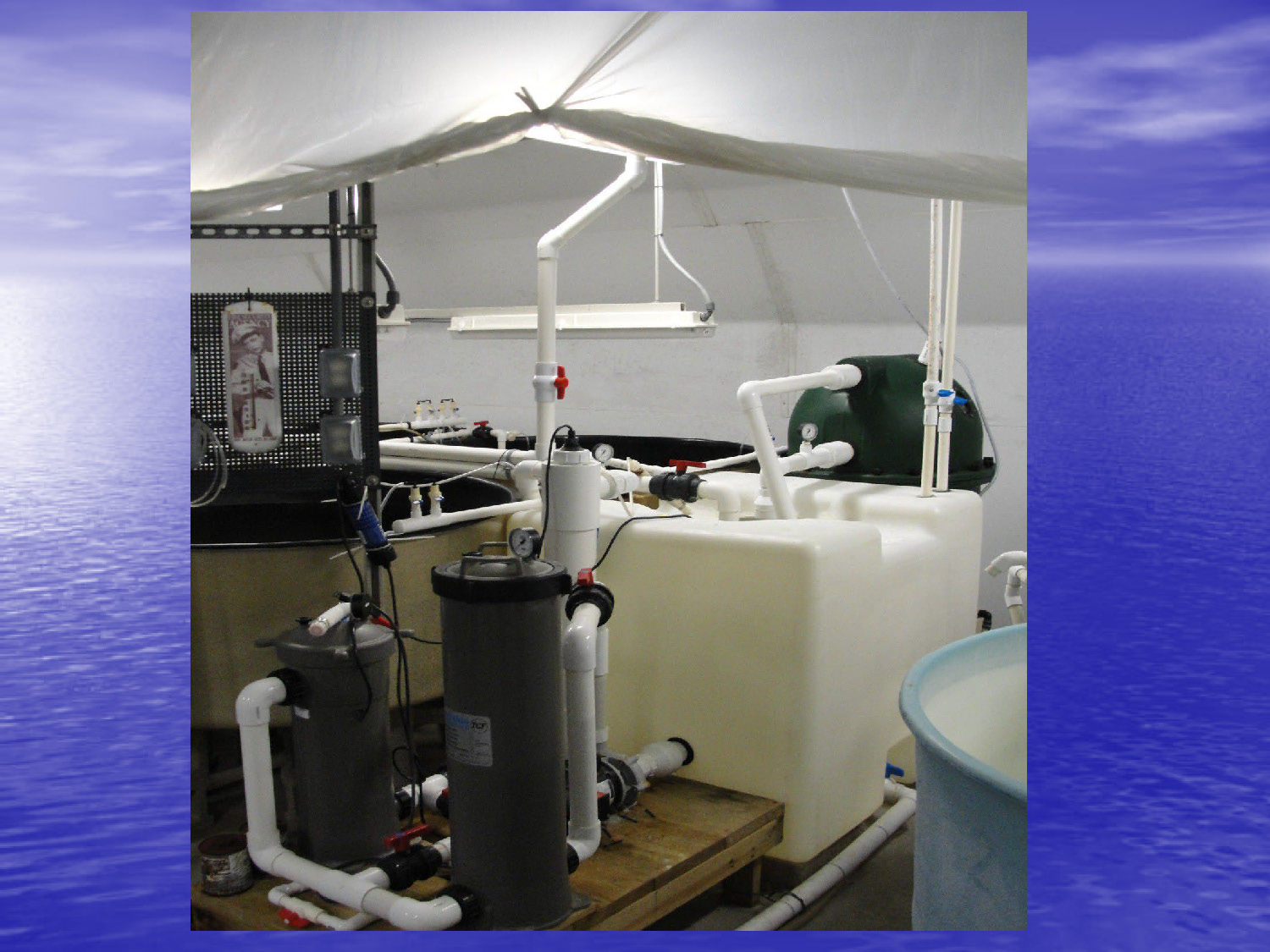
A detailed view of the water treatment and recirculation setup. The image features:
- A large, rectangular white plastic water reservoir serving as a central hub for the filtration system.
- Vertical white UV sterilization units and grey filter canisters integrated into the plumbing line.
- A white tarp or liner suspended overhead to protect the equipment and control light levels within the facility.
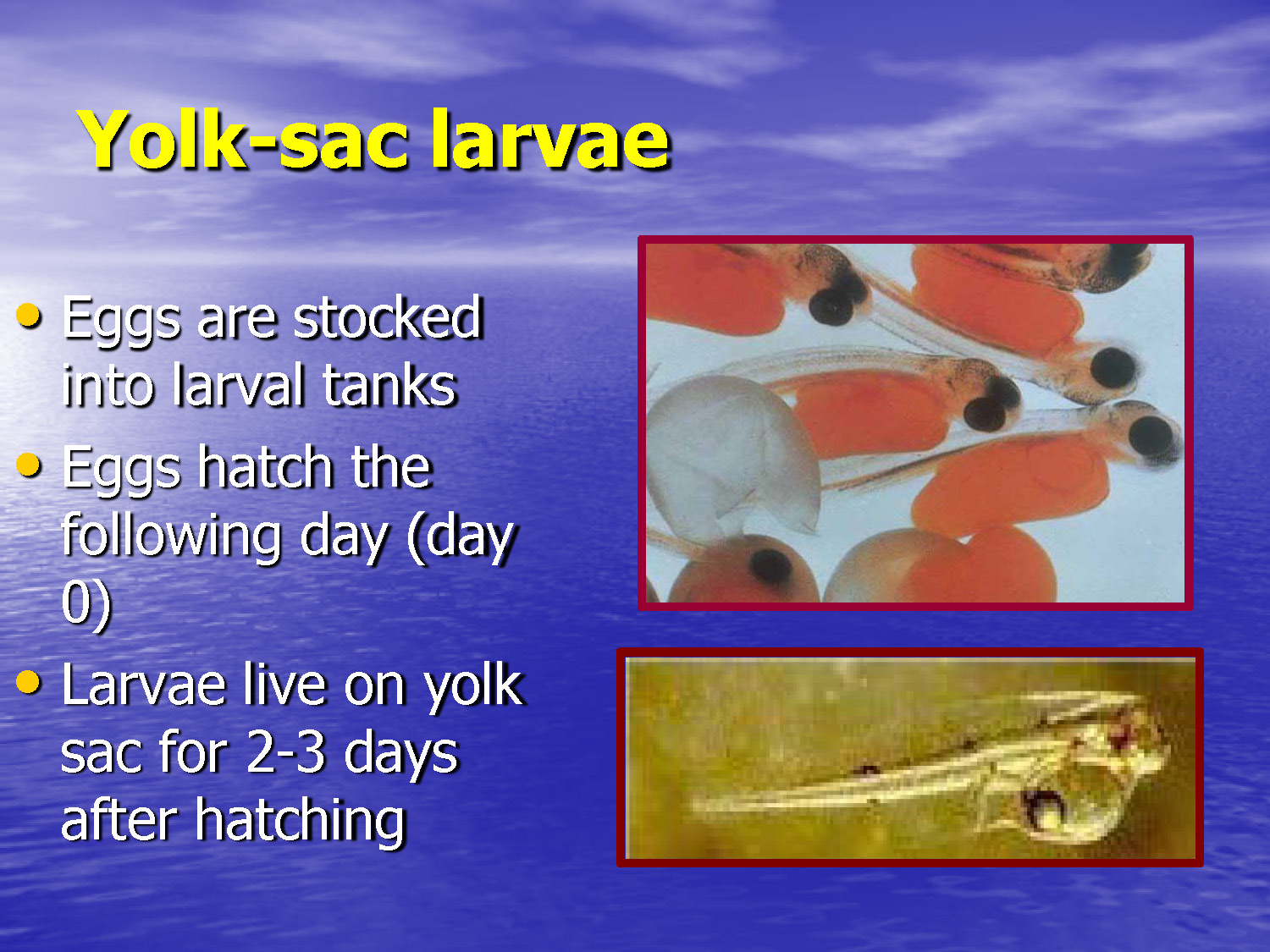
Yolk-sac larvae
- Eggs are stocked into larval tanks
- Eggs hatch the following day (day 0)
- Larvae live on yolk sac for 2-3 days after hatching
Image shows microscopic view of yolk-sac larvae with visible yolk sac attached to developing larvae.
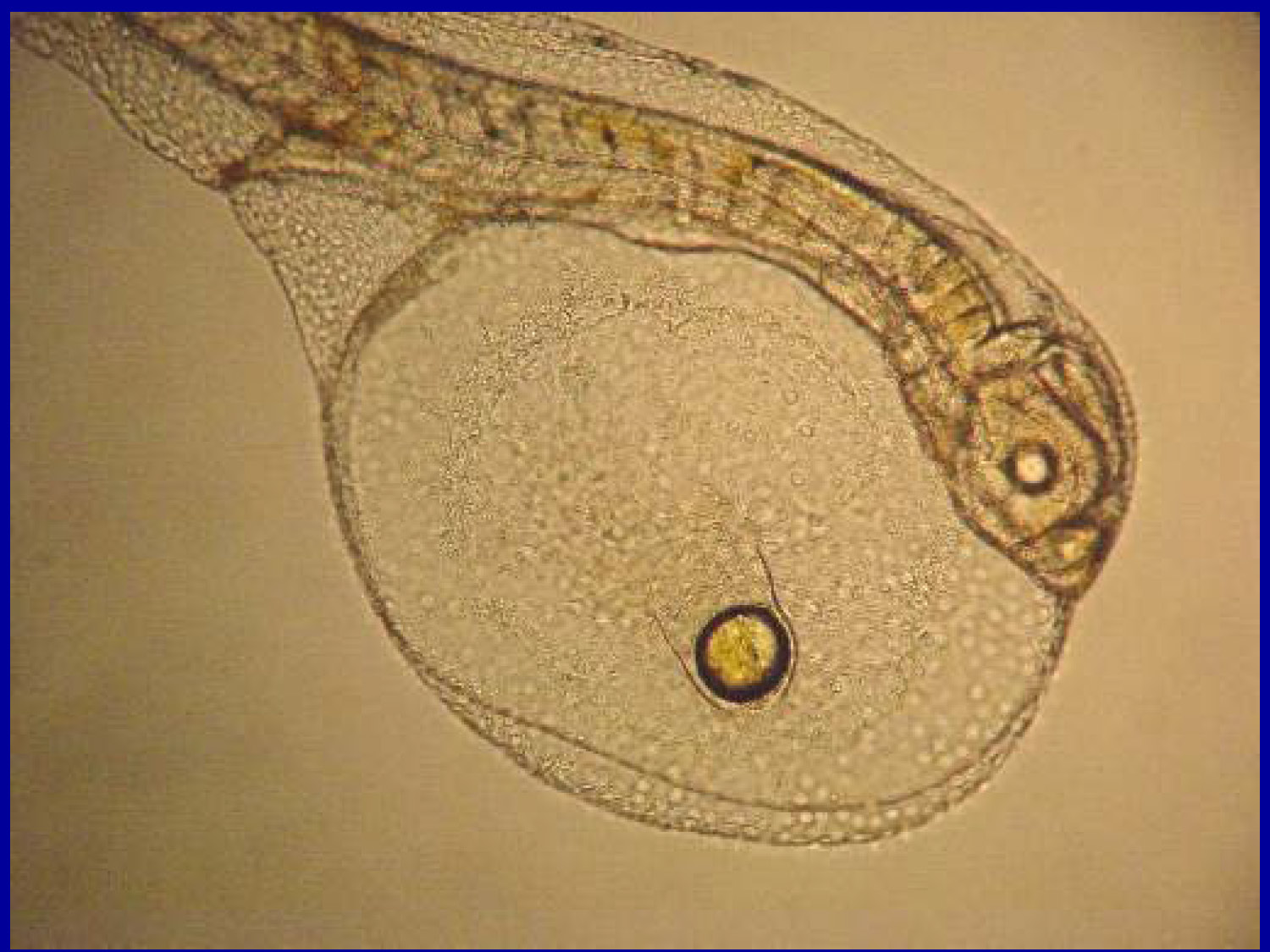
An extreme microscopic close-up of a developing fish larva. It features a prominent, large translucent yolk sac containing a single, dark circular oil globule, which provides nutrition to the larva before it begins active feeding.
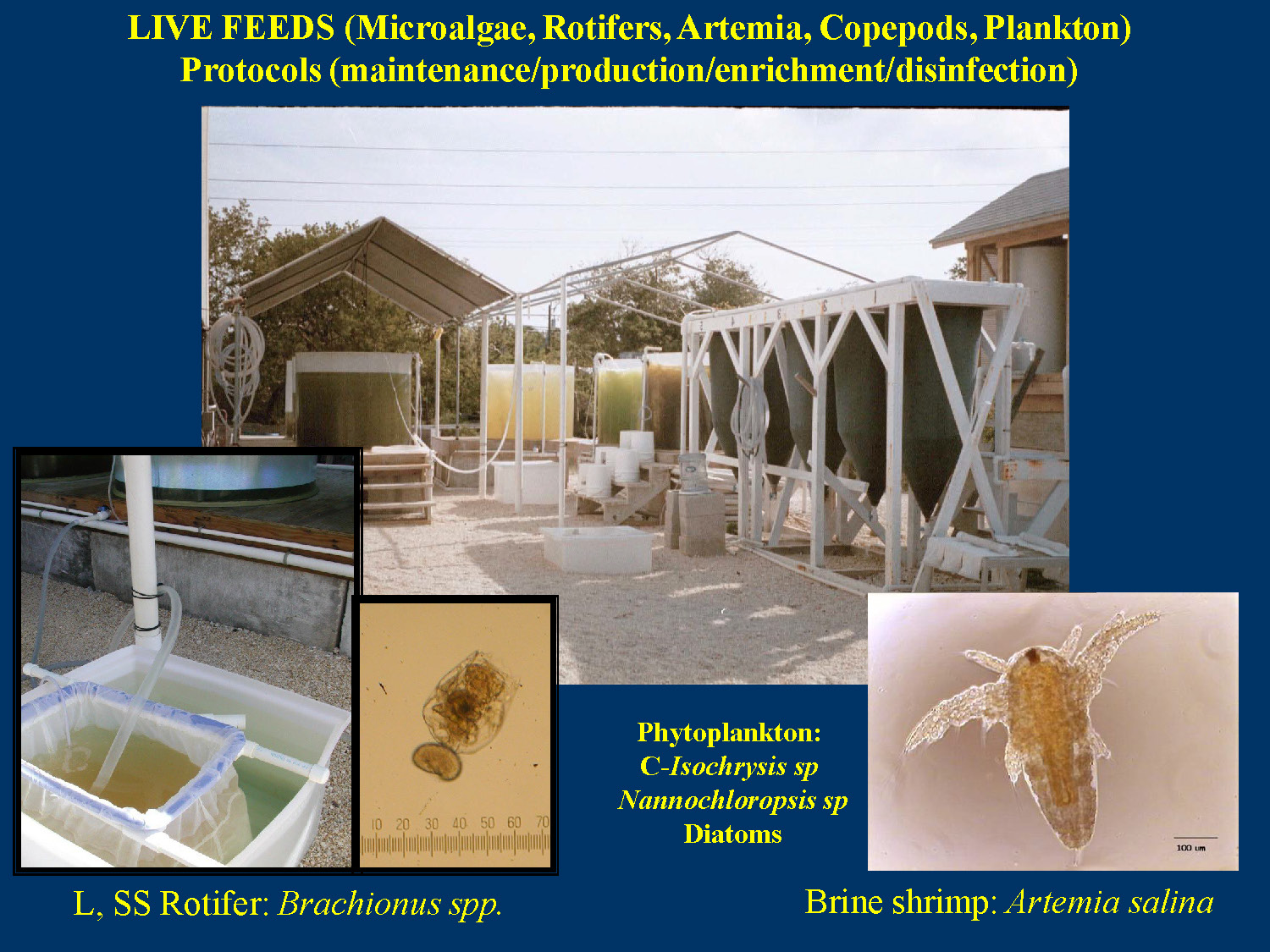
LIVE FEEDS (Microalgae, Rotifers, Artemia, Copepods, Plankton) Protocols(maintenance/production/enrichment/disinfection)
Images show three types of live feeds:
- Rotifer: Brachionus spp. - Small zooplankton used as first feed for larvae
- Brine shrimp: Artemia salina - Larger feed for growing larvae
- Phytoplankton: C-Isochrysis sp, Nannochloropsis sp, Diatoms - Microalgae for green water and enrichment
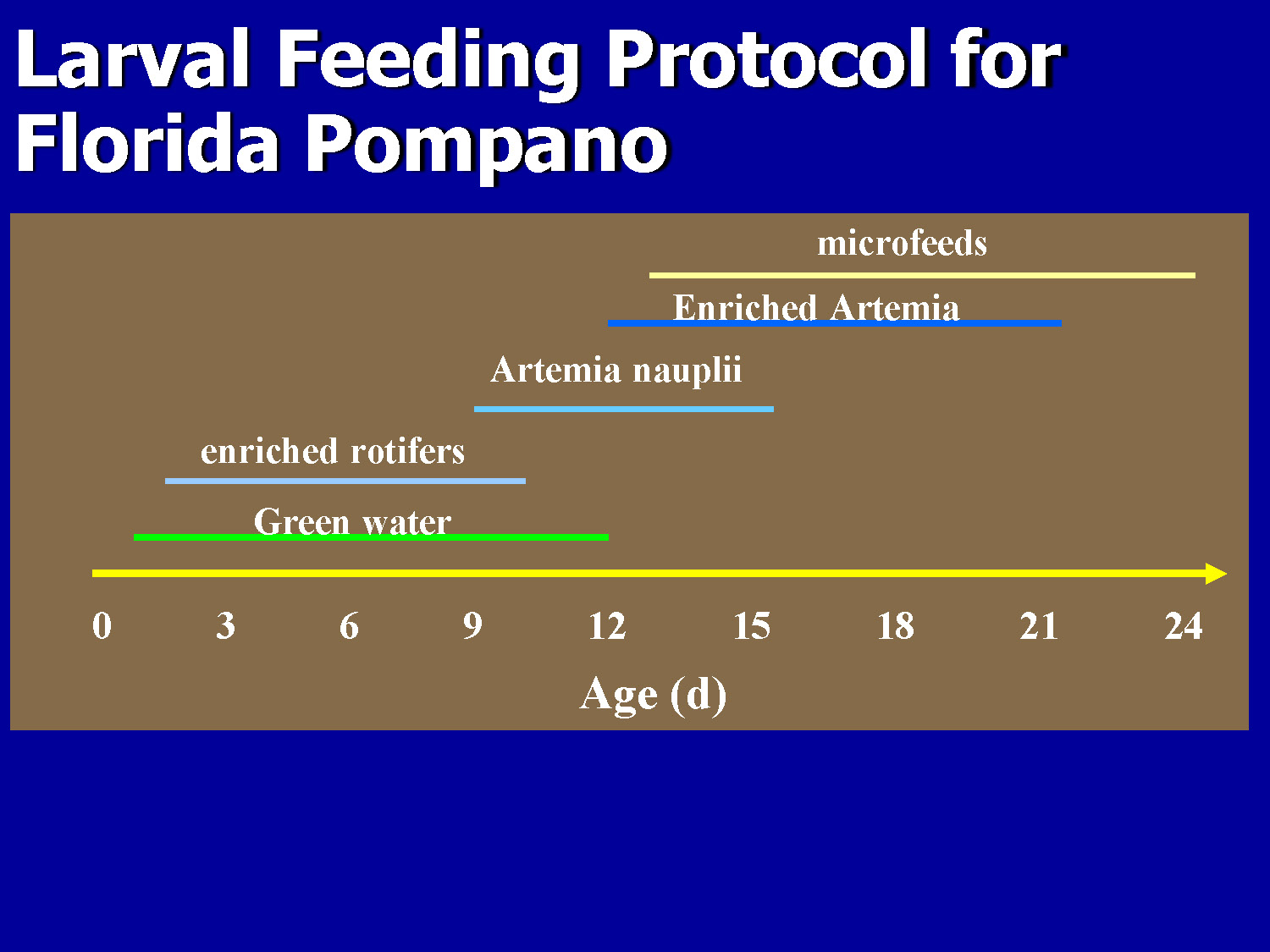
Larval Feeding Protocol for Florida Pompano
- Day 0-2: Green water introduced
- Day 2-15: Enriched rotifers (main feed from day 2-9)
- Day 9-21: Artemia nauplii introduced and continued
- Day 12-21: Enriched Artemia added
- Day 15-24: Microfeeds (dry feeds) introduced and gradually become primary diet
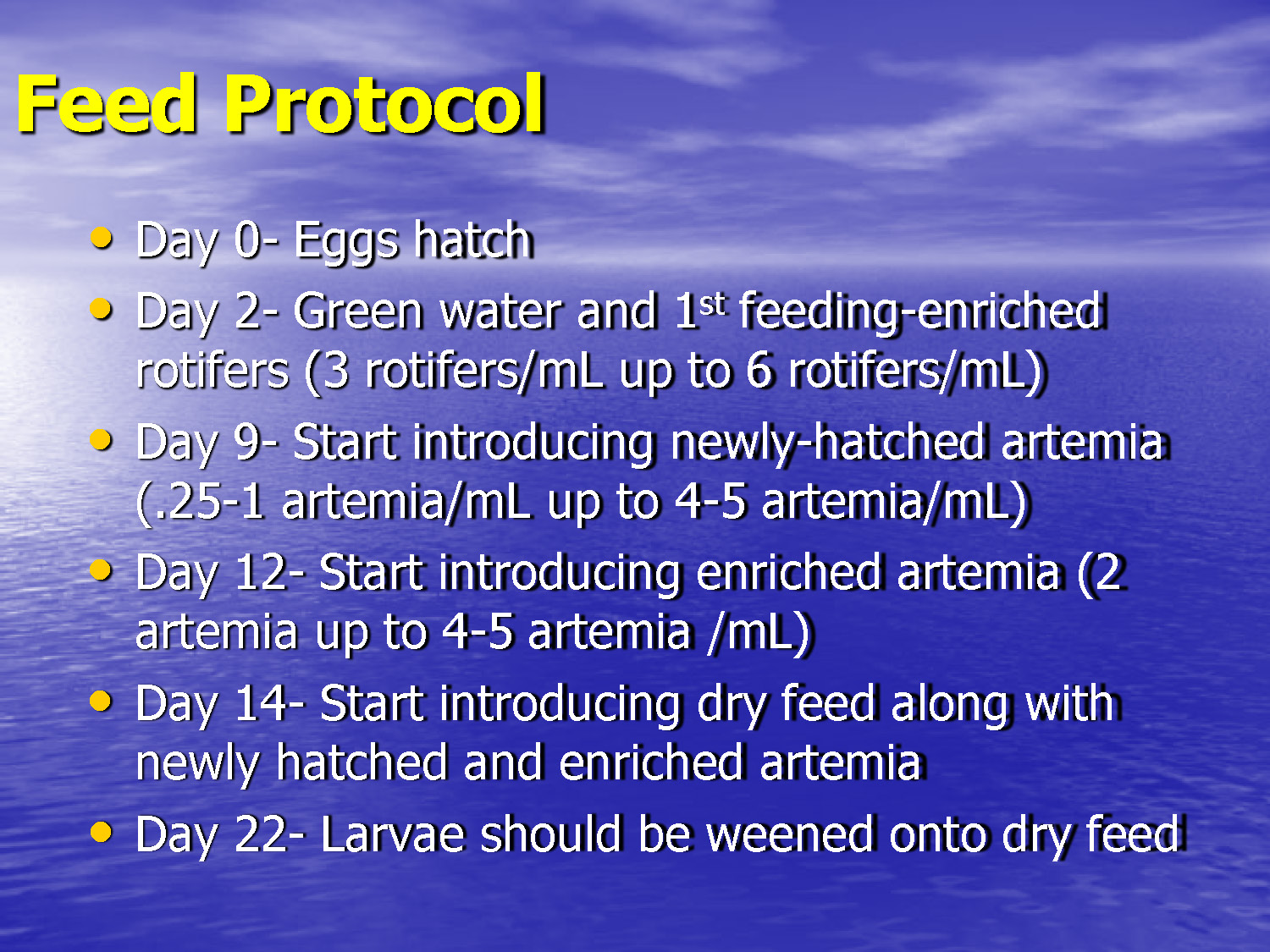
Feed Protocol
- Day 0- Eggs hatch
- Day 2- Green water and 1st feeding-enriched rotifers (3 rotifers/mL up to 6 rotifers/mL)
- Day 9- Start introducing newly-hatched artemia (.25-1 artemia/mL up to 4-5 artemia/mL)
- Day 12- Start introducing enriched artemia (2 artemia up to 4-5 artemia /mL)
- Day 14- Start introducing dry feed along with newly hatched and enriched artemia
- Day 22- Larvae should be weened onto dry feed
Critical Periods During Larval Development
- First Feeding
- Swim Bladder Inflation
- Feed transition
- Metamorphosis
- Weaning
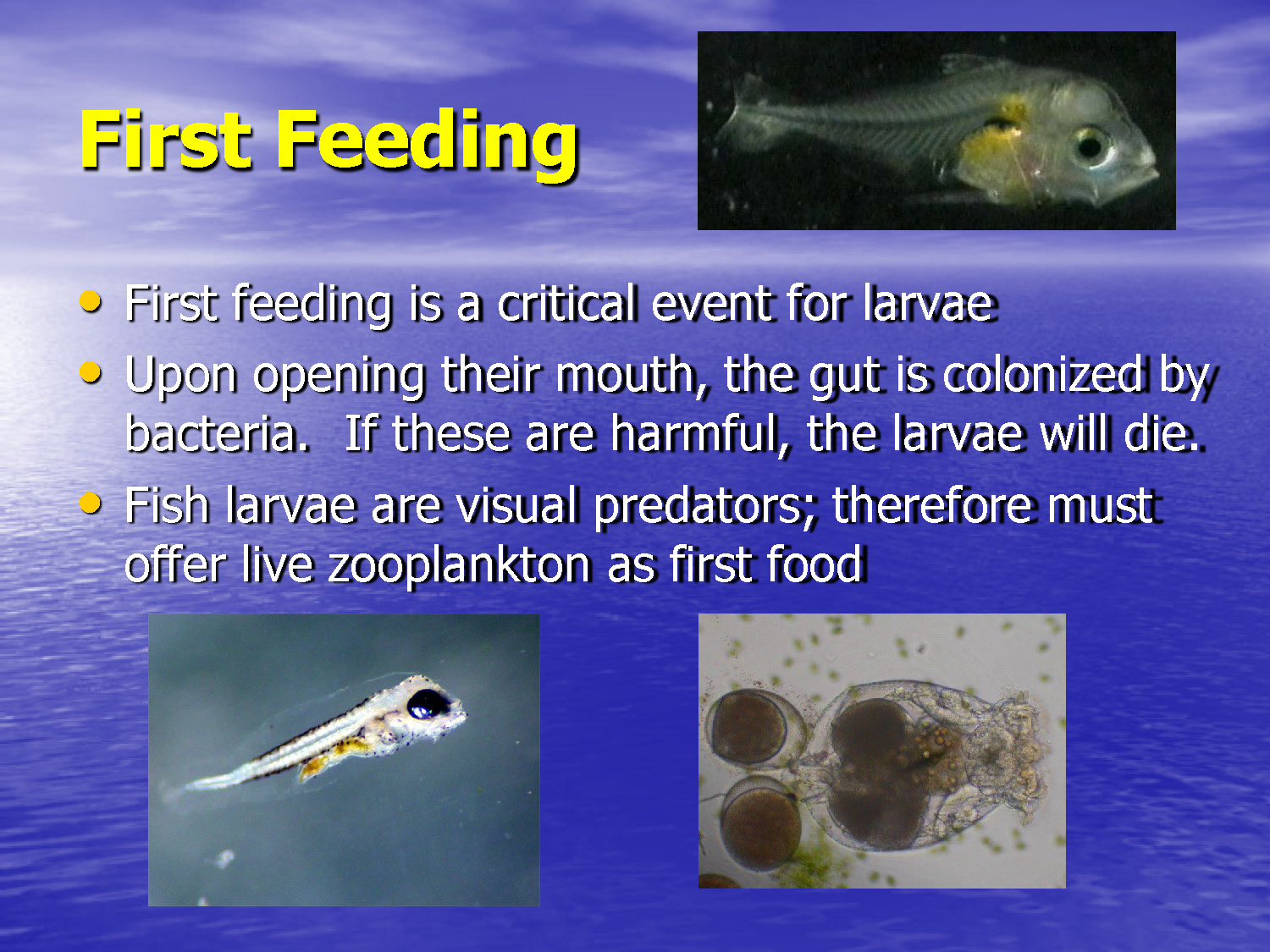
First Feeding
- First feeding is a critical event for larvae
- Upon opening their mouth, the gut is colonized by bacteria. If these are harmful, the larvae will die.
- Fish larvae are visual predators; therefore must offer live zooplankton as first food
Size of First Prey
Size of the initial prey item is dependent upon mouth gape
- Cod - Ciliates, trochophores
- Grouper, snapper – small copepods
- Pompano, cobia – rotifers
- Hybrid striped bass – Artemia
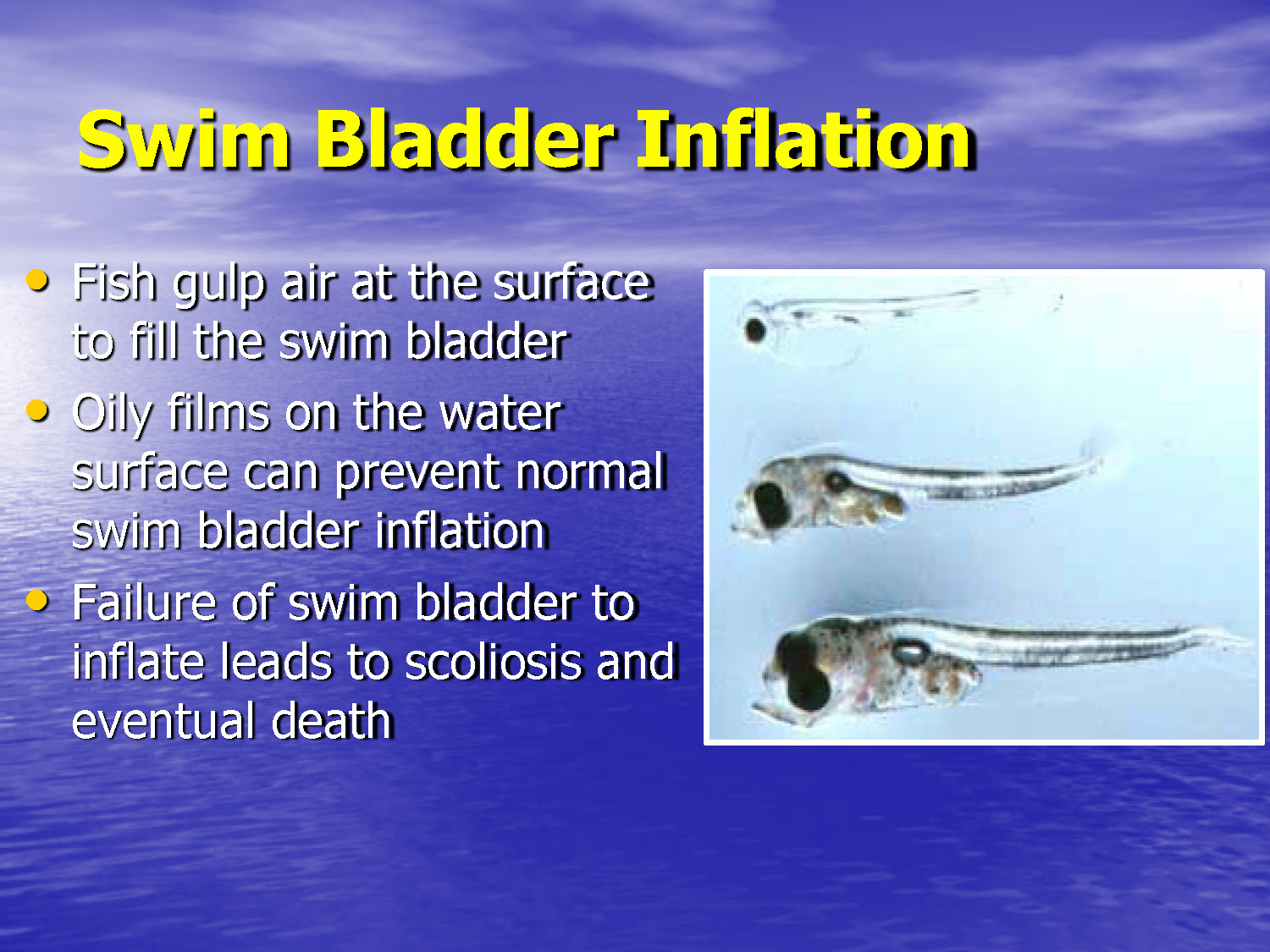
Swim Bladder Inflation
- Fish gulp air at the surface to fill the swim bladder
- Oily films on the water surface can prevent normal swim bladder inflation
- Failure of swim bladder to inflate leads to scoliosis and eventual death
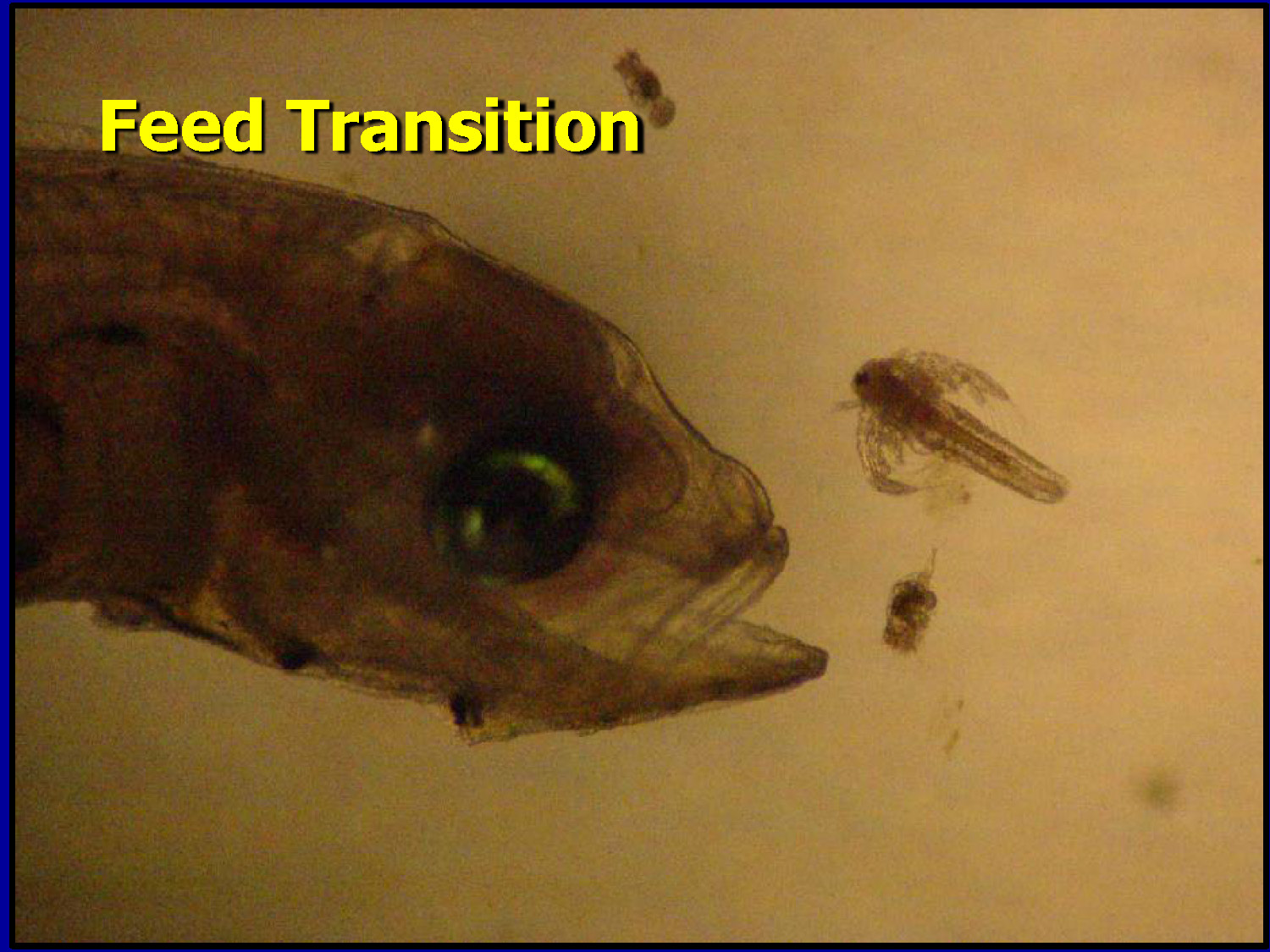
Feed Transition
A photograph titled "Feed Transition." It shows a microscopic view of a pompano larva's head with its mouth open, positioned to strike at a nearby rotifer and a brine shrimp nauplius floating in the water.
Metamorphosis
Metamorphosis is the physical transformation of the fish from its larval form to its juvenile form
Metamorphosis can be negatively impacted by:
- Dietary deficiencies
- Inappropriate temperature regimes (29°C)
- Poor water quality (D.O.-100%, pH-7.0-7.7, Salinity-35ppt, Alkalinity >100mg/L, TAN<.5mg/L, Nitrite<1.0mg/L)
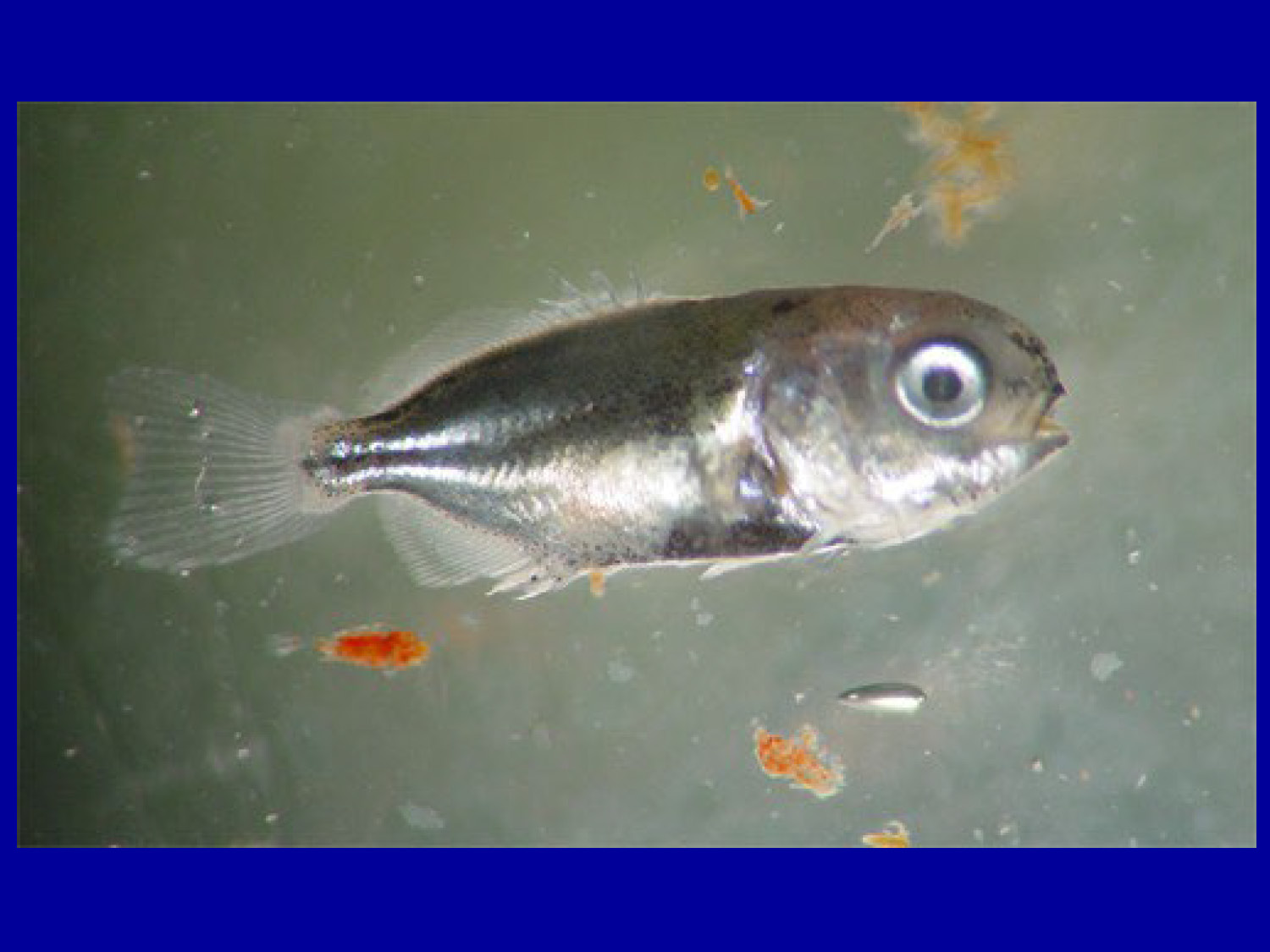
A close-up of a developing juvenile pompano. The fish is becoming more opaque and silver, showing a defined eye and fins. It is surrounded by small orange-colored brine shrimp (Artemia) in the water column.
Weaning
- Weaning is often difficult
- Artificial feeds need to be introduced early, even before fry begin feeding on them so that they are "part of the environment"
- Weaning failure often leads to cannibalism
Bottom line
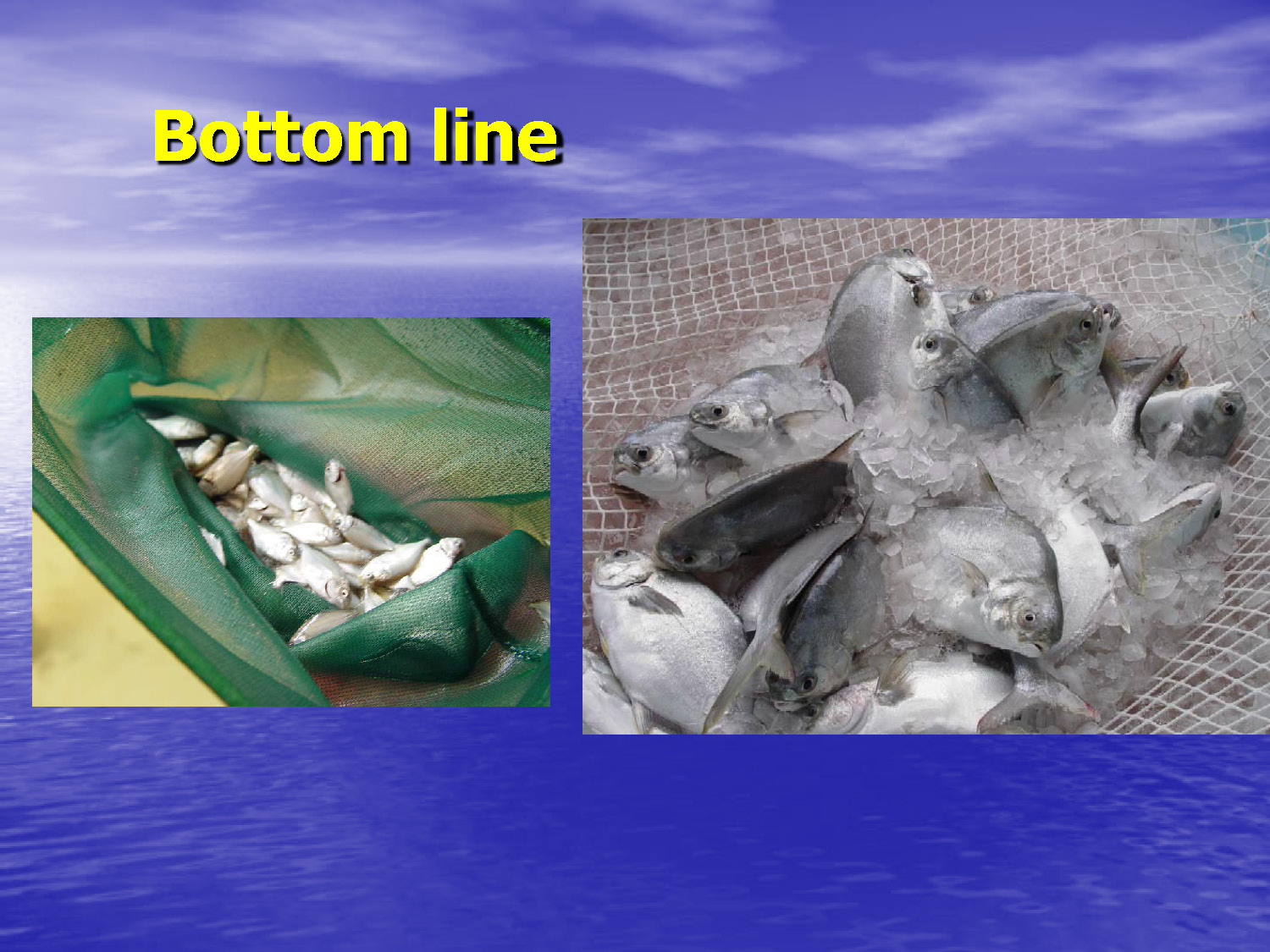
Two images under the heading "Bottom line."
- Left: A green mesh net containing dozens of small, silver juvenile pompano ready for stocking.
- Right: Several large, adult-sized pompano displayed on a bed of crushed ice, representing the final marketable product.
Vendor List
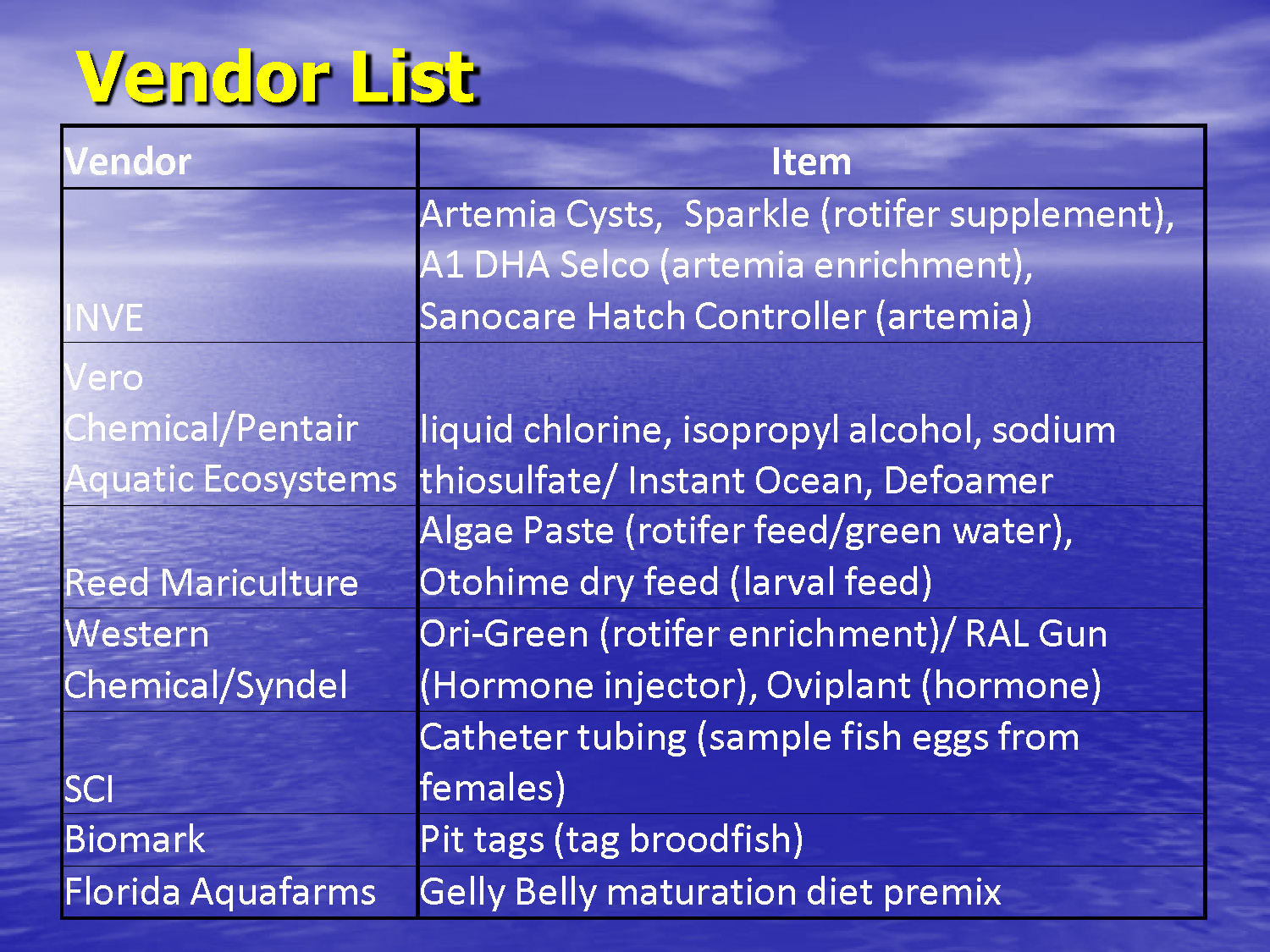
| Vendor | Item |
|---|---|
| INVE | Artemia Cysts, Sparkle (rotifer supplement), A1 DHA Selco (artemia enrichment), Sanocare Hatch Controller (artemia) |
| Vero Chemical/Pentair Aquatic Ecosystems | liquid chlorine, isopropyl alcohol,sodium thiosulfate/ Instant Ocean, Defoamer |
| Reed Mariculture | Algae Paste (rotifer feed/green water), Otohime dry feed (larval feed) |
| Western Chemical/Syndel | Ori-Green (rotifer enrichment)/ RAL Gun (Hormone injector), Oviplant (hormone) |
| SCI | Catheter tubing (sample fish eggs from females) |
| Biomark | Pit tags (tag broodfish) |
| Florida Aquafarms | Gelly Belly maturation diet premix |
End of presentation.
Go to top of page.