Science Students Dive Into Research at FAU Harbor Branch with WLW-ECOS Field Trips
Thursday, May 21, 2026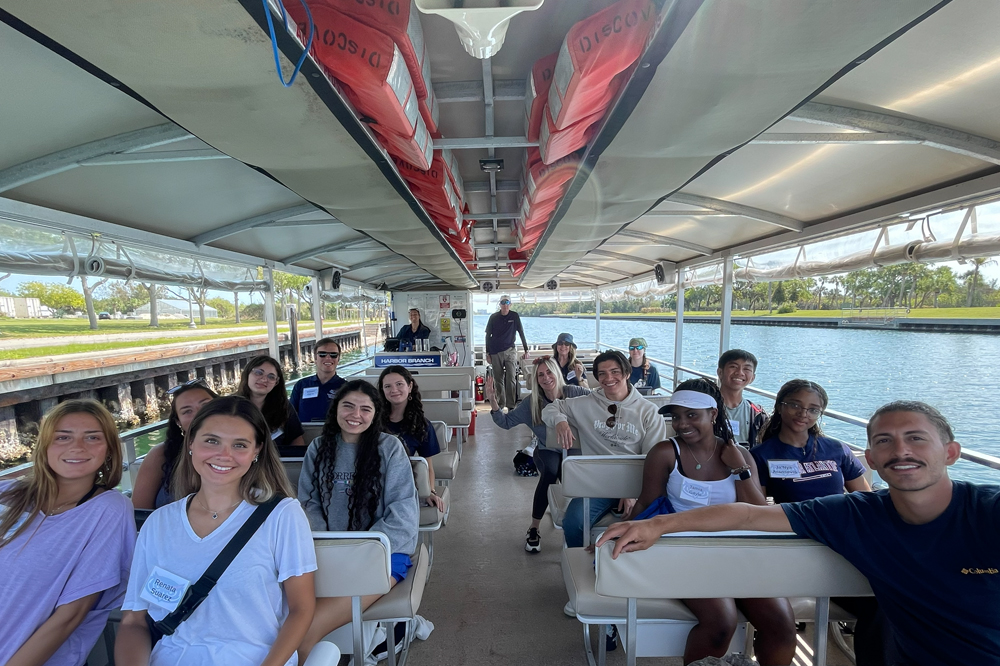
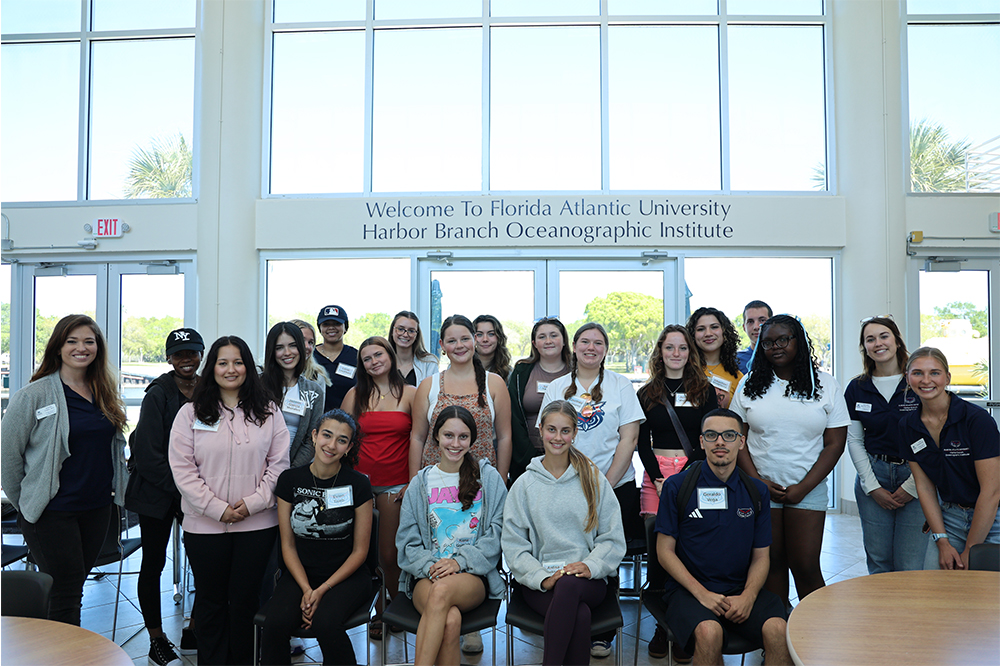
On two beautiful Saturdays this spring, 31 undergraduate students enjoyed an exclusive, behind-the-scenes look at Florida Atlantic University’s Harbor Branch Oceanographic Institute (HBOI) in Fort Pierce. Founded in 1971 as a premier marine research facility, HBOI is comprised of over 300 scientists, engineers, students, staff and volunteers who work toward the goal of Ocean Science for a Better World®.
The free field trips on March 21 and 28, supported by FAU’s School of Environmental, Coastal, and Ocean Sustainability (ECOS) WLW-ECOS Field Trip Program, invited full-time, degree-seeking freshmen and sophomores from the Schmidt College of Science to participate in two incredible opportunities to explore, learn and connect with ocean research in action. HBOI prioritizes solution-oriented research that addresses critical issues that affect coastal zones, oceans and human health.
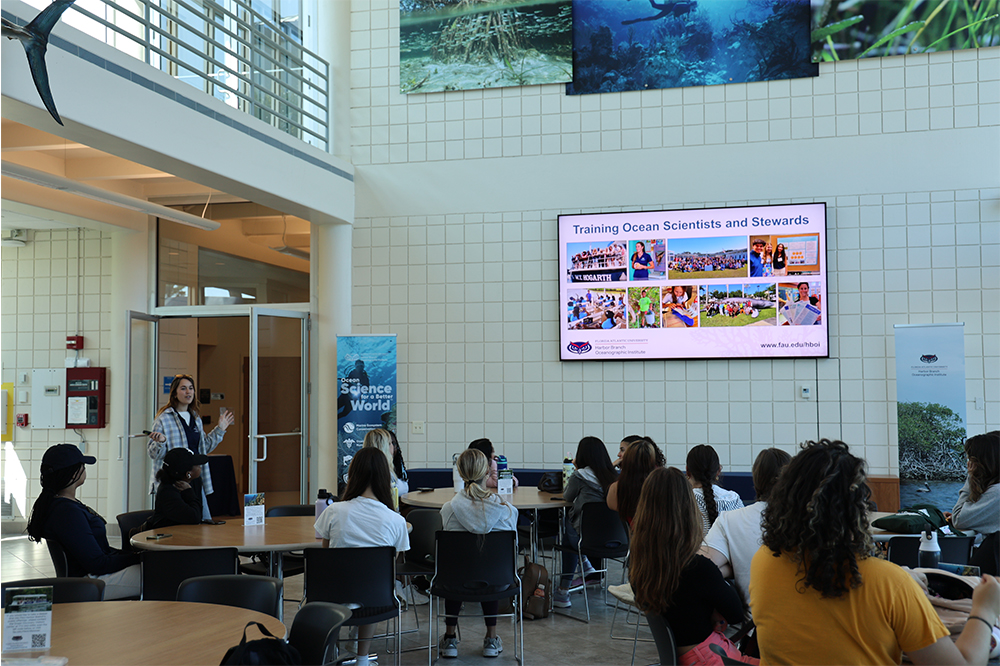
Upon their arrival at the university’s northernmost campus, students were welcomed and received a brief overview of the site and its history. The students then participated in an expertly guided boat tour, and after lunch, they enjoyed a tram tour.
During the tram tour, participants explored HBOI’s 144-acre waterfront campus, heard highlights of the cutting-edge research conducted by its marine scientists and engineers and discovered the impact this work has on South Floridians’ everyday lives. The tour also included a photo-op in front of the iconic Johnson Sea Link deep-sea submersible, which made the institution world-renowned for ocean exploration.
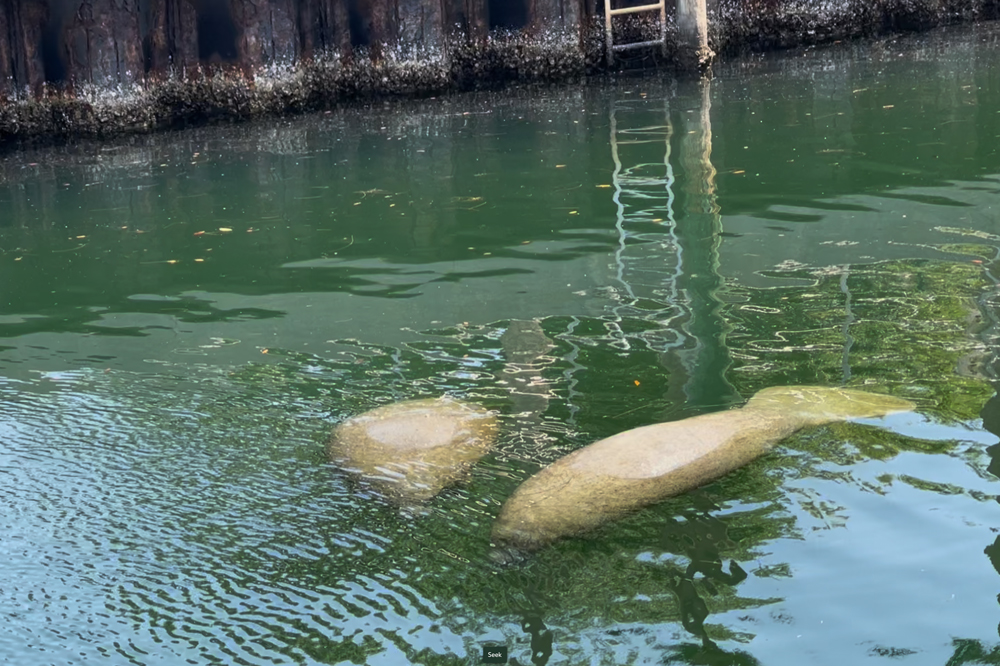
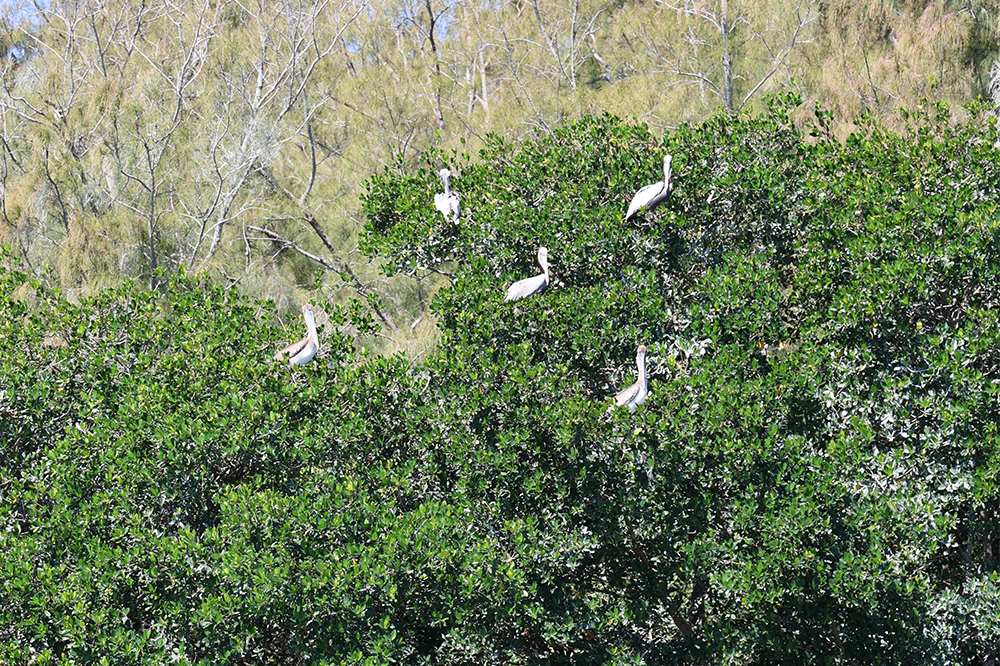
The educational excursion aboard HBOI’s award-winning pontoon tour boat on the Discovery, was an immersive experience. While a skilled guide shared insights on the institute’s groundbreaking research to better understand the Indian River Lagoon ecosystem, participants also had the unique chance to experience the lagoon as marine scientists. The boat—a floating laboratory equipped with state-of-the-art tools—allowed students to interpret real-time water quality data from the Indian River Lagoon Observatory Network of Environmental Sensors, survey underwater habitats with a remotely operated vehicle, and identify a wide range of wildlife—from microscopic plankton to sharks, rays, manatees and dolphins.
“One of my favorite parts about the FAU Harbor Branch tour was being able to see how many resources they have, such as the ROVs and the aquaculture tanks,” shared sophomore biological sciences student Madeleine Lambert. “It really shows you that the students and professors there are not just learning and teaching; they are discovering and making advancements in the science they are studying.”
Designated as an aquatic preserve and Estuary of National Significance, the lagoon is one of the most biologically diverse estuaries in North America. Spanning 156 miles along Florida’s east coast, it is home to more than 4,000 plant and animal species, including 50 threatened or endangered species. HBOI is a leader in Indian River Lagoon research and education and aims to conserve this vital ecosystem for generations to come.
Before boarding a bus back to the Boca Raton campus, students stopped by the Ocean Discovery Visitors Center—the public gateway to HBOI that showcases the on-going efforts of its marine scientists and engineers. The research-themed exhibitions provide visitors with an up-close look at the cutting-edge methods and technologies that have led to more than 50 years of discoveries around the world. The center also contains over 1,000 gallons of aquaria and is home to more than 80 different species of plants and animals. Its live displays highlight fascinating marine environments from seagrass beds to coral reefs and even include demonstrations of advanced sustainable aquaculture systems.
|
|
|
|