Prepare for a dynamic career in the legal field with a Paralegal Program recognized for excellence. According to
the U.S. Department of Labor, paralegal jobs are projected to grow faster than the average for all occupations
through 2031. Don’t miss this opportunity to advance your future with Florida Atlantic!
Is the Paralegal Certificate Program Right for You?
For individuals seeking to transition into the legal profession, enhance their current professional competencies,
or lay the groundwork for future legal studies, the Paralegal Certificate Program at Florida Atlantic University
(FAU) offers a rigorous, flexible, and academically grounded curriculum.
This program is specifically designed for working professionals and career changers who wish to acquire
marketable legal skills without the commitment of pursuing a full degree. Participants engage with fundamental
legal principles, develop proficiency in legal research, writing, and litigation support, and gain practical
insights necessary to excel in various legal environments, including law firms, corporate legal departments,
government agencies, and nonprofit organizations.
Distinctive Features of the FAU Paralegal Certificate Program
Florida Atlantic University’s Paralegal Certificate Program integrates substantive legal knowledge with
practical skill development, preparing graduates for diverse roles in the legal field. (Note: Paralegals may
not provide legal services directly to the public, except as authorized by law.)
Program Outcomes
Graduates of the program will be equipped to:
- Conduct comprehensive legal research and draft legal documents, including memoranda, contracts, and
pleadings
- Assist attorneys in critical functions such as trial preparation, case management, and client relations
- Apply legal terminology, principles, and procedures with accuracy and professional judgment
Program Advantages
- Earn a credential from a respected R1 research university
- Acquire substantive legal knowledge in core areas pertinent to paralegal practice
- Benefit from a flexible course structure designed to accommodate professional schedules
- Choose from a customizable pace - enroll in as few as one or as many as three courses per term
- Complete the program in as little as one year
- Manage tuition through pay-as-you-go options
- Learn directly from practicing attorneys and experienced paralegals
- Begin studies in January or August
The Paralegal Certificate Program at Florida Atlantic provides a robust academic experience, equipping students
with the knowledge and practical skills necessary to support legal professionals and to thrive in a variety of
legal contexts.
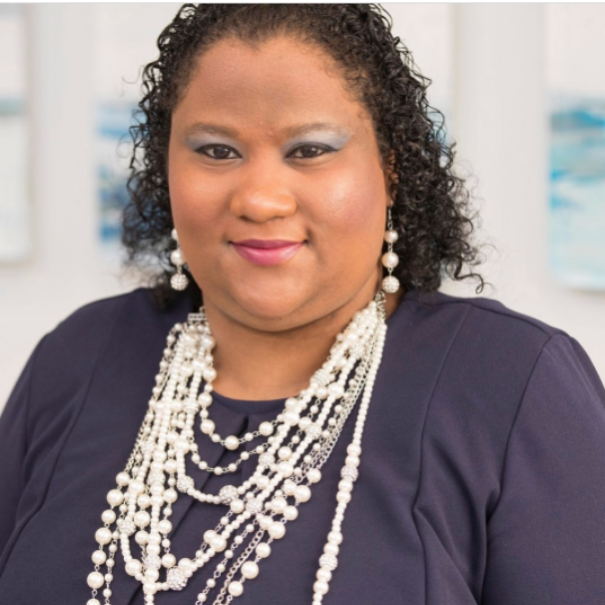
“None of what I have achieved thus far in my legal career would ever
have been possible without FAU Paralegal Certificate.”
– Tanecia Natto, paralegal to senior
partner at Baker & Zimmerman, P.A.
Admissions – Paralegal Certificate Program
Admission Requirements
Applicants interested in the Paralegal Certificate Program at Florida Atlantic University must meet the following
requirements:
- Possess a minimum of a high school diploma or GED
- No prior legal experience is required
- Demonstrate proficiency in spoken and written English to succeed in the program
Application Details
To apply for admission to FAU’s Paralegal Certificate Program, prospective students should complete the
following steps:
-
Apply for admission to FAU’s Paralegal Certificate Program here.
- Pay the $50.00 application fee.
-
Note: The application fee is waived for current FAU students. To request a fee waiver, please
email legalstudies@fau.edu.
- Upload the following documents via the application portal:
- Your highest-earned diploma or transcript
- Your current resume
Once your application is reviewed and accepted, you will receive detailed registration and payment instructions
via email.
Start your path toward a rewarding legal career with the Paralegal Certificate Program at Florida
Atlantic University. Apply today!
LA-1 Introduction to Law
Begin with an examination of the history of law from the earliest known legal decision to the present.
Additional topics include: the two primary legal systems in modern society; American theories of
jurisprudence; and the role of law in American society. American law is studied through a comparison of
Florida and Federal courts, criminal and civil law, substantive and procedural law, and trial and
appellate law.
LA-2 Legal Research and Writing
Students will become acquainted with the fundamentals of legal research and citation. Students will also
learn to use and locate primary and secondary sources and will gain exposure to various resources of
legal research. Research Writing includes exercises in grammatical construction and legal writing.
Students will become acquainted with the fundamentals of legal writing and learn to pre-sent legal
analysis in a logical concise format.
LA-3 Civil Litigation
The primary focus is on civil litigation in Florida. Included are: sources of law, jurisdiction, venue,
pleading requirements in civil actions, motion practice, third party practice, all aspects of discovery,
trial preparation, trial procedure, post-trial motions and appeals, and post-judgment enforcement. The
course will provide an understanding of civil litigation as it is practiced in Florida, with emphasis on
practical aspects of litigation. In addition, you will learn how to prepare for a trial and how to
assist the attorney in handling a civil matter from initial interview through trial.
LA-4 Probate and Estate Planning
Students are introduced to the principles of probate law in Florida. Topics for study include: the role
of the attorney and personal representative, probate vs. non-probate assets, testate vs. intestate
estates, creditor and beneficiary rights, accountings, probate litigation and federal estate taxes as
well as trust administration. You will learn to administer an estate from beginning to end, including
formal, summary and ancillary administrations, and you will be required to prepare pleadings after a
study of the Florida probate code. Estate Planning focuses on various ways to own property and the
consequences of same at death. The students will also learn the manner in which assets pass by
intestacy, the manner of creating valid wills and amending and revoking it, spouse’s elective
share, and the grounds for contesting a will, including lack of testamentary capacity and undue
influence. Finally, the students will have an overview about the different type of trust, its purposes,
and the use of revocable and irrevocable trusts.
LA-5 Contract Law
The broad application of contract law is kept in mind during the exploration of what makes some promises
enforceable. Areas of discussion include: how the concepts of offer, acceptance and consideration are
combined to create enforceable contracts; what happens when one or more elements is missing; and the
performance and breach of contracts. You will be invited to apply your learning to real-world situations
through discussions of contract disputes in the news, hypothetical situations based on current events
and by drafting exercises that challenge you to create unambiguous provisions.
LA-6 Criminal Law
This course involves the study of both substantive and procedural criminal law. Substantive criminal law
is introduced first by focusing on the criminal justice system itself. We then examine the elements of
the various offenses and defenses. We conclude the first part of the class by studying factual,
statutory, and constitutional defenses to crimes. The second part of the class focuses on criminal
procedure. We study the constitutional aspects of search and seizure law, interrogation, pre-trial
process and discovery, trial, sentencing, and appeal.
LA-7 Personal Injury
This course includes an in depth examination of the elements making up a cause of action based on
negligence; the study of intentional torts such as assault, battery, and intentional infliction of
emotional distress, actions based on strict liability and product liability, as well as other aspects of
personal injury. Topics of discussion include: the various documents used in personal injury cases
(complaints, answers, affirmative defenses); discovery documents used in preparation for trial
(interrogatories, requests to produce and requests for admission); and the use of other pre-trial and
trial documents and exhibits and how they are used in personal injury actions. You will learn the
fundamental elements of personal injury causes of action, settlement negotiations, mediation, and
arbitration. The goal of the course is achieved through both the text and the use of actual case
documents and experiences, with an emphasis on practical application.
LA-8 Real Estate and Closing
All phases of real estate practice are studied. Topics include: residential and commercial contracts; the
process from listing a piece of property through closing; various forms of property ownership and
restrictions; financing (types of mortgages); types of title insurance matters (liens vs. permitted
acceptable items); construction-related matters (liens/notices required); types of deeds; taxation;
homestead; loans; residential and commercial leases; eviction proceedings; foreclosure; litigation; and
preparation of closing statements. The goal is to give you the knowledge to understand a basic
residential contract, understand a title insurance commitment, prepare all documentation relating to
closings, and the various issues involved in a real estate transaction.
LA-9 Immigration
Immigration Law begins with the topic of American citizenship and continues with the study of
admissibility, inadmissibility, naturalization and removal. In addition to the complex constitutional
laws, statutes and regulations involved in the various processes and steps, the course will cover the
context of the broader historical and political forces that shaped the body of immigration law. You will
get skills training in the interpretation of difficult statutes and regulations, a working knowledge of
the many forms required by the DHS/USCIS for the working practitioner, and an understanding of how our
immigration policies fit into the study of civil rights and liberties.
LA-10 Business Entities
You will study sole proprietorship and general and limited partnerships, with a special emphasis on
corporations. Topics include: corporate formation, articles of incorporation and by-laws, sub-chapter S,
corporate financial structure, operation, meetings, dividends, distributions, employment, steps after
formation, foreign corporations, and corporate taxation.
LA-11 Domestic Relations
Addresses the issues of family law in the U.S. Included topics are: valid marriages, annulments, divorce,
property distribution, paternity, child custody, and support. Adoption may also be covered. Students
will develop a working knowledge of the pleadings, motions, discovery involving, jurisdictional and
venue issues relating to and involving family law.
LA-12 Paralegal Professionalism
The course provides hands-on experience to reinforce students learning by having them prepare the legal
forms used in actual court cases. In addition, the students will have an overview on how technology has
changed the law office, and the type of software that different law firms use in the operation of the
business. The course also provides an overview of the office duties, computers and office systems. The
students will learn techniques on how to prepare legal correspondence, legal documents, and preparations
for trial. In addition, students will put into practice the theoretical aspect of what they learned
throughout the program.
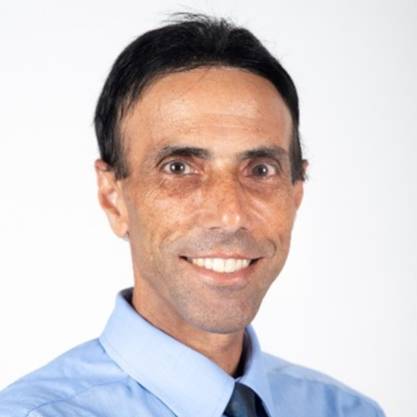
“I realized that I needed something more... Through the Paralegal
Certificate Program, I was challenged... all in different areas of law, that opened my eyes to
the broader legal field.”
– Howard Rudnick,
graduate

Program Costs – Paralegal Certificate Program
Investing in your education through the Paralegal Certificate Program at Florida Atlantic University is a
valuable step toward advancing your legal career. Below is an overview of the program costs:
- $50 application fee
- $175 technology fee
- Tuition for 12 required courses - costs vary by course
- Textbooks and course materials - prices vary depending on individual courses
- For detailed information on current tuition rates and textbook costs, please contact us at legalstudies@fau.edu.
Explore an affordable path to a rewarding legal career with FAU’s Paralegal Certificate Program.
Administrative Staff
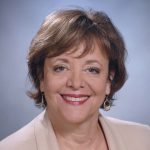
Anita N. Blowers, Ph.D.
Director of Legal Studies
Read Bio
Dr. Anita N. Blowers is a Teaching Professor and Director of Legal Studies in the School of
Criminology and Criminal Justice at Florida Atlantic University, and Associate Professor Emerita
in the Department of Criminal Justice and Criminology at the University of North Carolina at
Charlotte. She earned her Ph.D. in Criminal Justice from the University at Albany, State
University of New York.
Dr. Blowers’ research explores elder abuse and neglect, older adults in the criminal
justice system, sentencing practices, and criminal justice policy. She also engages in
scholarship on teaching and learning, with a particular focus on student outcomes and assessment
in higher education. Her work has been widely published in peer-reviewed journals in the fields
of criminal justice and law, and she has written book chapters published in collaborative
academic works.
In addition to her scholarly work, Dr. Blowers has held numerous administrative and academic
leadership roles, focusing on curriculum design, program innovation, and efforts to improve
student outcomes. She has played a key role in developing cross-campus collaborations that align
academic and student affairs, promoting a cohesive and student-focused educational experience.
Alejandra Quintero
Program Coordinator
Read Bio
Alejandra Quintero serves as the Program Coordinator for the Legal Studies Paralegal Program at
Florida Atlantic University, bringing over 20 years of experience in academic support services.
With a strong background in administration and management, she plays a key role in guiding
students and supporting the program’s day-to-day operations.
Alejandra holds a Bachelor’s degree in Psychology from Santo Tomás de Aquino in
Colombia and a Master’s degree in Higher Education Leadership from Florida Atlantic
University.
Outside of her professional life, Alejandra enjoys spending time with her family and pets, as
well as exploring new places through travel and hiking.
Faculty
Samantha Angel
angels@fau.edu
Read Bio
Samantha Angel began working in the legal field after earning a B.A. in Anthropology from the
University of Central Florida in 2012. She attended Florida Atlantic University’s
Paralegal Studies Program, graduating in July of 2016. She was hired by the Office of the
Attorney General in December of 2016, where she continues to work in the Criminal Appeals unit.
Samantha graduated with an M.A. in Criminal Justice from the University of Central Florida in
2019, is a Florida Registered Paralegal, and an active member of the FRP Enrichment Committee
and Palm Beach County Bar Paralegal Committee.
Samantha teaches the Paralegal Professionalism class for FAU Paralegal Certificate Program. As an
alumna of that program, Samantha provides a unique and valuable perspective for students.
Kenneth Dion
kdion2@fau.edu
Read Bio
Kenneth B. Dion, J.D. has a Bachelor of Arts degree from Boston College and a J.D. from Suffolk
University School of Law in Boston. He has been a practicing attorney for over twenty-five years
representing clients in Criminal Law, Contract Law, Immigration Law, Personal Injury Law,
Traffic Law, and Corporate Law. He was formerly an Assistant Public Defender at the Palm Beach
County Public Defender’s Office. Ken instructs the LSAT course in the Test Preparation
Department at FAU and also teaches Criminal Law and Business Entities for the FAU Paralegal
Certificate Program.
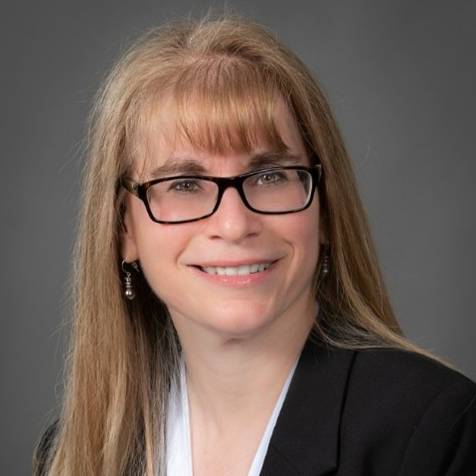
Elise Gross
egross11@fau.edu
Read Bio
Elise Gross, Esq., LL.M., has focused her legal practice on trusts and estates for nearly thirty
years, which includes the drafting and administration of wills and trusts as well as probate
administration. Additionally, Elise Gross has been serving other law firms as Of Counsel since
2011 where she handles estate planning and administration as well as represents individuals and
businesses in connection with integrating estate planning with asset protection plans.
Elise Gross graduated with a B.A. from the Florida International University. She went on to
receive her law degree from New York Law School in 1992 and her Masters in Law (LL.M.) in the
Heckerling Program in Estate Planning from the University of Miami, School of Law in 1993. Elise
is currently admitted to the New York and Florida bar.
Elise serves on the B&P Cabinet and PAC of the South Florida Jewish Federation and serves on
several Jewish Federation committees and one for JARC and the Trustbridge Hospice Foundation of
Broward Advisory Board. She is also a member of the Greater Boca Raton Estate Planning Counsel.
Elise teaches the Probate & Estate Planning class for the FAU Paralegal certificate Program.
Lyle Long
llong12@fau.edu
Read Bio
Lyle Long is a personal injury lawyer and one of the founding partners of Long, Jean &
Wechsler, P.A. He has served as an attorney for over a decade and has recovered millions for his
injured clients in that time. In addition, after receiving his Juris Doctor from Nova
Southwestern University, Lyle worked as an associate attorney for a prominent South Florida
criminal law firm. Looking to expand his trial skills, he spent time as an Assistant Public
Defender in the Seventeenth Judicial Circuit Broward County, FL. After gaining extensive trial
experience in the public sector, Lyle decided to transition into private practice. In 2015, he
joined what at the time was a civil litigation firm aggressively fighting insurance companies
and has recovered millions for his injured clients. Lyle teaches the Personal Injury course in
the FAU Paralegal Certificate Program.
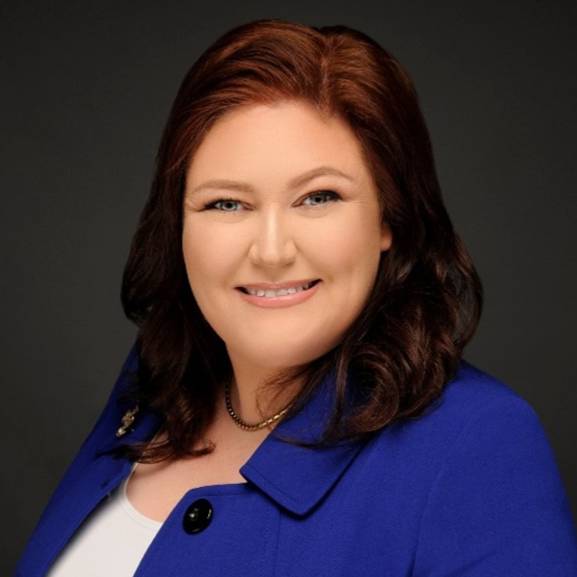
Laura Reich
reichl@fau.edu
Read Bio
Laura M. Reich, Esq. is an attorney and arbitrator focused on complex civil litigation with
specializations in art, commercial, communications, and international law. She is a partner at
the law firm of Harper Meyer LLP in Miami, Florida, and her clients include U.S. and
international businesses and individuals whom she represents on a wide variety of issues,
including breach of contract, violations of consumer protection statutes, breach of fiduciary
duties, antitrust, garnishment, business torts, regulatory matters, and more. Ms. Reich also
serves as a frequent arbitrator and is listed with the American Arbitration Association and the
Court of Arbitration for Art, located in The Hague, Netherlands. Her educational background
includes the University of Florida College of Law (JD) and University of Florida (BA), both with
honors. Ms. Reich also serves as an adjunct professor at Florida International University School
of Law, and she is currently an officer of the International Law Section of The Florida Bar. She
also teaches the Introduction to Law, Legal Research & Writing and Civil Litigation classes
for the FAU Paralegal Certificate Program.
Yelena Sverdlova
ysverdlova@fau.edu
Read Bio
Ms. Sverdlova has attained her LL.M specializing in Taxation from The Boston University School of
Law. Yelena established her law firm, Capital Planning Law, PLLC, in 2016.
Mrs. Sverdlova has a true passion for the law and has obtained extensive experience in many
facets of business law including, but not limited to: business start-ups, business agreements,
general business counsel, and asset protection. She also provides legal representation in the
areas of estate planning, probate administration, guardianship and real estate law.
Mrs. Sverdlova teaches Contract Law in the FAU Paralegal Program.
Samantha Vacciana
jvacciana@fau.edu
Read Bio
Samantha Vacciana is an alum of Florida Atlantic University, where she received a
Bachelor’s and Master's degree. She then graduated Cum Laude from the University of
Florida, Levin College of Law, where she earned her Juris Doctor. Samantha’s legal career
has involved both civil and criminal work, and in 2012, she opened the doors to her own law
firm, Trial Lawyers of Florida representing clients in criminal defense, probate, personal
injury and family law. Samantha serves on the board of various organizations, including the
Florida Bar Foundation, the Florida Bar Grievance Committee, Florida Legal Services, Florida
Association of Criminal Defense Lawyers, Gang Alternative’s Project Renew, and the
Caribbean Americas Soccer Association.
Samantha teaches the Domestic Relations class in the FAU Paralegal Program.
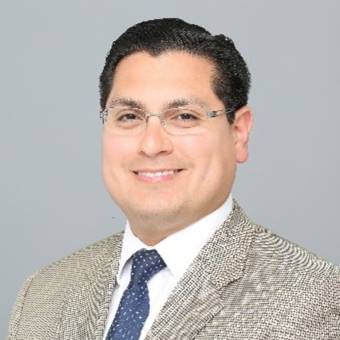
Javier Zuniga
zunigaj@fau.edu
Read Bio
Javier Zuniga is a Florida licensed attorney since 2008. He obtained his Bachelor’s Degree
(B.S.) at Nova Southeastern University with a major in Paralegal Studies in 2003. For Law School
he attended the evening program at Nova Southeastern University, while working full time. Javier
obtained his Juris Doctorate (J.D.) in 2008 and became a member of the Florida Bar that same
year.
Prior to law school Javier worked for many years at a non-profit organization in Palm Beach
County assisting distressed consumers with debt related matters. As a lawyer Javier started
practicing as an associate attorney in a consumer defense law firm in 2008. In 2010 he opened
his own practice Zuniga Law, P.A., in Boca Raton, Florida, with a concentration in Immigration
Law, Bankruptcy Law and Debtor/Creditor Relations with an emphasis in Debtor representation.
Javier was born in Guayaquil, Ecuador. He is fully bilingual, and a large portion of his
practice is dedicated to serving the legal needs of the Spanish speaking population of South
Florida.
Javier teaches the Immigration Law class for the FAU Paralegal Certificate Program.
What is the difference between a “paralegal” and a “legal
assistant”?
It has long been recognized that the terms “paralegal” and “legal assistant” are
synonymous terms just as “lawyer” and “attorney”. This is not an opinion of NALA
(National Association of Legal Assistants), but a well documented fact throughout the United States
– supported by state Supreme Court rules, statutes, ethical opinions, bar associations guidelines,
and other similar documents.
How quickly can the program be completed?
The program consists of 12 courses and can be completed in as little as one year.
Can the program be completed on a part-time basis?
Yes. However, do note, the Certificate Program must be completed within 3 years.
How do I apply?
Students may begin the program in either January or August. The Paralegal Certificate program uses a
year-round, rolling admissions process. If you wish to begin the program in the Spring semester (January
start), applications are due December 1. If you wish to begin the program in the Fall semester (August
start), applications are due July 1.
View the Click Here to jump to the application.
Can I apply for federal funding or FAFSA?
The Paralegal Certificate Program is a non-credit certificate program and, as such, does not qualify for
financial aid.
What skills are necessary to be a paralegal?
Paralegals must have excellent English reading, writing and speaking skills, the ability to think
logically, and the integrity to uphold the high ethical standards of the legal profession.
When can I begin the program?
Students can begin the program in January or August.
How does a certificate program differ from a degree-granting program?
A continuing education certificate is a short-term, non-degree program designed to
provide practical skills and professional development in a specific field. These programs allow students
to gain expertise in a short time span. Participants receive a certificate of
completion, not a degree.
Do students receive grades in the courses?
Yes. All courses are conducted in a formal academic setting. Students complete a variety of graded
assignments, papers, and exams. While there are no official transcripts, students do receive a final
letter grade for each course.
Does the paralegal program offer placement services?
Yes. Employers contact the program coordinator who posts job advertisements and recommends to students
and graduates to seek these opportunities. Also, we network with paralegal associations.
How is the job outlook for the paralegal profession?
The paralegal profession has grown tremendously since its introduction in the 1960’s. The volume of
legal activity and litigation continues to increase even when the economy slows down.
The Department of Labor, Bureau of Labor Statistics, forecasts a faster-than-average growth rate of 14
percent through 2031, much faster than the average growth for all occupations.
As law firms try to increase the efficiency of legal services and lower their expenses, they are expected
to hire more paralegals and legal assistants. Some law firms are rethinking their project staffing and
rebuilding their support staff by hiring paralegals, who may be given some of the administrative tasks
previously assigned to legal secretaries.
Private law firms will continue to be the largest employers of paralegals, but a growing array of other
organizations, such as corporate legal departments, insurance companies, real estate and title insurance
firms, and banks also hire paralegals. Corporations in particular are expected to increase their
in-house legal departments to cut costs. In part because of the range of tasks they can perform,
paralegals are also increasingly employed in small and medium-size establishments of all types.
What is the average salary for a paralegal?
Earnings of paralegals vary greatly, depending on education, training, experience, the type and size of
employer, and the geographic location of the job. The average current salary reported for paralegals
with certificates was about $60,000, certificate holders being compensated at a higher level than any
other form of education, including Associate Degree or Bachelor Degree holders.
“Changing careers after 20 years was significantly less challenging...
due to the education I received [in the] Legal Studies Program. I am so grateful and
appreciative to FAU because I am a successful paralegal today because of their program.”
– Jody Kling, judicial
assistant, 17th District Judicial Circuit of Florida