DSW Student Wins FL NASW Educator of the Year for Innovative Use of AI in Clinical Social Work Training
Wednesday, Sep 03, 2025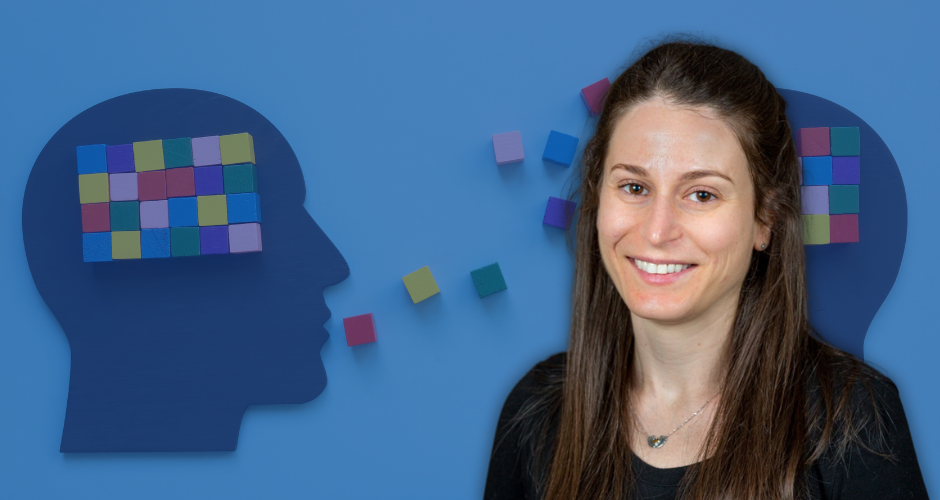
When Ariella VanHara, a Doctor of Social Work (DSW) candidate at Florida Atlantic’s Phyllis and Harvey Sandler School for Social Work, was named Educator of the Year by the Florida Chapter of the National Association of Social Workers, she didn’t even realize she’d been nominated.
VanHara, who’s finishing up her first year in the DSW program, has a joint appointment at Florida Gulf Coast University (FGCU), teaching in the social work department while also serving as a clinician and field instructor for Counseling and Psychological Services (CAPS).
Her pedagogy brings artificial intelligence into student roleplay scenarios.
“In social work training, the primary practice has been doing roleplays—one person plays the social worker, the other plays the client,” VanHara explains. “But, to be honest, I’m not the biggest fan of that model, and students often share that as well. I remember when I was an undergraduate, it never really felt real or impactful.”
To make the learning process more dynamic and less scripted, VanHara introduced AI into the classroom, using it as a spontaneous and unpredictable “client.”
“When we do it with AI, students really don’t know what’s going to be said on the other end.” This makes it possible for students to test out scenarios in a way that’s both safe but more unpredictable.
For instance, VanHara noted that students are often worried about saying something insensitive or unintentionally offensive when they get into an actual conversation with a client. She encouraged her students to test out not-so-helpful interventions—like telling an AI programmed to act as a grieving client that “With time, you’ll get over it.”
“What was really interesting was we saw the AI’s tone shift in response,” she said. “It began to withdraw in its responses.” Her students noticed and it led to a thoughtful conversation about tone and empathy.
For VanHara, using tools like Pi.ai and ChatGPT gives students a safe yet emotionally engaging space to practice what they’ve learned, make mistakes, and grow as future practitioners.
From Crisis Work to the Classroom
VanHara has been on the front lines of mental health care since she was an undergraduate majoring in psychology. Her career started out in inpatient crisis services, where she quickly moved from behavioral health tech to crisis clinician, supervisor, and eventually director.
“I initially wanted to work with the substance use population—and I did,” she says. “But then I covered a shift for a coworker in the crisis unit and absolutely loved it. I put in for a transfer the next day.”
Crisis work revealed to her the raw, human reality of mental illness. “You get to see mental health at its most vulnerable point. I really appreciated the humanity that was there.”
In her current job as both an instructor and a CAPS clinician and field instructor, she gets to teach and mentor a new generation of social workers while keeping one foot in the hands-on practice of social work that drew her in the first place.
“It’s the best of both worlds.”
A Scholar on the Rise
Winning the award for Social Work Educator of the Year came as a surprise to VanHara, but not to her mentors.
“She’s an amazing student,” said Danielle Groton, PhD, SSSW associate professor and DSW degree program coordinator. “And as if her award weren’t impressive enough, her paper for Dr. David Landsman-Wohlsifer's class was just accepted for publication.”
The paper, titled “Manic and Adjudicated: A Diagnostic Assessment Case Study,” will appear in the journal Reflections: Narratives of Professional Helping. The case analysis explored the complexities of diagnosis, client narratives, and clinician reflection.
VanHara credits Landsman-Wohlsifer for encouraging her to take the leap into submitting a paper for publication. At the end of the course, he gave the students in his class instructions on how they could submit their final research project for publication.
VanHara said she decided to pursue the opportunity more to get a jumpstart into understanding the feedback and peer review process rather than because she thought she had a serious chance of getting accepted. She was thrilled to learn that her research had been accepted.
"At the end of the course, I encouraged all of my students to consider submitting their papers for publication,” Dr. Landsman-Wohlsifer said. “Now that they are doctoral students, I want them to begin to develop their CVs as clinical scholars. Ariella embraced that challenge and transformed the assignment into something worthy of a professional journal. Her recognition as Educator of the Year and recent publication acceptance are a testament to her drive, innovation, and the meaningful contributions she is already making to our profession.”
Shaping the Future of Social Work at Florida Atlantic
Whether in the classroom, the clinic, or the pages of an academic journal, VanHara is shaping the future of social work through empathy, innovation, and dedication. As both a scholar and a practitioner, she models what it means to lead with humanity.
Her journey to Florida Atlantic was driven by both personal and professional alignment. An alumna of FGCU, where she earned her undergraduate degree in psychology, VanHara went on to earn her MSW remotely from Indiana University–Purdue University Indianapolis in 2016. After getting licensed in 2018 and gaining valuable experience in crisis intervention, she knew it was time to transition into higher education.
But with two young children at home, VanHara needed a program that understood the demands of working professionals. “I talked to a colleague who was in FAU’s first DSW cohort, and she had great things to say,” VanHara recalls. “I attended Dr. Danielle Groton’s informational session, and I loved the structure. It’s built for people who are working.”
The hybrid model—blending synchronous learning with independent work—offered the flexibility she needed. “When I started the program, my son was two and my daughter was four. I thought, ‘Am I a little insane for doing this?’” But she found that the online program offered a reliable and workable structure for pursuing her DSW while working and parenting.
"We have been very intentional in the design of our program to create flexibility for students still working in the field, while still maintaining the rigorous expectations of a doctoral program,” Dr. Groton said. “We are thrilled that our program structure empowers exceptional students such as Ariella to join us and bring this level of expertise and innovation into our virtual classrooms."