Igniting Research: FAU’s Dr. Heidi Schaeffer Creates Bold New Fund to Fight Human Trafficking
Wednesday, Jan 07, 2026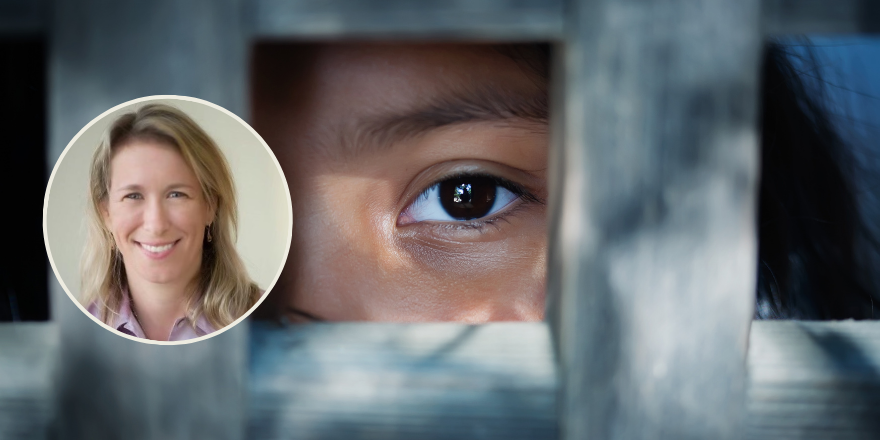
In 2008, when Heidi Schaeffer, MD, first attended a meeting of the Broward County Human Trafficking Coalition, she was faced with a problem she’d never fully confronted before.
“It opened my eyes to the sheer amount of human trafficking occurring right in our own backyards,” she recalled. “And I was shocked that as a practicing doctor, there was no training in this area.”
That realization became a mission. Dr. Schaeffer dedicated herself to understanding the complexities of human trafficking and educating her fellow clinicians on how to recognize and treat its victims.
Today, nearly 20 years later, Dr. Schaeffer, now a nationally recognized expert in the field, is establishing a $25,000 Seed Research Fund at the College of Social Work and Criminal Justice designed to ignite faculty research into the prevention of human trafficking and child abuse. With this visionary gift, she aims to empower researchers at Florida Atlantic to pursue bold, innovative projects that can lead to meaningful interventions and protect vulnerable populations.
A Career Forged in Compassion and Advocacy
When Dr. Schaeffer began her journey into the world of advocacy, she knew that healthcare providers, regardless of their specialty, were unknowingly encountering patients affected by exploitation, especially in South Florida. Since 2008, she’s worked to give nurses and physicians the knowledge and resources to detect the signs of human trafficking and provide informed, trauma-sensitive care to patients in need, as well as brought these critical conversations to state and national audiences of health and mental health practitioners, funders, and lawmakers. As a licensed physician, a dedicated community partner, and a respected educator, Dr. Schaeffer’s persistent passion for mentorship and advocacy is a core part of her role at FAU’s Schmidt College of Medicine, where she serves as a Clinical Affiliate Assistant Professor and encourages medical students to practice compassionate care.
Fueling "B.R.A.V.E.R.Y." Through Seed Funding
The new Seed Research Fund is designated explicitly for investigators within the College of Social Work and Criminal Justice. Dr. Schaeffer says she chose to focus her support on what she calls the more “taboo” areas of well-being.
"There are plenty of companies and individuals who support mainstream research," she explained, "but I feel there’s not enough funding in these areas of well-being, since many people don’t want to think about the reality of how prevalent human trafficking and child abuse are."
By addressing these adverse childhood experiences (ACEs), she believes we can prevent a cascade of negative outcomes later in life. The grant is aptly named the “B.R.A.V.E.R.Y.” Grant, an acronym for Bold Research Analyzing Vulnerabilities, Exploitation, and Rape in Youth.
This initial $25,000 investment is designed to overcome the primary hurdle in innovative research: securing initial funding. “Getting seed money is always the hardest part of starting a new research project because there are no proven results yet,” Dr. Schaeffer noted.
She hopes that once the B.R.A.V.E.R.Y. research demonstrates preliminary success, it will attract additional investors and larger grants, amplifying its impact and fostering further investigation into the human trafficking epidemic.
“Dr. Schaeffer’s generosity exemplifies the type of bold, community-rooted leadership we aim to foster,” said Naelys Luna, Ph.D., MSW, founding dean of the College of Social Work and Criminal Justice. “This fund reflects both her vision and our College’s commitment to actionable research that safeguards those who rely on us most and promotes their overall well-being.”
Confronting Human Trafficking in South Florida
Florida has a high prevalence of both sex and labor trafficking, each inflicting intense and lasting trauma. Dr. Schaeffer emphasizes the urgent need for research that explores the connection between childhood abuse and vulnerability to trafficking in adulthood. "Stopping the cycle is important," she asserted.
One of the most persistent obstacles in this work is public misconception. "A common myth is that trafficking and exploitation only happen to ‘certain’ kinds of people," she said. "Trafficking does not discriminate, though, and I’ve seen victims from every walk of life, race, gender, socioeconomic status, religion, etc." She believes this research can help reverse societal denial and apathy by demonstrating that everyone is vulnerable.
"Dr. Schaeffer’s commitment to confronting the most hidden and painful forms of exploitation –human trafficking and child abuse – creates the kind of bold research environment our faculty need to generate real, evidence-based solutions,” said Precious Skinner-Osei, Ph.D., MSW, interim director of the Sandler School of Social Work. “This gift does more than seed new studies; it amplifies our collective responsibility to protect vulnerable children and families. We are profoundly grateful for her partnership and for the courage it takes to invest in work that many people find difficult to even acknowledge."
Dr. Schaeffer’s approach is deeply rooted in a survivor-centered, trauma-informed perspective, shaped by her own work with survivors. "Working with survivors has truly strengthened my resolve," she shared. "Using the victim-centered approach as a clinician and an advocate… has been effective and rewarding."
For those in the community who want to help, Dr. Schaeffer’s advice is clear. First, be open to learning. "Awareness is key," she insisted. January is Human Trafficking Awareness Month, providing numerous opportunities to learn more about this critical issue. She also encourages candid conversations with family to prevent predators from taking advantage. Finally, she points to the direct impact of financial support for "boots-on-the-ground" organizations like FLITE Center and ChildNet, as well as the groundbreaking research at Florida Atlantic.
“I can’t wait to see the innovative and impactful research that is produced by the interdisciplinary team of Social Work and Criminal Justice faculty stemming from the BRAVERY Fund,” said Ryan Meldrum, Ph.D., director of the School of Criminology and Criminal Justice. “As a researcher who studies the behavioral and health impacts of trauma, I share Dr. Schaeffer’s desire to present and alleviate trafficking in all its forms, and I am deeply touched by her decision to choose the College of Social Work and Criminal Justice to advance efforts to achieve this goal.”
A Legacy of Impact and Inquiry
Dr. Schaeffer’s gift further advances Florida Atlantic’s role as an R1 research university and empowers the next generation of social work and criminal justice scholars to bring hidden issues to light and develop evidence-based solutions.
“Dr. Schaeffer’s BRAVERY Fund represents the kind of transformational philanthropy our community needs,” said Tootie Martin, director of development for the College of Social Work and Criminal Justice. “By supporting research that confronts human trafficking, childhood trauma, and exploitation, this investment empowers our faculty and students to generate evidence-based solutions that protect vulnerable youth. It also signals to current and future funders that bold action is not only possible – it’s necessary. Together, we can build a safer, more compassionate community for every child.”
The new fund promises to build on Florida Atlantic’s reputation for outstanding, field-advancing scholarship, instilling confidence in future investors and ensuring that the College of Social Work and Criminal Justice remains at the forefront of youth mental health and human trafficking prevention. Through her vision and generosity, Dr. Schaeffer is not only supporting research but also nurturing a culture of bravery, compassion, and resilience that will resonate throughout the community for years to come.