The turtles are coming…but so is the Sargassum!
by Sam Trail | Sunday, Mar 26, 2023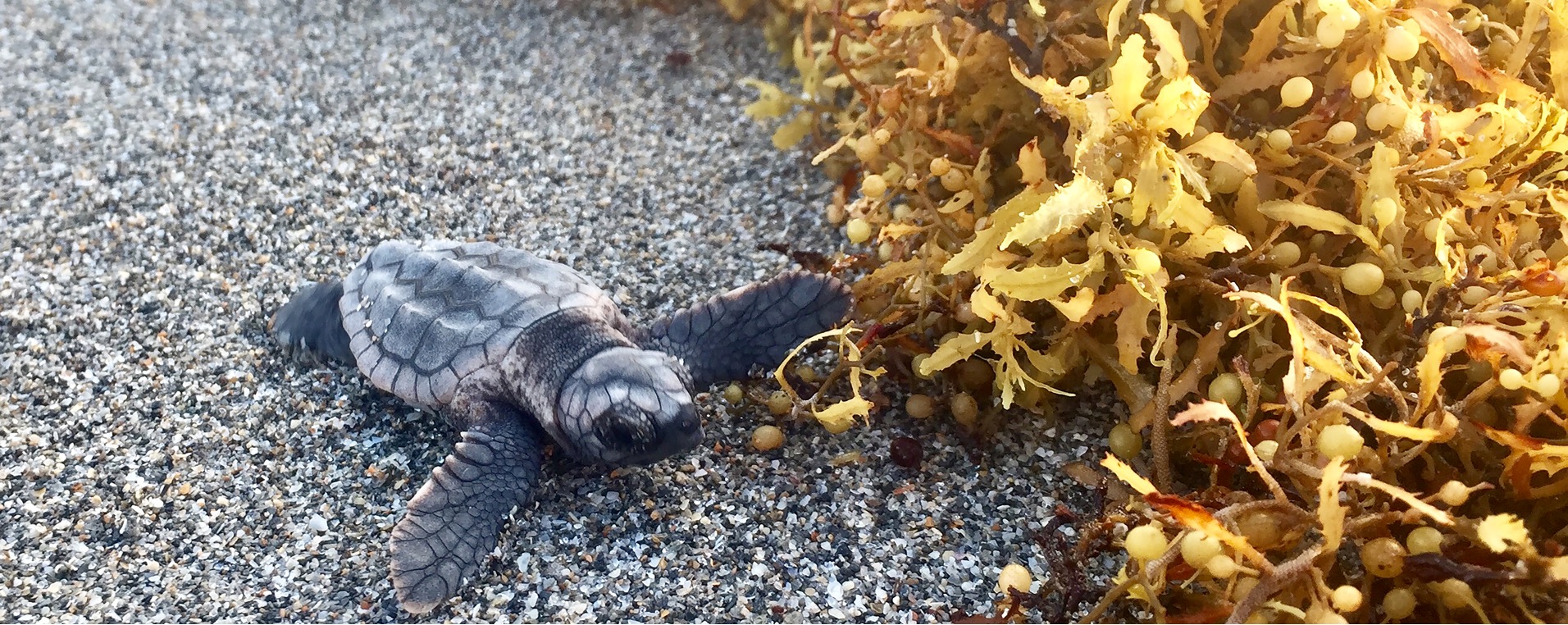
Let’s start this article off with two riddles:
- What has mustard-colored branches, is full of hiding spots, and food for little sea turtles?
- What is brown, stinky, and a barrier for hatchling turtles crawling to the surf-line?
Do you think you have the answers? You might be surprised to know that the answer to both riddles is the same!
Macroalgae known as Sargassum (aka a type of large seaweed that is related to kelp) is a natural part of the marine environment and a home to many young turtles after they leave our South Florida beaches and ride the Gulf Stream current toward the Sargasso Sea. The Sargasso Sea, located in the middle of the Atlantic Ocean, is named for its large amounts of floating Sargassum mats. Young sea turtles find food, shelter, and warmth in the Sargassum mats. The nooks and crannies of the Sargassum branches provide hiding spots that help the small turtles avoid being eaten by predators that also visit the mats.
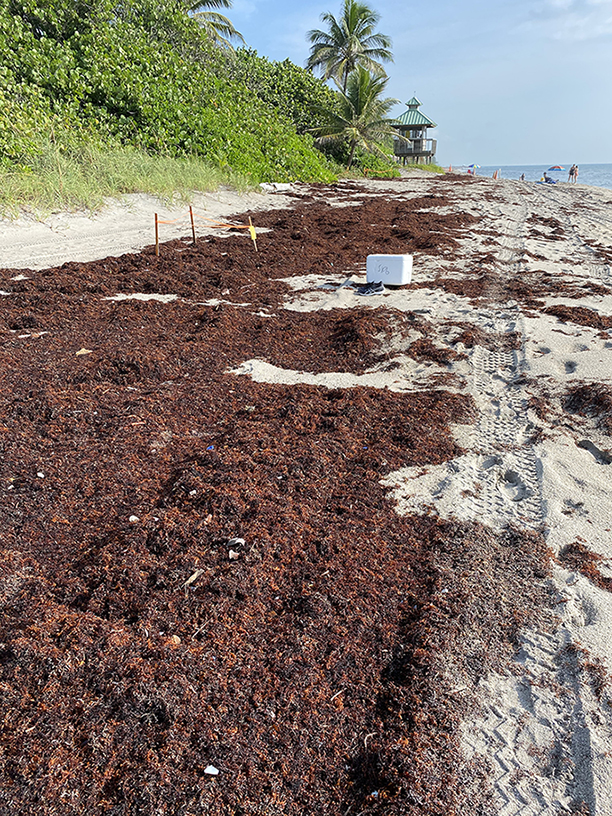
These large mats of seaweed can spell trouble for sea turtle hatchlings when they wash up on Florida’s beaches. The stinky, rotting nuisance to beachgoers also can prevent hatchling sea turtles from making it to the water if it piles up high enough! In a recent study published in the Journal of Coastal Research, Dr. Michael Salmon and graduate student, Josh Schiariti, from Florida Atlantic University found that the higher the Sargassum on the beach, the less likely loggerhead hatchlings were to make it to the water. In fact, at just under a foot of Sargassum (30 cm), no hatchlings were able to scale or penetrate the mat. While Schiariti and Salmon made sure that the turtles they studied got a lift across the Sargassum mounds, unsuccessful turtles elsewhere likely become exhausted and vulnerable to predators on the beach.
Sea turtle nesting season overlaps with much of the seaweed season in southern Florida, both peaking in the summer months. This year is particularly worrisome as scientists track what could be the largest Sargassum bloom on record (nearly 2x the width of the United States) heading towards our beaches. The big mats are projected to start making landfall in July. The influx of large seaweed mats is likely caused by a perfect storm of increases in available nutrients (think of these as marine fertilizer), warm water temperatures, rainfall, wind conditions, and currents. Healthy seaweed, at sea, could increase habitats for young turtles that make it out to those floating mats of Sargassum. Yet, tall mounds of Sargassum on the shoreline likely mean fewer hatchling turtles will make it off the beach.
As we look forward to the spring and summer months, the turtles are coming ... but so is the Sargassum!