Over 100 Microscopes Donated to Broward County Parks and Recreation by Department of Biological Sciences
Thursday, Feb 26, 2026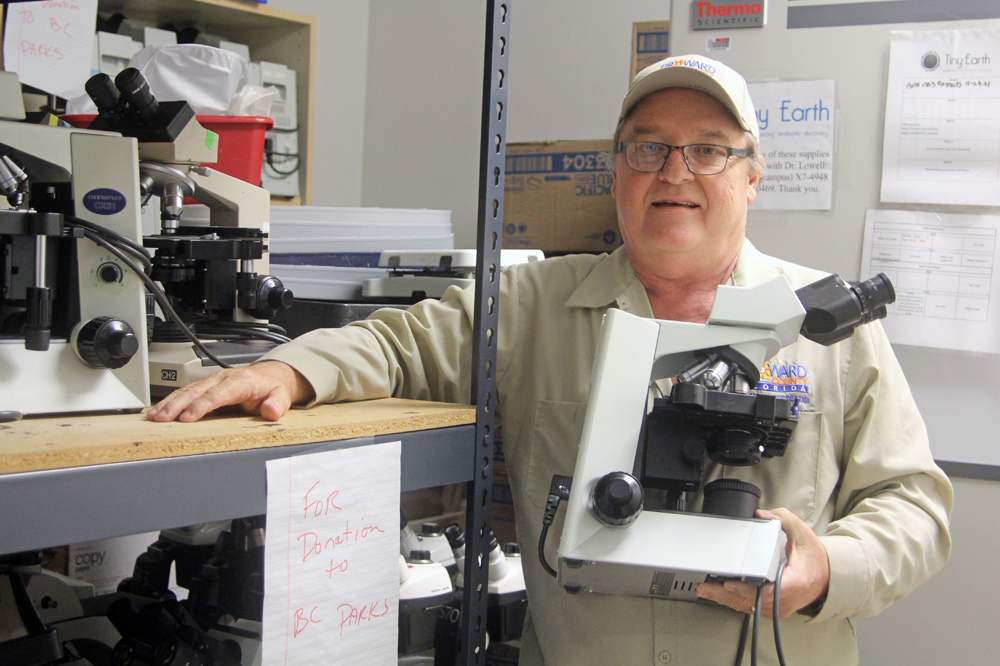
In February, 104 refurbished compound microscopes and 18 dissecting microscopes from the Schmidt College of Science’s Department of Biological Sciences were donated to Broward County Parks and Recreation. The surplused microscopes from the college’s Boca Raton and Davie campuses hope to inspire STEAM (science, technology, engineering, arts and mathematics) learning in neighborhood parks across the area.
“We are delighted to partner with Broward County Parks to help advance their free environmental education programs and after school programming that is specially designed to enhance students’ academic growth,” said Sarah Milton, Ph.D., professor and chair of the Department of Biological Sciences in the Schmidt College of Science.
The microscopes will be available to park naturalists in Natural Areas at five county Nature Centers. They will also be installed in neighborhood parks located within the Broward Municipal Services District—an unincorporated section of Broward County that has the highest underserved population.
These neighborhood parks offer free after school programs, including the After School Science and Geography Review program. For this initiative, Florida Atlantic University students work alongside Broward County Parks’ STEAM and environmental education staff to help reinforce the Florida Sunshine State Standards for science and geography among Pre-K through 12th grade students.
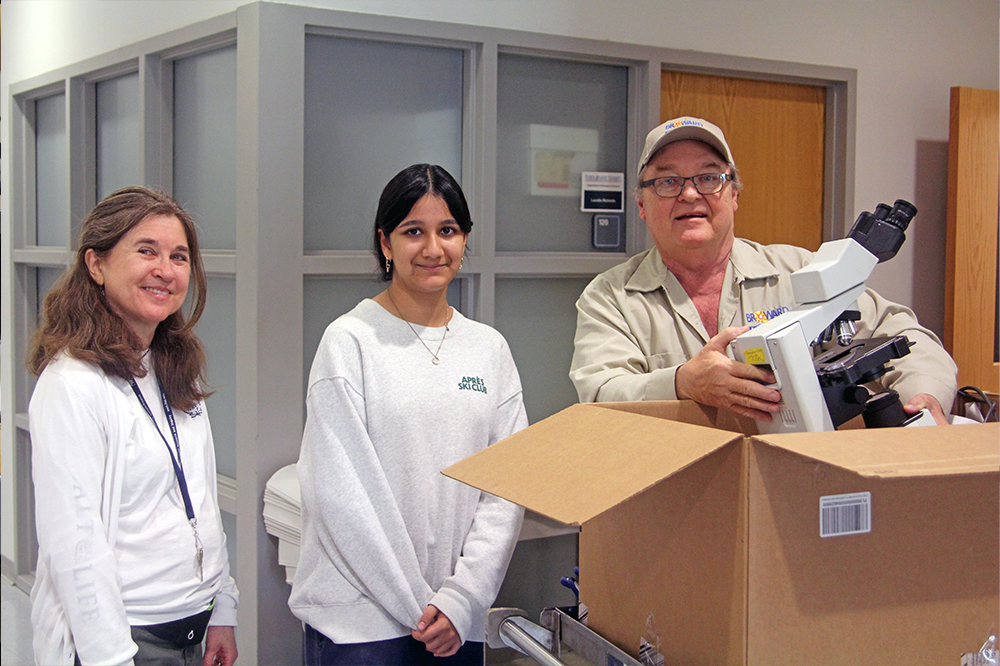 John Pipoly, Ph.D., an adjunct professor at the Schmidt College of Science and a Broward County Parks scientist, helped facilitate the donation of the surplused microscopes.
“These programs serve the most under-resourced communities in Broward County,” shared Pipoly. “It is my hope that these microscopes will catalyze STEAM learning throughout the area’s neighborhood parks.”
Broward County Parks has had a working relationship with the college since 2021. Over 100 Florida Atlantic students have completed Directed Independent Study programs by developing curricula for the After School Science and Geography Review program, as well as instruct alongside Pipoly and other staff members. While current FAU students are helping to instruct and inspire young learners, co-teaching the program also goes a long way toward developing their own skills.
“FAU students work together with professional naturalists and natural resource managers within the Parks’ system in natural areas and nature centers to enhance their training in delivering experiential education,” noted Pipoly. “This training is far more in-depth than they would otherwise be exposed to.”