In Her Element: Chemistry Instructor Erin Williams, Ph.D.
Monday, Jun 16, 2025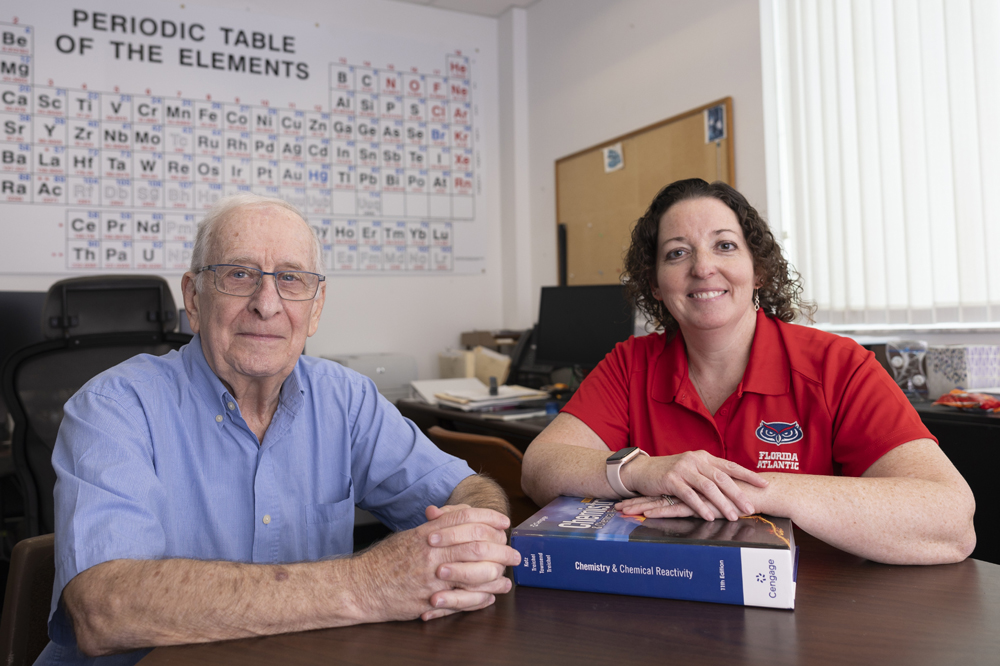
Instructor Erin Williams, Ph.D., has been attracted to chemistry since she was in high school. She quickly fell in love with the subject, and her chemistry teacher truly inspired her to continue studying it.
“I knew it was something I was good at, and I loved being able to explain it,” shared Williams. “Unbeknownst to me at the time, it was a foreshadowing of my future career.”
After her graduation from St. Thomas Aquinas High School in Fort Lauderdale, Williams continued her quest to pursue a career in chemistry as an undergraduate at Seton Hall. There, she was destined to meet an inspirational role model, Daniel Huchital, Ph.D.
“Dr. Huchital was one of the first people I met at Seton Hall,” recalled Williams. “I had applied for a special scholarship, and Dr. Huchital was the representative from the scholarship committee who called to notify me that I had been selected for it. I made it a point to find him the first time I stepped foot in the Science Building at Seton Hall, and, after meeting face-to-face, he offered to be my academic advisor in the Chemistry Department.”
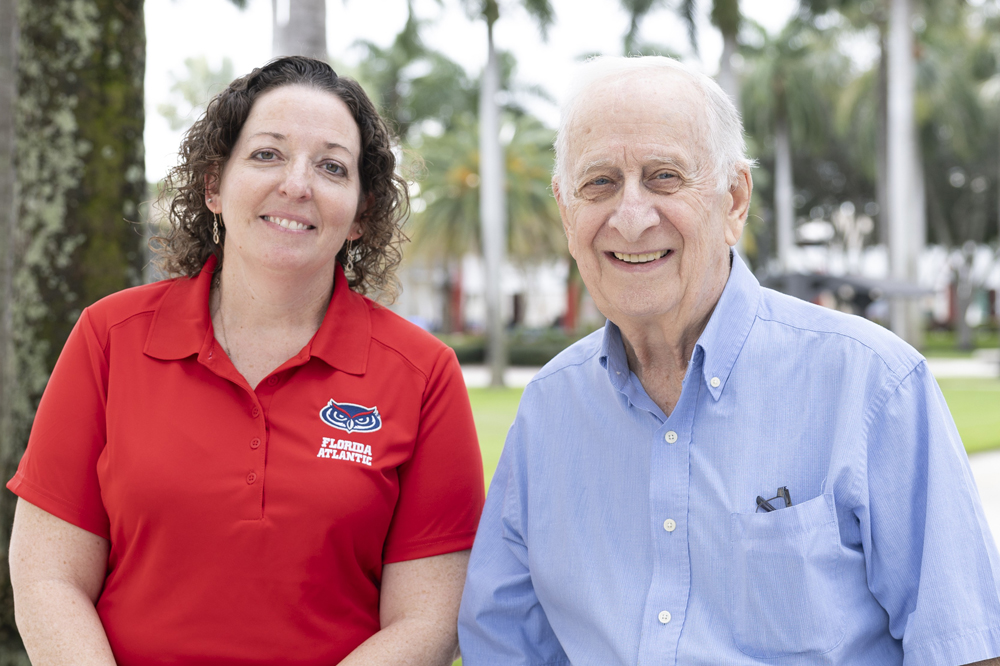 During her undergraduate years, Williams and Huchital met regularly to discuss classes and other topics, and Williams quickly felt like he had become her mentor. Fast forward a few years, Huchital left Seton Hall and relocated to South Florida, where he began teaching chemistry at Florida Atlantic. Williams returned to South Florida to teach at her alma mater, St. Thomas Aquinas High School, as a chemistry and robotics teacher. Over the years, the two continued to keep in touch.
After 13 years of teaching at the high school level, Williams was starting to feel the itch that it was time for a change. In a perfect twist of fate, Huchital, who by then had taught chemistry at Florida Atlantic for more than 20 years, contacted Williams to share that he was retiring. Huchital urged her to look up the job posting and apply for the “now open” teaching position in the college’s Department of Chemistry and Biochemistry. She quickly did, and the rest was history. Williams joined the Charles E. Schmidt College of Science in June 2023. To this day, the two frequently get together.
“Very often, Dr. Huchital meets for lunch with me and my colleague, Dr. Tito Sempertegui,” noted Williams. “They taught General Chemistry courses together for many years before he retired. He is always interested in how my General Chemistry students are doing and what material we are currently working on in class. It is always nice to get together and share our love for teaching chemistry!”
Currently, Williams is researching the effects of implementing active learning techniques into a large lecture chemistry course, and she is piloting the intervention of Learning Assistants (LA’s) in General Chemistry 1, in a course section with approximately 200 students. In fall 2024, she was selected to be part of the Faculty Learning Community by the Quality Enhancement Plan to adapt the General Chemistry 1 course to include LA’s starting in spring 2025. Additionally, she is also researching the most effective ways to incorporate Artificial Intelligence (AI) tools into the chemistry curriculum.
“My colleagues in the Department of Chemistry and Biochemistry have made my transition to teaching at the college level super easy, and even though it has only been a little less than two years, I feel like this is home,” expressed Williams. “Florida Atlantic is a hidden gem in terms of the universities in Florida!”
Outside of her teaching and research responsibilities, Williams serves as the Chemistry Club advisor. Since COVID-19, she has found that students are more eager to get involved in their school outside of traditional learning opportunities.
“Connecting with their peers—many in a similar major—in a more relaxed environment, helps students feel more at home at the university,” shared Williams. “The Chemistry Club creates the right blend of educational and extracurricular opportunities for all students, and it serves as a direct pathway to connect students and faculty and fosters relationships that are more fruitful than what develops in the classroom.”