Following Darwin’s Footsteps: Students Dive Into Discovery in the Galápagos
Wednesday, Sep 30, 2026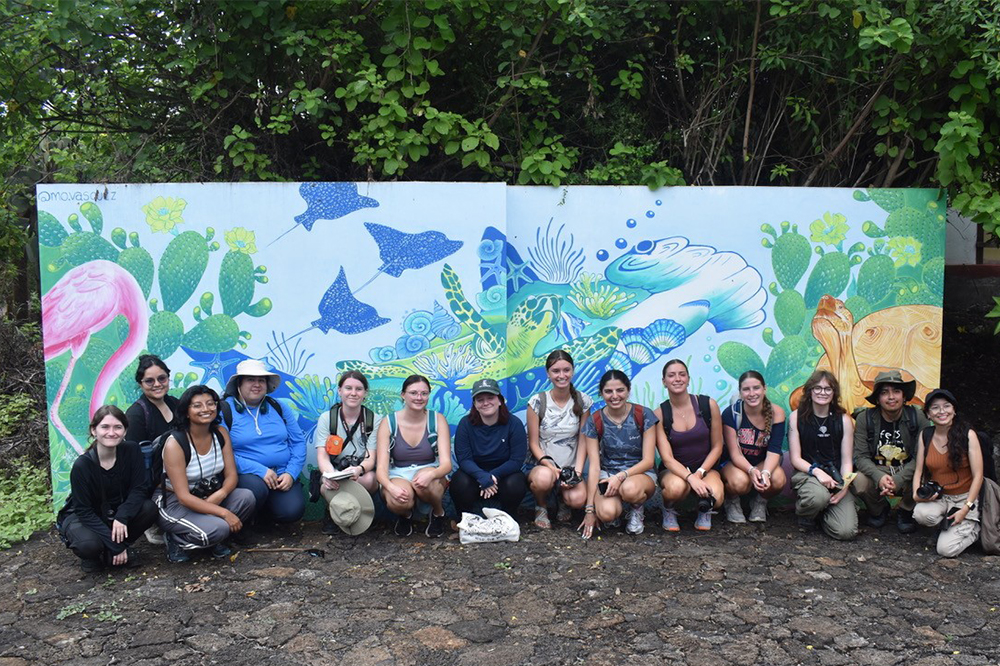
How many students can boast they spent the summer immersed in one of the most unique, scientifically important and biologically diverse ecosystems in the world?
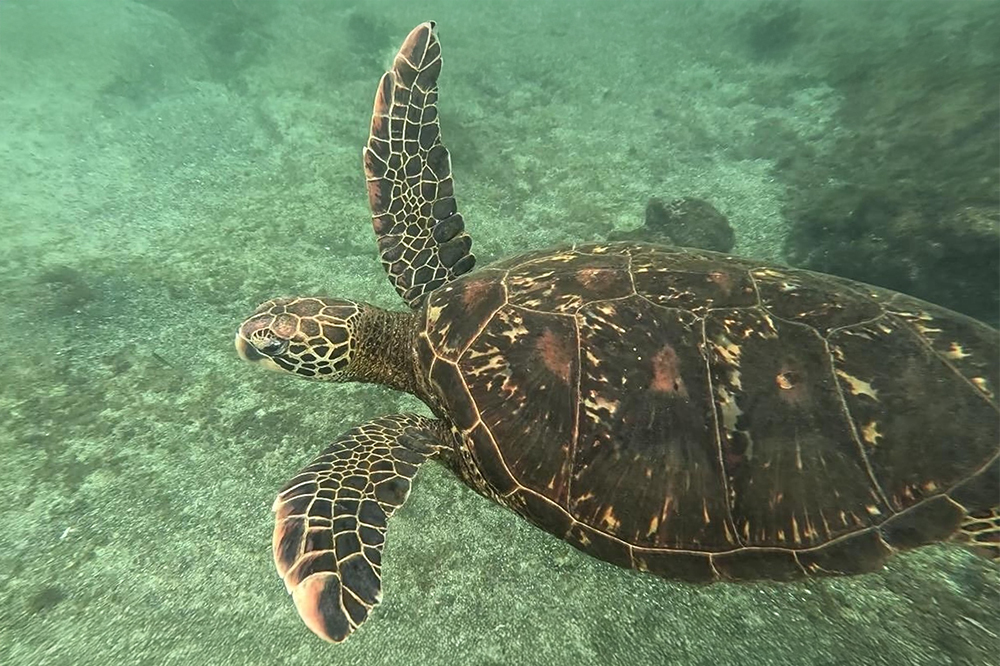
Ten undergraduate Schmidt College of Science students were lucky enough to participate in the college’s inaugural faculty-led study abroad program in the beautiful and remote Galápagos Archipelago this summer as part of the inaugural WLW-ECOS Galápagos Study Abroad Program. For three incredible weeks, students used the dramatic volcanic chain of islands as a living laboratory to examine evolutionary processes and marine ecological systems through intensive field-based activities.
“This study abroad program gave students the opportunity to learn about evolution by seeing the same places and animals that helped Charles Darwin develop his ideas over 150 years ago,” stated Marianne Porter, Ph.D., professor, Department of Biological Sciences, and co-director, Marine Science and Oceanography Master’s Program. “Students were able to experience concepts and ideas that they read from a book when sitting in a classroom and apply it in real life. Experiential learning is so important, and I am thrilled that students were able to gain an appreciation for the biology, geology and culture of the Galápagos and Ecuador.”
This first-of-its-kind program was conducted in conjunction with the University of Central Ecuador (UCE), which opened its modern new campus facility in Puerto Ayora on Santa Cruz Island, Galápagos, this summer. Four UCE students joined the Florida Atlantic cohort; all were based on Santa Cruz to participate in daily field excursions, snorkeling surveys, intertidal studies and natural history hikes.
During the immersive program, students took two classes: Evolution (PCB 3674), taught by Stephen Kajiura, Ph.D., a professor of biological sciences; and Marine Ecology (OCB 4633), taught by Sarah Milton, Ph.D., a professor and chair of the Department of Biological Sciences, Porter, and Kajiura, for which students earned a total of six credit hours.
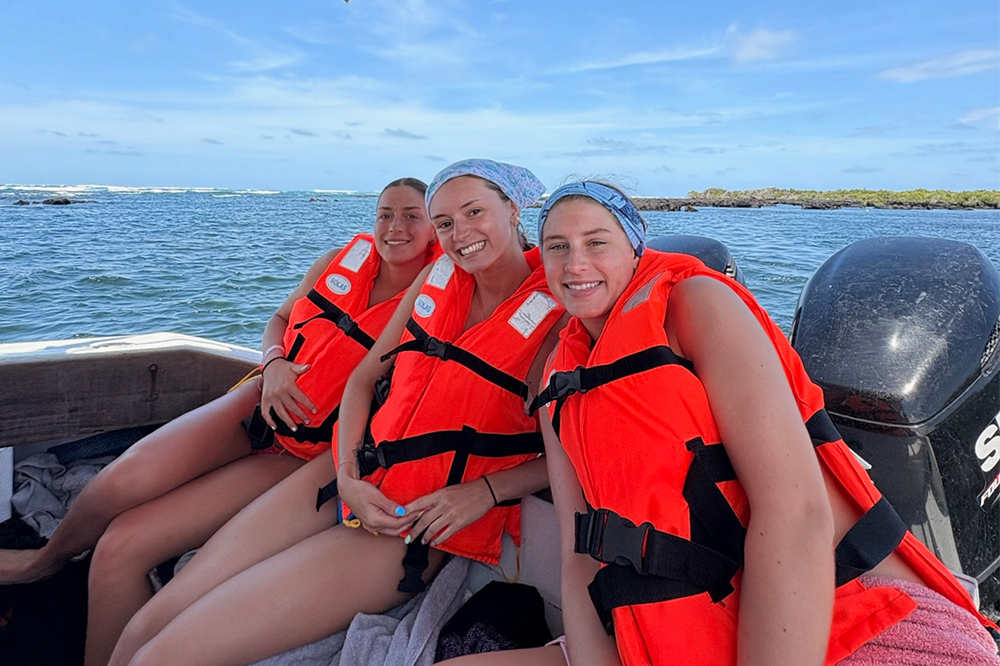
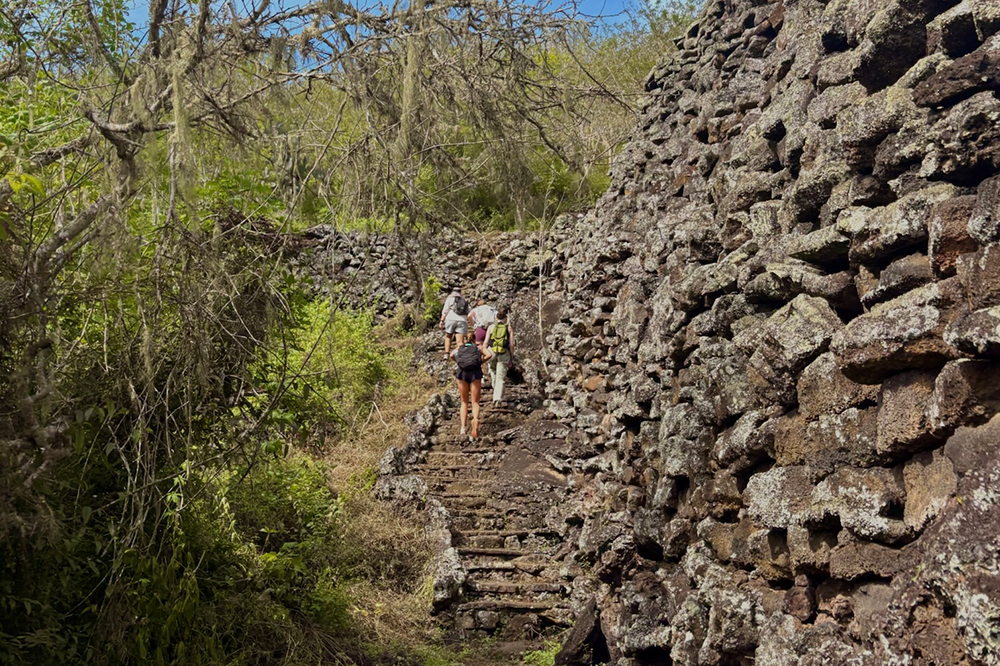
For four days and three nights, both faculty and students embarked on an excursion to Isabela Island – the largest island in the Galápagos Archipelago formed by six shield volcanoes – and home to the second-largest active caldera in the world. Students investigated volcanic landscapes, productivity gradients, as well as mangrove systems and large-scale ecological processes that influence marine and terrestrial communities.
“It is always my goal to inspire students to be curious,” expressed Kajiura. “Through such interactive, non-traditional learning opportunities, students were able to explore, observe and record their thoughts and discoveries in their own notebooks out in the field, just like Darwin did. There is no better place on the planet to get lost in a truly living laboratory of unusual species and incredibly productive ecosystems.”
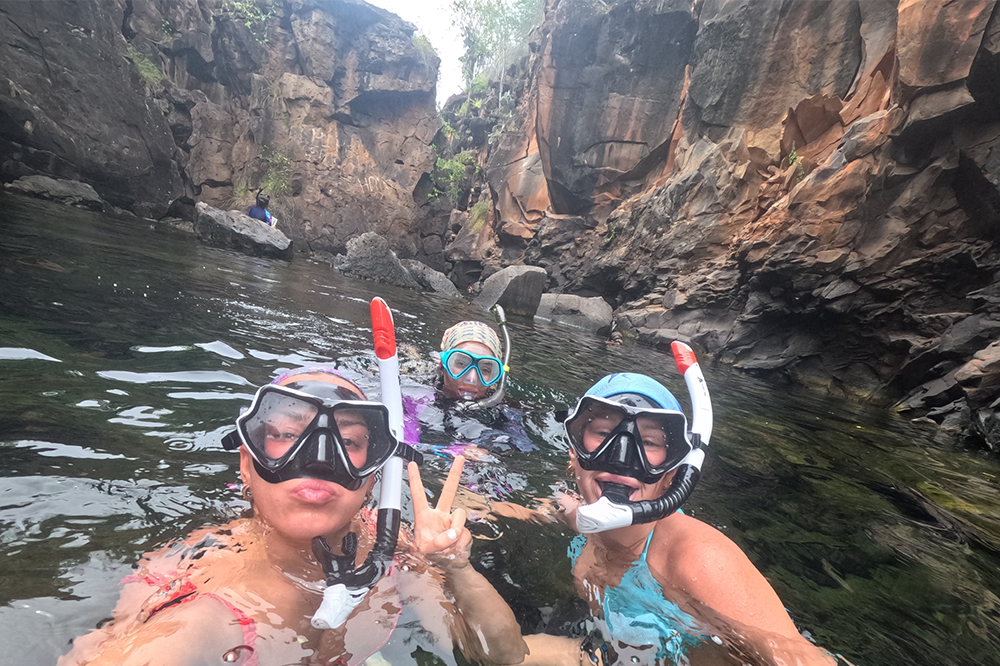
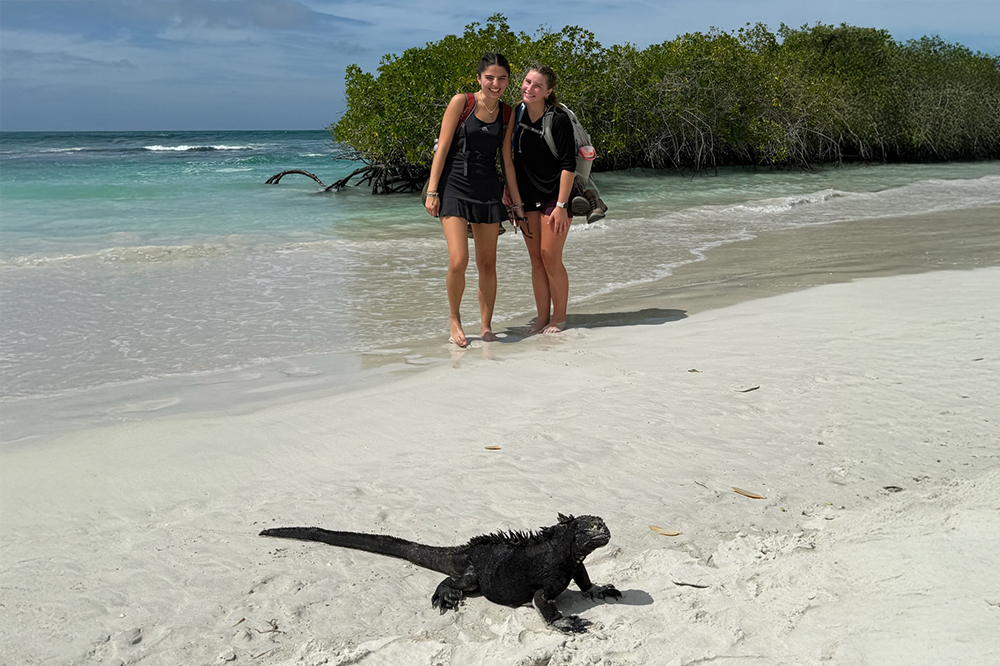
Biology undergraduates Sofia Jans and Brileigh Rayl were among the selected students for the program. Each day brought new adventures – from hiking scenic trails and snorkeling in Tortuga Bay to forging new friendships and immersing themselves in a new culture, they embraced every moment the islands offered.
"Hiking into the caldera of a volcano was truly unforgettable,” Rayl shared. “Snorkeling at Tortuga Bay, I found myself surrounded by baby blacktip sharks and countless other species. But the most awe-inspiring moment was on Isabela Island, where I saw more marine life in a single snorkel than ever before.”
"We saw a giant manta ray – it was well over 8 feet long – and it was like nothing I had ever seen," recalled Jans. "We were on our way back from Los Tuneles after a successful day of identifying species and exploring the landscape, when Dr. Kajiura pointed out a huge mass in the water. Thanks to our amazing captain who turned around just for us to see it, I got to experience one of the most incredible animals in the wild."
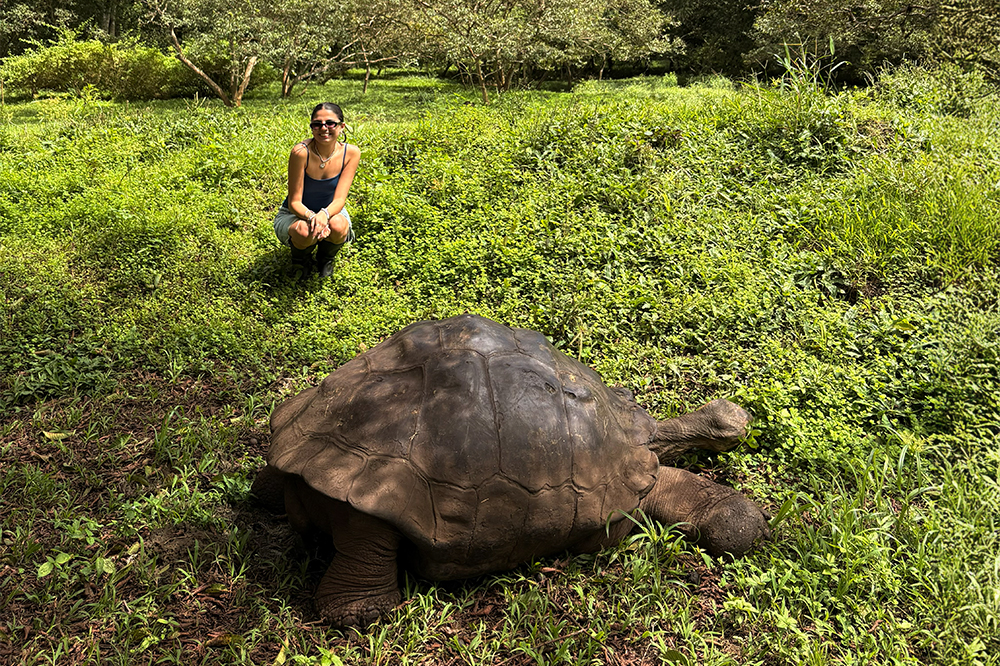
Josefina Lamaison, a sophomore biological sciences student and WLW-ECOS Research Fellow, enjoyed a special trip to Rancho Primicias where visitors can interact with giant tortoises in their natural habitat.
“I was shocked by how enormous the giant tortoises were – it was amazing to see them in person and so close to us,” noted Lamaison. “At the end of the tour, we got to climb inside a tortoise shell and try push-ups to feel how heavy it is. It was such a fun and unforgettable experience!”
From airfare to meals and accommodations, the 10 Florida Atlantic students participated in the inaugural program free of charge, thanks to the generosity of the WLW-ECOS fund established by Wayne and Lucretia Weiner (WLW). Launched in 2024, the fund creates invaluable opportunities for students and early-career scientists who are dedicated to developing solutions for a more sustainable future.
“Some students in the class had never traveled internationally before and used their passports for the first time,” shared Porter. “In addition to everything our students learned during the trip, I am delighted that I was able to share this experience with them. I hope this excursion instilled a love of visiting and learning about new places for them.”
Outside of this once-in-a-lifetime trip, Jans and Rayl benefit from the support of WLW-ECOS Student Success Scholarships. The program provides need-based financial support to full-time Schmidt College of Science undergraduate students who are pursuing careers in solution-oriented environmental research.
"I am incredibly grateful for all of the ways that WLW-ECOS has funded and shaped my college experience," expressed Jans. "I couldn't give enough thanks to them for all that they do for Florida Atlantic students."
The initiative came about after UCE President Patricio Espinosa del Pozo, M.D., Ph.D., visited the university’s Boca Raton campus last fall to meet with Schmidt College of Science and ECOS leadership members about collaborative projects.
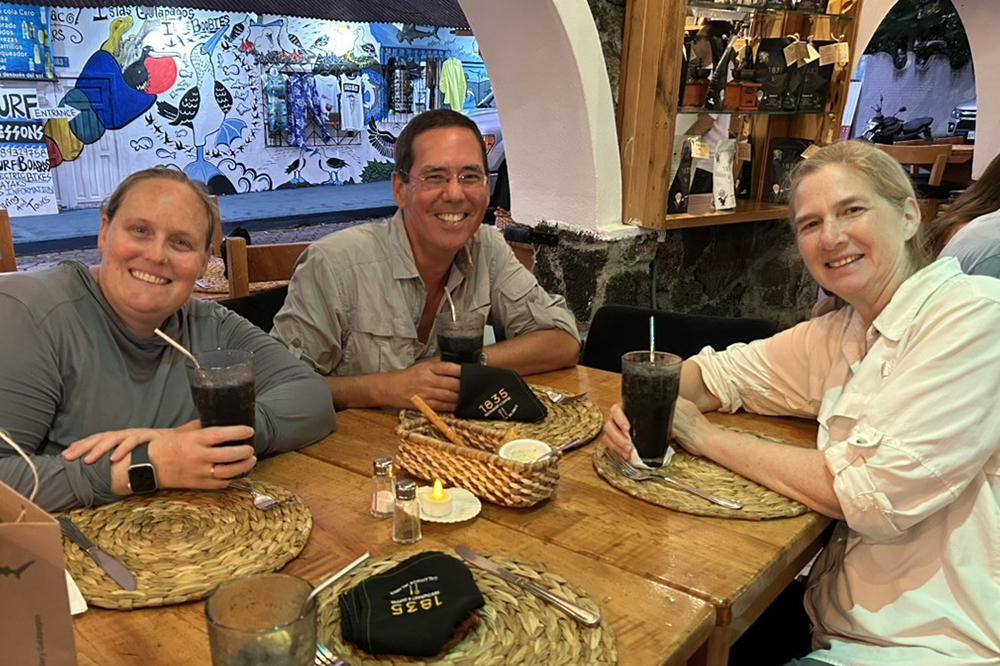
In December 2025, a team from Florida Atlantic, including Valery Forbes, Ph.D., dean of the Schmidt College of Science, Michael Horswell, Ph.D., dean of the Dorothy F. Schmidt College of Arts and Letters, Porter, Kajiura, and Milton, traveled to the Galápagos. The group spent a week hiking the islands, visiting the world-famous wild tortoise reserves and the Charles Darwin Research Station, meeting with key UCE faculty and touring UCE’s new three-story laboratory facility, which functions as a hub for regional research, community engagement and higher education.
Learn more about FAU ECOS and the many opportunities available.
|
|
|
|
|
|
|
|