What is a Burrowing Owl?
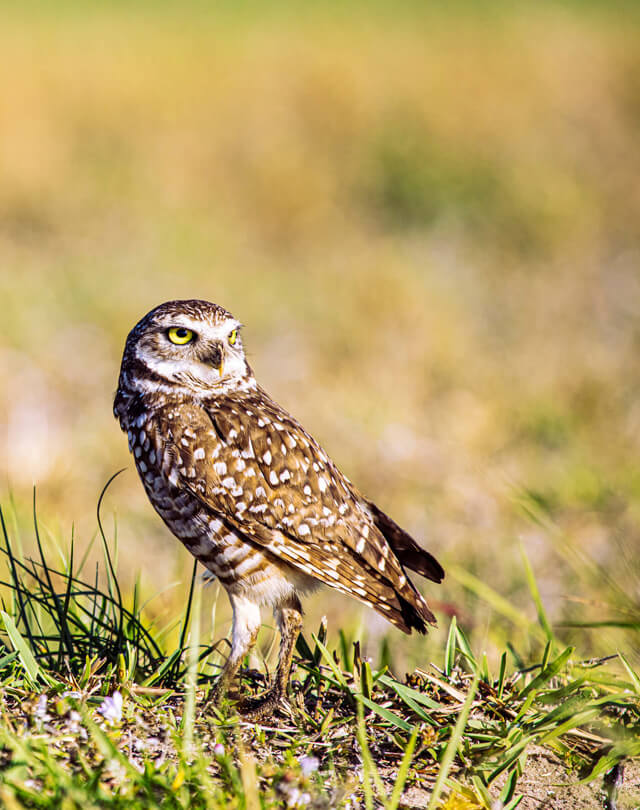
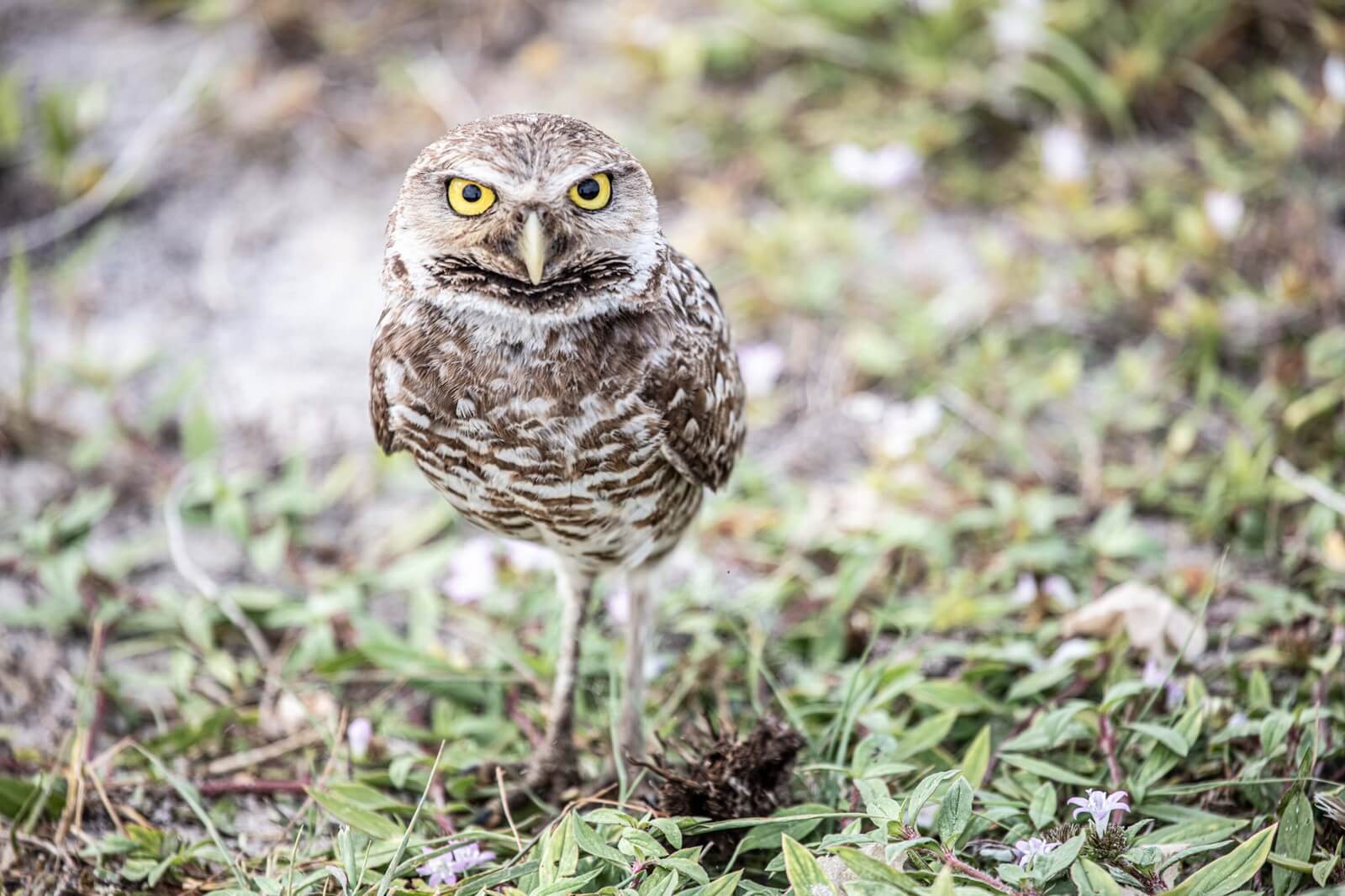
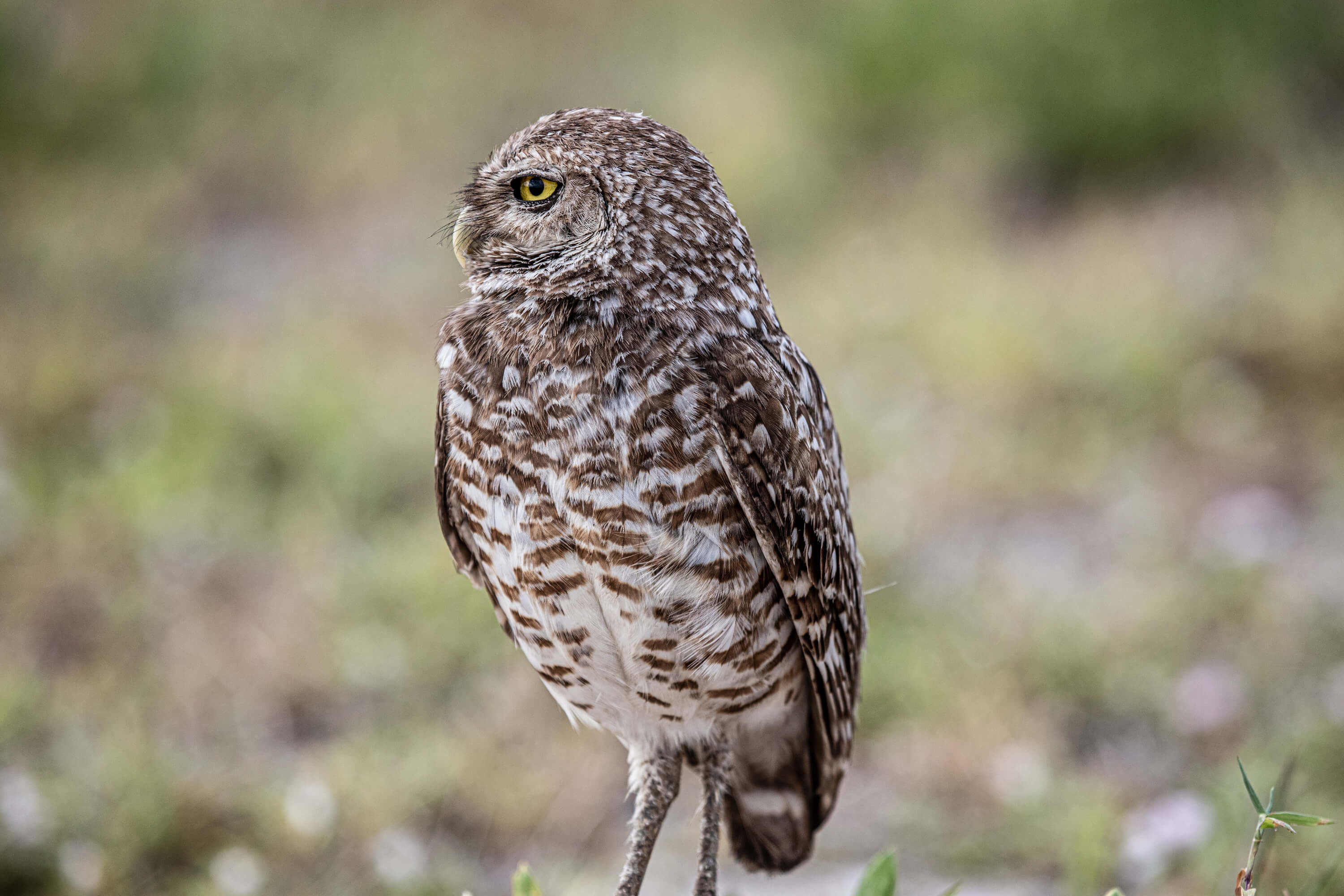
A burrowing owl is a small, ground-dwelling owl with a round head and no ear tufts. They have white eyebrows, yellow eyes and long legs. The owl is sandy colored on the head, back and upper parts of the wings. Burrowing owls are easy to see because they are often active in daylight. The females are usually darker than the males. Burrowing owls dig their own burrows in Florida but may utilize other species’ burrows for nests. Their range extends from the top of South Florida up into Canada and includes many subspecies.
The United States has two resident subspecies, one in the Southwestern states and one in Florida, Athene cunicularia. The Florida burrowing owl is considered a different sub-species than the others in North America and is isolated from other owls, the nearest of which are in central Texas. It is protected by federal law that lists it as a "species of concern" and the state of Florida considers it a "threatened species." Therefore, any research conducted of this species will require scientific permits from the Florida Fish and Wildlife Conservation Committee, as well as from local public parks or private properties where they occur.
The Florida Atlantic Logo
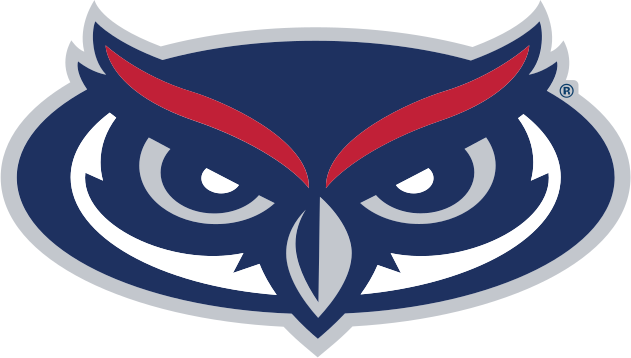
The Florida Atlantic University logo features a depiction of a burrowing owl. Florida Atlantic’s Boca Raton campus was designated as a burrowing owl sanctuary in 1971 by the National Audubon Society. The owls nest here due to the open treeless areas and sandy well-drained soils, typical of a burrowing owl habitat. Although these areas are mowed throughout the year, they are not irrigated, maintaining the habitat as wild as possible. The feisty bird, traditionally associated with wisdom and determination, serves as the university mascot.
Owl Population
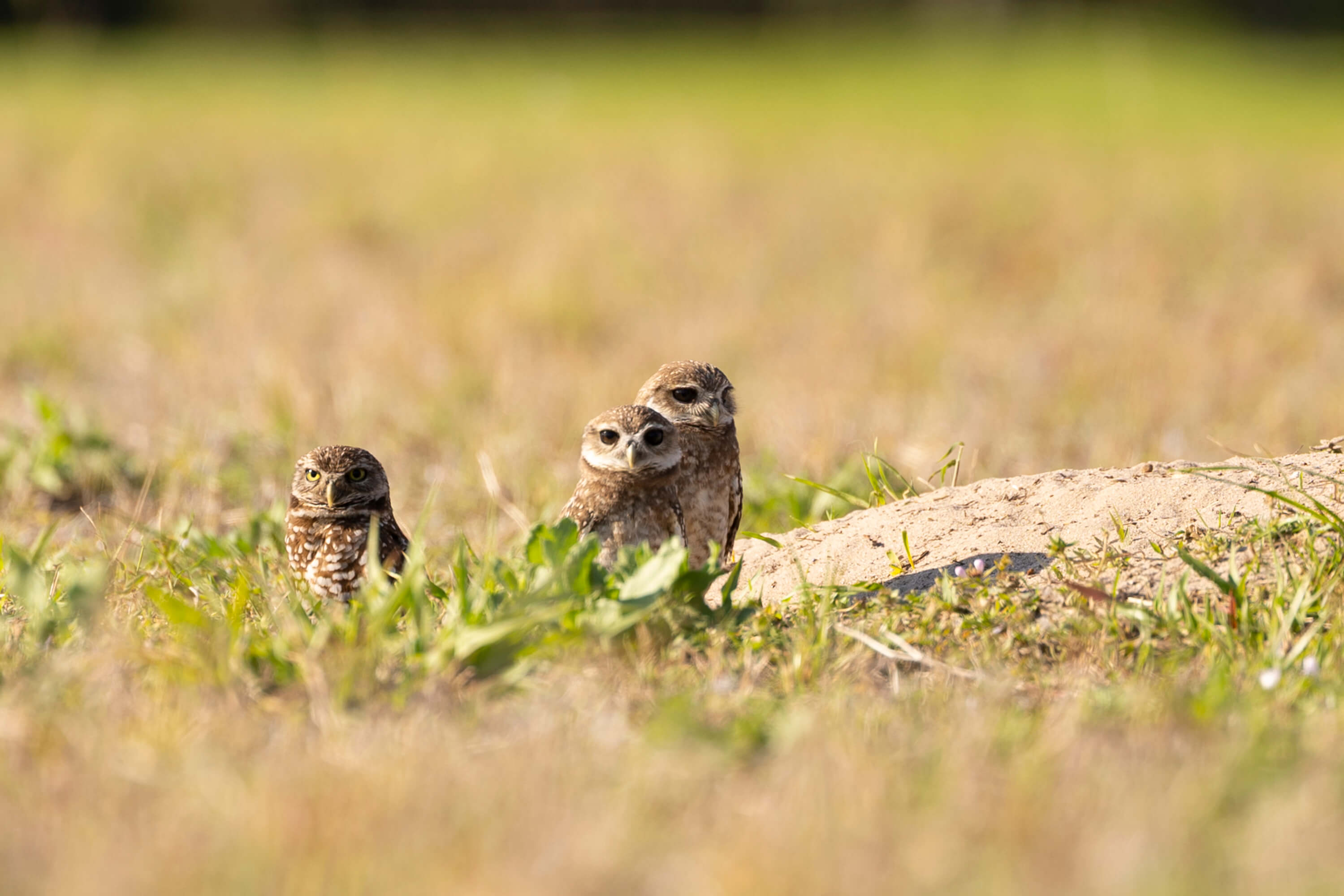
According to the August 2025 Species Assessment Report, the current estimated owl population on the Boca Raton campus is 46. This estimate is based on 40 owls observed during the assessment and 49 potentially occupied burrows. It represents the highest-recorded population on campus since data collection began in 2010. The population has more than doubled in the past decade.
Conservation Committee
Established in 2001, the Conservation Committee oversees Florida Atlantic’s environmentally sensitive areas, including habitats for owls and gopher tortoises. The advisory committee meets quarterly and includes representation from Florida Atlantic faculty, staff and students, the Florida Fish and Wildlife Conservation Commission, and the university’s environmental engineering consultants, Miller Legg.
Conservation Area
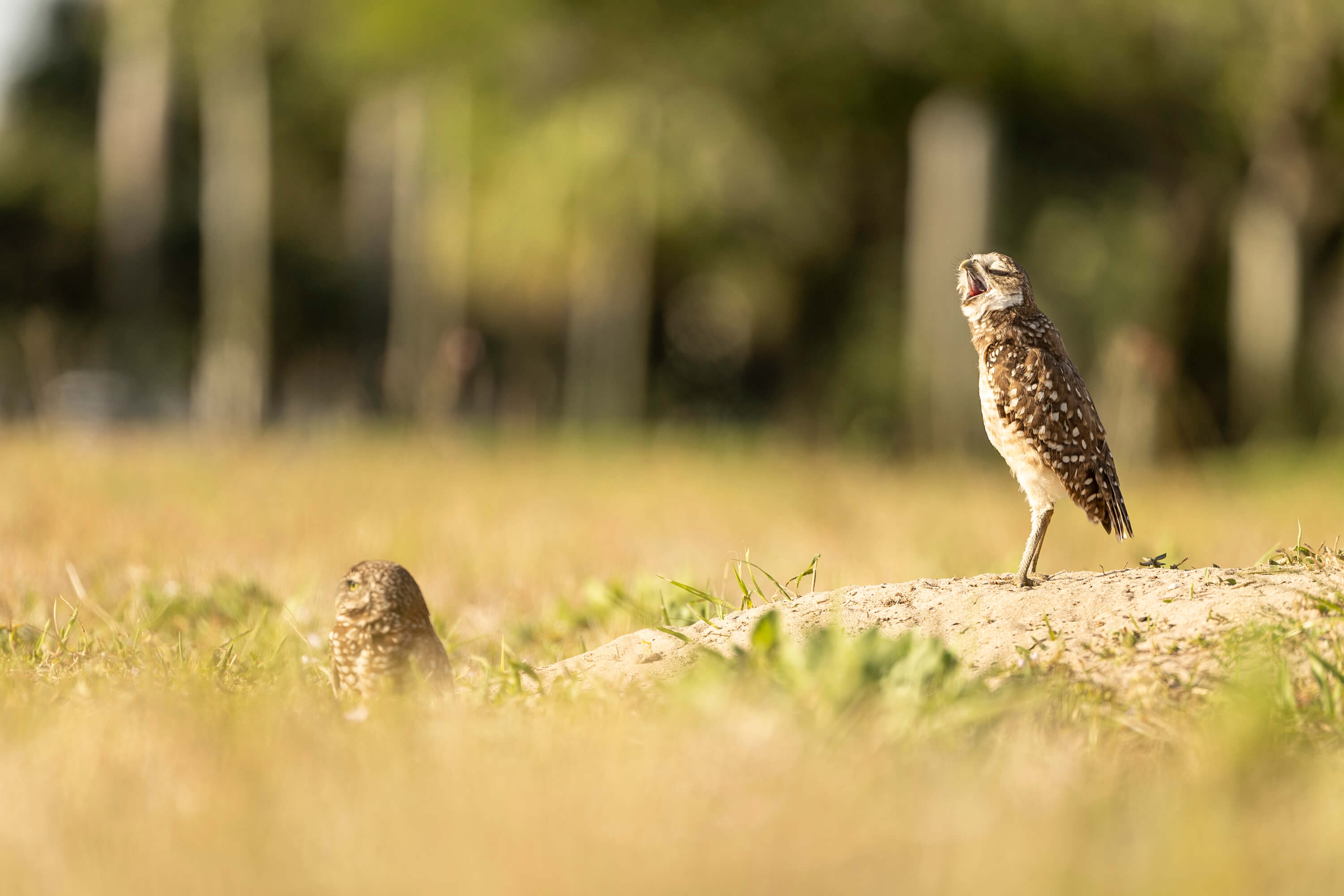
Florida Atlantic manages approximately 95 acres of conservation area, which serves as habitat for burrowing owls and gopher tortoises. All maintenance and management of conservation areas are coordinated through the Conservation Committee, which enforces strict protocols for mowing and other activities that impact the habitats. Florida Atlantic hires specialized landscaping vendors to manage the conservation area, which includes the removal of non-native vegetation and selective thinning of native species to maintain a habitat suitable for owls. All habitat management activities are coordinated through the university’s environmental engineering consultants, who issue detailed protocols and provide on-site oversight throughout the process.
Conservation Efforts
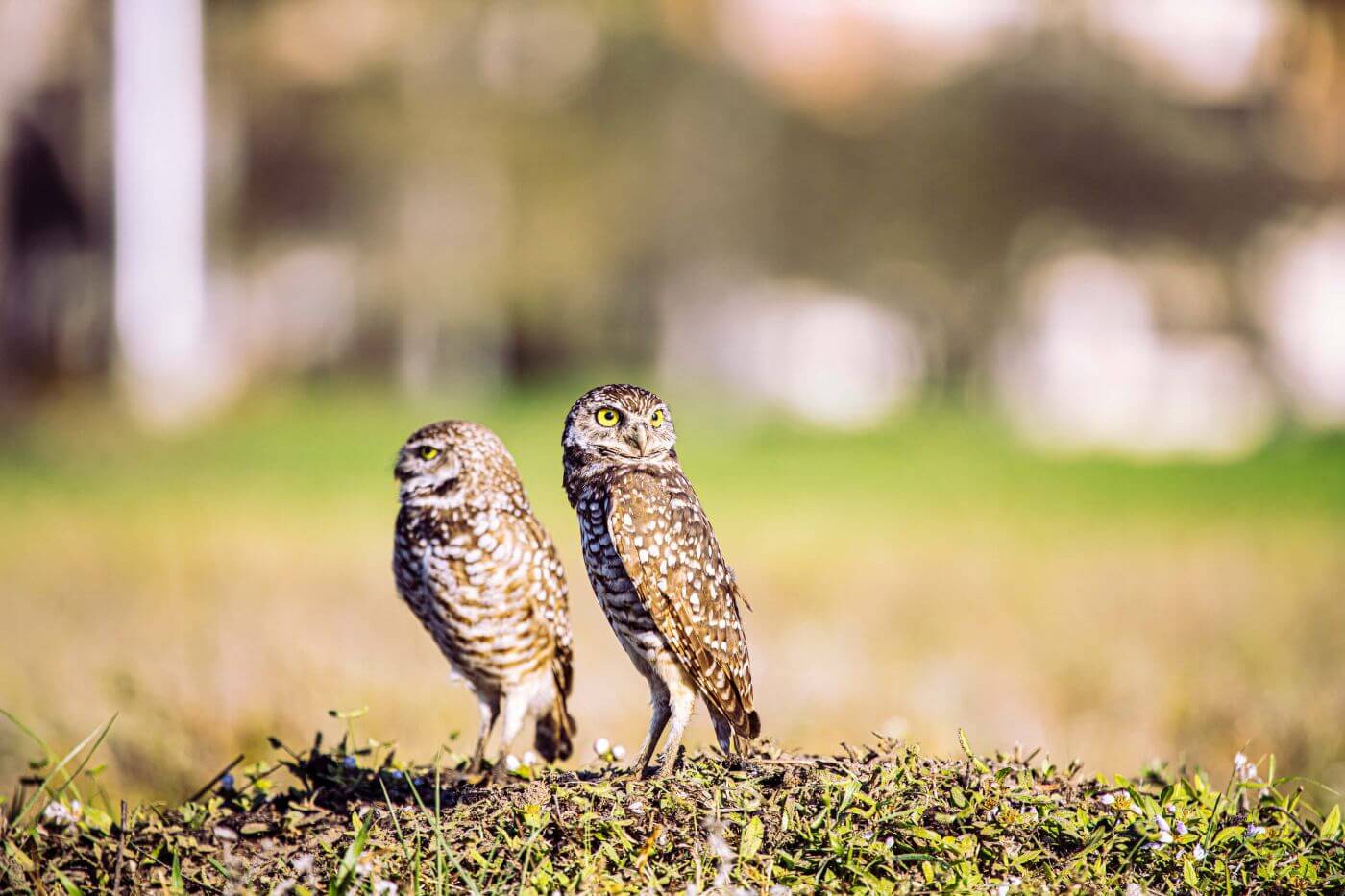
It is the goal of Florida Atlantic to ensure the conservation, protection and wise use of all natural ecosystems and natural resources on university property. Florida Atlantic plans and develops projects in accordance with the university’s master plan, and conservation efforts are a component of the plan most recently adopted by the Board of Trustees on April 20, 2021.
Open grassy areas that are zoned for development but contain owl or tortoise burrows continue to be managed under the oversight of the Conservation Committee. This approach allows the species to remain onsite until development plans are finalized. Only once a project is approved and funds are allocated for design and construction does Florida Atlantic work with environmental engineers and the Florida Fish and Wildlife Conservation Commission (FWC) to obtain the necessary permits for removing burrows.
Prior to ongoing construction on Talon Hall, the FWC issued an Incidental Take Permit, which allowed for the scoping and collapse of potentially occupied but inactive burrows, meaning adult owls are present but there are no flightless young or eggs. An FWC-trained biologist performed video scoping to confirm that no eggs or flightless young were present prior to any activity. If owls were observed during scoping, the scope was immediately removed and the burrow was left undistributed until the owls existed voluntarily.
Florida Atlantic will continue to perform regular Protected Species Assessments and Habitat Assessments to track protected species population trends and inform habitat management practices.