8/18/2026
Reshaping Coastal Restoration
A Resilient Seagrass Species Could Help
Seagrasses are among the most important foundation species in coastal ecosystems, providing critical habitat for marine life, stabilizing sediments and improving water quality. Yet nearly 20% of the world’s historic seagrass cover has been lost. In Florida’s Indian River Lagoon, widespread seagrass losses following harmful algal blooms have left many areas with little natural recovery, highlighting the need for new restoration approaches.
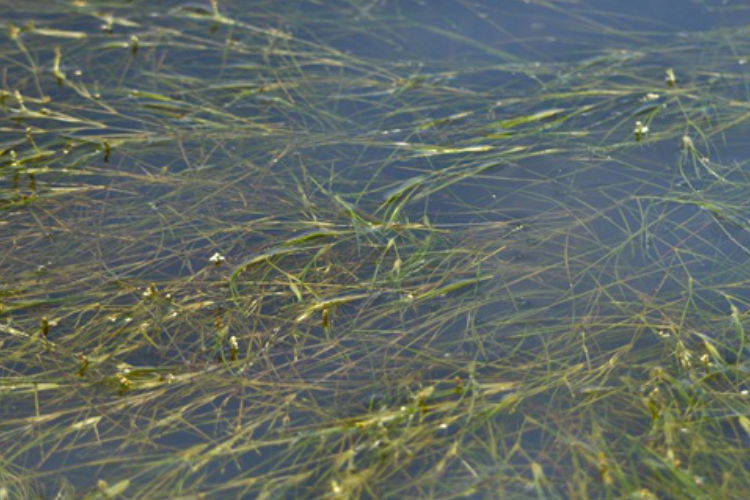
Researchers from Florida Atlantic University’s Harbor Branch Oceanographic Institute have documented the restoration potential of a resilient native seagrass, Ruppia maritima, that could offer a promising new tool. The species can withstand repeated environmental stress by persisting as seeds in the sediment and regenerating when conditions improve. It also successfully grew and produced viable seeds in the FAU Harbor Branch Seagrass Nursery, suggesting it could help jump-start recovery in degraded coastal habitats.
“Ruppia maritima has a remarkable ability to persist through disturbance,” said Rachel Brewton, Ph.D., senior author and an assistant research professor at FAU Harbor Branch. “Even when the plants disappear above ground, the population can persist as a seedbank in the sediment, waiting for conditions to become favorable.”